
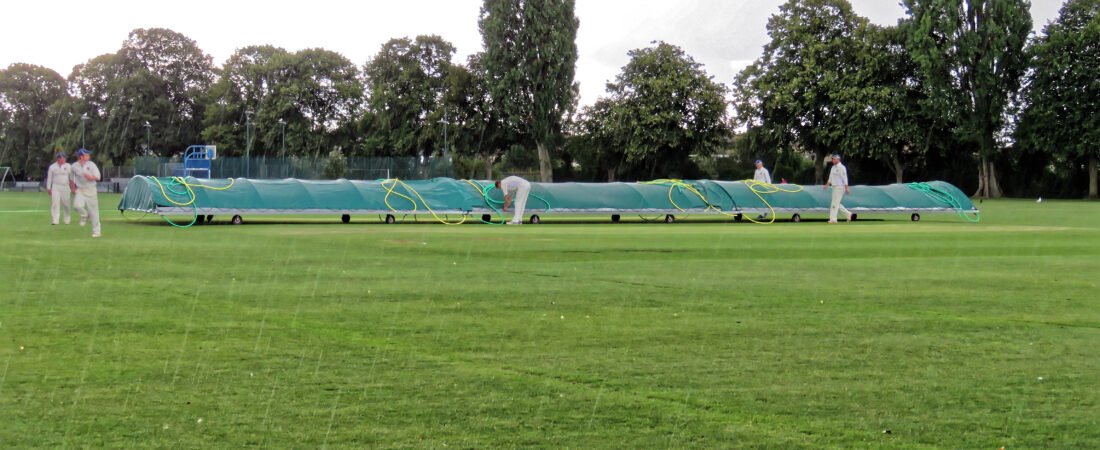
Cricket has a new enemy at the Asian Games, and it is not a rival team. The Asian Games cricket rain has turned the men’s T20 tournament at Nisshin 2026 into a slow-moving disaster: six consecutive matches abandoned, not a single ball bowled in days, and quarter-finals decided not by bat or ball but by ICC rankings. For Afghanistan, knocked out by a washout against India for the second Asian Games in a row, the heartbreak is becoming a cruel tradition.
This is not the first time weather has humiliated cricket at the Asian Games. From a gold-medal final abandoned after 18.2 overs in Hangzhou to a knockout match decided by the spin of a coin in Incheon, the Asian Games cricket rain has a long and miserable history. In this special report, The Khelverse breaks down the seven most shocking rain disasters in Asian Games cricket history, explains why the sport is so helpless against the weather, and asks the hard questions about scheduling, venues, and whether cricket truly belongs in a multi-sport Games held during typhoon season.
Table of Contents
Asian Games Cricket Rain Turns Nisshin 2026 Into a Washout Disaster
The numbers are staggering. Of the last six scheduled matches at the Korogi Sports Park in Nisshin, every single one has been called off because of the Asian Games cricket rain. Four quarter-finals were abandoned without even a toss. Two group matches were washed out midway. Not a single legal delivery has been bowled at the venue since Saturday, September 26, when Nepal had raced to 149 for 4 in 15 overs against hosts Japan before the heavens opened.
The venue itself tells a story of ambition undone by weather. Organisers spent an entire year converting a baseball diamond into a cricket ground, and the Asian Games cricket rain has made the result heartbreaking to watch. Jarrad Shearer, the Games’ sports director in charge of cricket, could not hide his despair: “Cricket, like baseball, you can’t play it in the rain. A year of my life on this, and it rains,” Shearer told reporters.
Shearer’s ground staff have thrown everything at the problem. “Come tomorrow morning it will be all hands on deck to dry up the areas that aren’t under the covers,” he said. “We’ve got some soppers, we’ve got some squeegees, some big old brooms, we’ve got sponges. Plus it’s supposed to be sunny and 32 degrees, so with any luck we’ll soak up as much water as we can in the morning and the sun will do its work in the afternoon.”
But hope is in short supply. Powerful Typhoon Surigae lashed Japan’s southern Okinawa prefecture on Monday and was projected to track northeast toward central Japan and the Tokyo region by midweek, raising the prospect of even more disruption. Earlier, Typhoon Dujuan had already struck during week one of the Games, forcing equestrian events in Tokyo to be suspended. Cricket has not been the only victim either. Tennis, surfing, and several other outdoor sports have all been battered by the same weather system, with Filipino tennis star Alex Eala’s opening match repeatedly delayed at the Higashiyama Park Tennis Centre.
How the Asian Games Cricket Rain Quarter-Finals Were Decided Without Cricket
Here is the most absurd part of the Nisshin washout saga. With no reserve days and no contingency built into the schedule, tournament rules dictated that the higher-ranked team would advance whenever the Asian Games cricket rain made play impossible. The result was a set of quarter-finals decided entirely in an office.
On Monday, September 28, Pakistan’s quarter-final against Hong Kong was washed out, sending sixth-ranked Pakistan through at the expense of 24th-ranked Hong Kong. Hours later, India versus Afghanistan, the most anticipated clash of the round, was abandoned a mere 16 minutes before the scheduled toss. World No. 1 India progressed; tenth-ranked Afghanistan went home without facing a ball.
Tuesday brought more of the same. Sri Lanka advanced past Nepal and Bangladesh went through at Malaysia’s expense, both washed out by the Asian Games cricket rain without a toss. For Nepal, who had stunned Afghanistan in the group stage, and Malaysia, who had waited three years for another shot at a Full Member nation, elimination by weather felt especially cruel.
India’s T20I captain Shreyas Iyer tried to stay professional about the chaos. “Yes, rain is there, but that is the reason we can’t give up because we have decided that we are a bunch of professionals and all these hurdles will keep coming. We have to be prepared mentally irrespective of whatever the situation is going to be.”
Afghanistan opener Mohammed Akram was less diplomatic. “The rain started yesterday, so hard luck for us,” he said. “We would have been happy to play here with India, our players are in form. But unfortunately the rain has ruined everything.” For Afghanistan, the pain was doubled by history: three years ago, in Hangzhou, their gold-medal dreams were drowned by the very same Asian Games cricket rain.
Hangzhou 2023: The Asian Games Cricket Rain Final That Never Finished
If Nisshin 2026 feels like a nightmare, it is a nightmare Afghanistan has lived before. The men’s gold-medal final at the Hangzhou Asian Games in 2023 remains the most infamous episode of Asian Games cricket rain in history, and its scars are still fresh.
Afghanistan, batting first in the final against India, had fought their way to 112 for 5 in 18.2 overs when heavy rain swept across the ground. The players walked off expecting a delay. The delay became an abandonment. The rain never relented long enough for India to even begin their chase, which meant India could not face the minimum five overs required for a result under the Duckworth-Lewis-Stern method.
With no result possible, the gold medal was awarded to India as the higher-seeded side. Afghanistan, who had played brave, brilliant cricket to reach their first Asian Games final, were handed silver medals for a match that never finished. It was a bitter pill then, and it made this week’s quarter-final washout against the same opponents feel like a recurring curse.
The rest of the Hangzhou tournament had its own Asian Games cricket rain stories. Bangladesh’s bronze-medal playoff victory over Pakistan gave them a podium finish, while Malaysia’s quarter-final against Bangladesh produced a classic that deserved better weather. Malaysia restricted Bangladesh to 116 for 5 and then fell short by just two runs in a spirited chase. Three years later, Malaysia were scheduled to meet Bangladesh again in a Nisshin quarter-final. The Asian Games cricket rain had other plans, and the rematch never happened.
Incheon 2014: When Asian Games Cricket Rain Was Decided by a Coin Toss
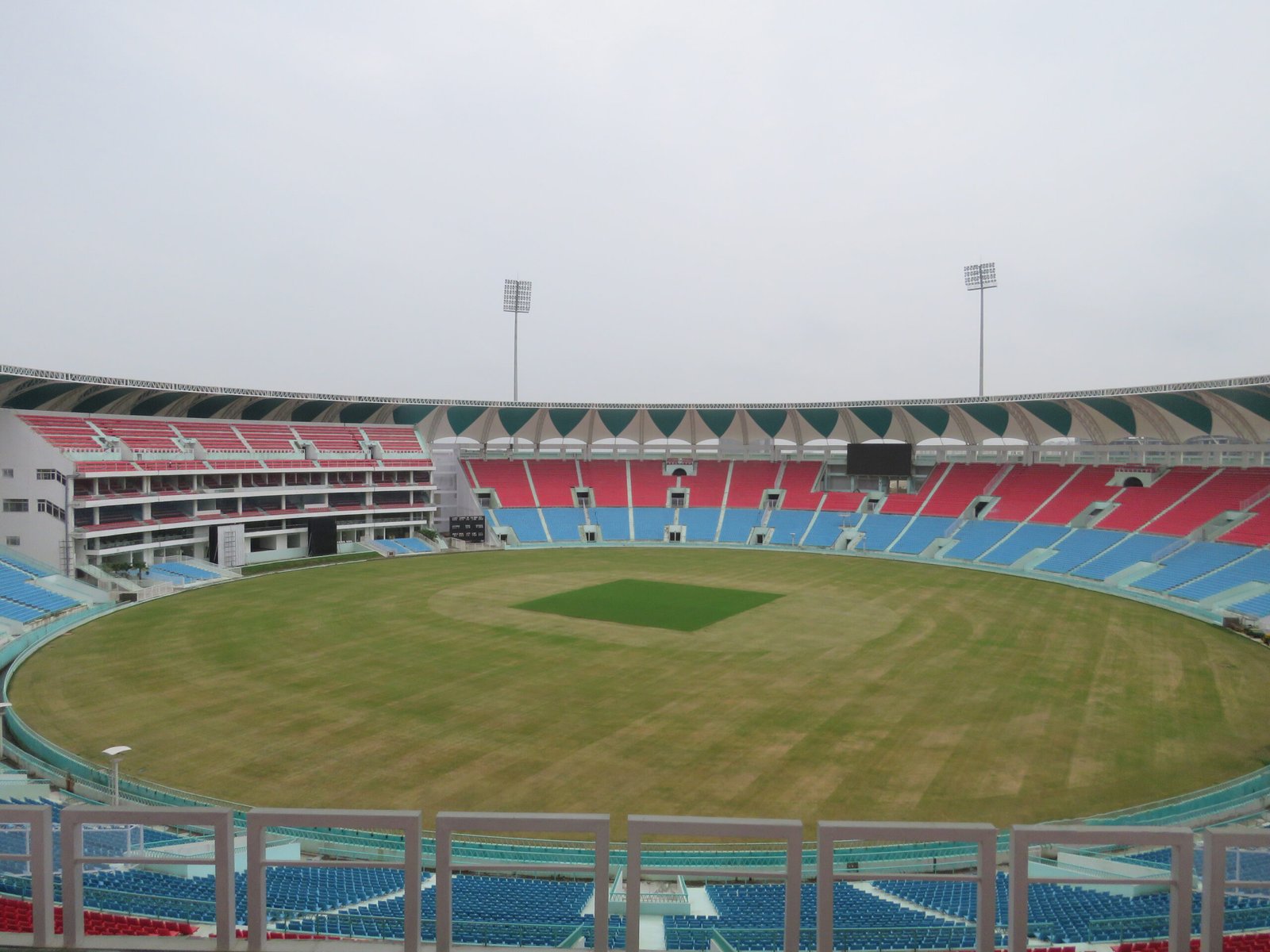
Long before Nisshin, the Asian Games cricket rain was already writing absurd chapters. At the 2014 Incheon Games, held at the Yeonhui Cricket Ground in South Korea from September 20 to October 3, the weather produced one of the strangest results in the sport’s history.
Kuwait and Maldives were scheduled to meet in a men’s group match. Rain made play completely impossible. No toss, no ball, no cricket. With the schedule offering no room for a replay, officials settled the fixture the only way left: Kuwait won by the spin of a coin. A place in the knockout rounds of a continental multi-sport event, decided by a coin toss because the sky would not clear.
The women’s tournament in Incheon was equally scarred by Asian Games cricket rain. Pakistan defeated Bangladesh by four runs in a rain-reduced final to take gold, while the bronze-medal match saw Sri Lanka overcome China. South Korea’s group match against China was squeezed into ten overs per side after rain interruptions. Sri Lanka’s men eventually took gold by beating Afghanistan by 68 runs in the final, with Bangladesh claiming bronze over Hong Kong.
What Incheon proved, and what every edition since has confirmed, is that the Asian Games cricket rain is not bad luck. It is a structural feature of staging an outdoor, weather-sensitive sport in East Asia in late September and early October, right in the middle of typhoon season, without meaningful reserve days.
Guangzhou 2010: Where Asian Games Cricket Began
To understand how far the tournament has come, and how little the weather planning has changed, rewind to Guangzhou 2010, when cricket made its Asian Games debut. The men’s tournament was won by Bangladesh, who defeated Afghanistan in the final to claim the first-ever Asian Games cricket gold. Pakistan’s women took the inaugural women’s title.
The 2010 edition was a celebration of cricket’s expansion across Asia, with associate nations getting rare exposure against established teams. Malaysia’s story is typical: they have now reached the quarter-final stage four times since cricket was introduced in Guangzhou, but have never gone beyond it. This year in Nisshin, they finally had another chance to test themselves against Bangladesh, a Full Member nation they had pushed to within two runs in 2023, until the Asian Games cricket rain intervened. Instead, their campaign ended with a viral social media post from Virandeep Singh and a flight home.
Sixteen years after Guangzhou, the Asian Games cricket rain remains the tournament’s most consistent performer, showing up in every edition and rarely leaving empty-handed.
Why Asian Games Cricket Rain Is So Destructive: DLS, Five Overs, and No Reserve Days
To the casual fan, abandoning a whole tournament over rain seems ridiculous. But cricket’s relationship with water is uniquely unforgiving, and the Asian Games cricket rain exposes every weakness in the sport’s design.
The Five-Over Rule and the DLS Method
For a rain-affected T20 match to produce an official result, both teams must have the opportunity to bat for at least five overs each. If both sides complete those five overs and rain then ends the match, the Duckworth-Lewis-Stern (DLS) method calculates a fair result based on runs scored, wickets lost, and overs remaining. Fall short of five overs for either side, and the match is a “no result”, as if it never happened.
This is exactly how the Asian Games cricket rain doomed the Hangzhou 2023 final. Afghanistan’s 112 for 5 in 18.2 overs counted for nothing because India never got to face a single ball, let alone five overs. No DLS calculation was possible. No result could be declared. The gold medal went to a seeding table instead of a scoreboard.
Why Cricket Cannot Be Played in the Rain
Unlike football, where players slide through mud for ninety minutes, cricket stops the moment rain arrives, and for good reasons. A wet ball becomes impossible to grip for bowlers and dangerous for batters facing it at 140 kph. A damp outfield turns fielding into an injury risk, with players sliding on saturated grass. Most critically, a wet pitch changes the behaviour of the ball off the surface, making batting a lottery and threatening serious injury.
The Asian Games cricket rain in Nisshin has been the worst kind: not dramatic thunderstorms that pass in an hour, but days of persistent, soaking rain that leaves the outfield waterlogged even when the skies briefly clear. That is why China’s women’s quarter-final against Bangladesh was washed out on a Thursday morning described as “perfect for action”. The weather overhead was fine. The sodden outfield, soaked by days of earlier rain, made play impossible despite the ground staff’s valiant efforts.
The Missing Reserve Days
The deepest failure is administrative. Multi-sport Games run on brutally tight schedules, with venues booked back-to-back and athletes flying in and out. Building reserve days into a cricket tournament means holding a converted baseball stadium empty for days that might not be needed, an expensive luxury organisers clearly decided against.
The result is a knockout competition with no second chances. When the Asian Games cricket rain arrived in Nisshin, there was nowhere for the washed-out quarter-finals to go. Rankings took over, and teams like Nepal and Malaysia were eliminated by meteorology.
Typhoons and Scheduling: The Questions Nisshin Must Answer
Here is the uncomfortable truth about the Asian Games cricket rain: it was predictable. Late September and early October is typhoon season in Japan. The 2026 Games have already been hit by two named typhoons. Typhoon Dujuan disrupted the first week, suspending equestrian events in Tokyo. Typhoon Surigae lashed Okinawa during the second week and tracked toward central Japan, directly threatening the business end of the cricket tournament.
Scheduling a weather-sensitive outdoor sport in a typhoon corridor, in a converted baseball stadium with questionable drainage, without reserve days, and then acting surprised when the Asian Games cricket rain arrives, is not misfortune. It is planning failure. The question now is whether cricket’s administrators will learn anything before the sport’s even bigger date with multi-sport destiny: the Los Angeles Olympics in 2028, where cricket returns to the Olympic programme after more than a century.
There are precedents for doing this better. Major cricket tournaments routinely build reserve days into knockout stages. The ICC’s own events have learned, through painful washouts of their own, that you cannot schedule cricket in monsoon regions without a Plan B. The Asian Games, juggling dozens of sports across multiple cities, has less flexibility, but “the higher-ranked team advances” is a poor substitute for a cricket match, especially when medals are at stake.
For the associate nations, the damage from the Asian Games cricket rain goes beyond one tournament. Malaysia may not face a Full Member team again for years. Nepal’s golden generation, which stunned Afghanistan in the group stage, never got its quarter-final moment against Sri Lanka. China’s women, returning to Asian Games cricket after a 12-year absence, never got to show the world what they could do. Their Australian coach Alan Newington summed up the despair: “We’re very disappointed. We were hoping the world could see the China women play for the first time in a big tournament. But we’ll reset and we’ll try again.”
What Happens Next: Semis, a New Final Rule, and a Shared-Gold Twist
Despite the chaos caused by the Asian Games cricket rain, the tournament staggers on. The semi-finals are scheduled for Thursday, October 1, at the same Korogi Sports Park: Pakistan versus Bangladesh in the first semi-final, and defending champions India against Sri Lanka in the second. The bronze-medal playoff and the gold-medal final follow on Saturday, October 3.
Bangladesh, notably, have reached the semi-finals without completing a single match in the tournament, carried through on a first-round bye and then a washout. Their captain Litton Das, playing his first Asian Games despite years of international cricket, had declared before the tournament that “the big dream is to win the gold medal.” That dream is still alive, though it has survived entirely on paperwork. Bangladesh will also be without Najmul Hossain Shanto, ruled out of the tournament with fever and infection.
One thing has changed since Hangzhou, and it matters enormously. If the Asian Games cricket rain washes out the final this time, the gold medal will not go to the higher-seeded team. Under the revised rules, both finalists will share the gold. It is a small mercy, and a quiet admission that the 2023 outcome felt wrong to many. But it is cold comfort for the teams already eliminated by the old logic in the quarter-finals.
The forecast offers a flicker of hope. After days of deluge, sunny skies and 32-degree heat are expected, giving Shearer’s army of soppers, squeegees, brooms, and sponges a fighting chance. “With any luck we’ll soak up as much water as we can in the morning and the sun will do its work in the afternoon,” he said. Cricket fans across Asia will be watching the skies over Nisshin as closely as the scorecards.
Conclusion: Cricket Deserves Better Than the Weather Lottery
The story of the Asian Games cricket rain is the story of a wonderful sport repeatedly let down by the circumstances of its staging. In Nisshin 2026, six matches have been lost, four quarter-finals decided by rankings, and teams like Afghanistan, Nepal, and Malaysia sent home without the dignity of defeat on the field. In Hangzhou 2023, a gold-medal final was abandoned after 18.2 overs. In Incheon 2014, a match was settled by a coin toss. Each edition adds a new chapter to the same soggy tale.
None of this is the fault of the players, who have been universally professional, or even the ground staff, who have worked miracles with brooms and sponges. It is the fault of scheduling that treats cricket like any other sport, ignoring that no major team sport is as helpless against rain. Until the Asian Games builds real weather contingency into its cricket tournament to fight the Asian Games cricket rain, reserve days, better drainage standards, smarter seasonal scheduling, the rain will keep deciding medals.
Cricket is about to step onto the biggest multi-sport stage of all at the Los Angeles Olympics in 2028. The lessons of Nisshin, Hangzhou, and Incheon could not be more urgent. The Asian Games cricket rain has ruined enough tournaments. It is time the administrators finally brought an umbrella.
What do you think? Should washed-out knockout matches be replayed instead of decided by rankings? Tell us in the comments and follow The Khelverse for continuing coverage of the Asian Games 2026.