
Table of Contents
- The semifinal nobody played for
- India vs Sri Lanka semifinal: how rain wrote the script
- The seeding rule, explained
- Preview: two cold-start teams
- What happens if it rains again
- Why the India vs Sri Lanka semifinal matters beyond the medal
- Conclusion
The semifinal nobody played for
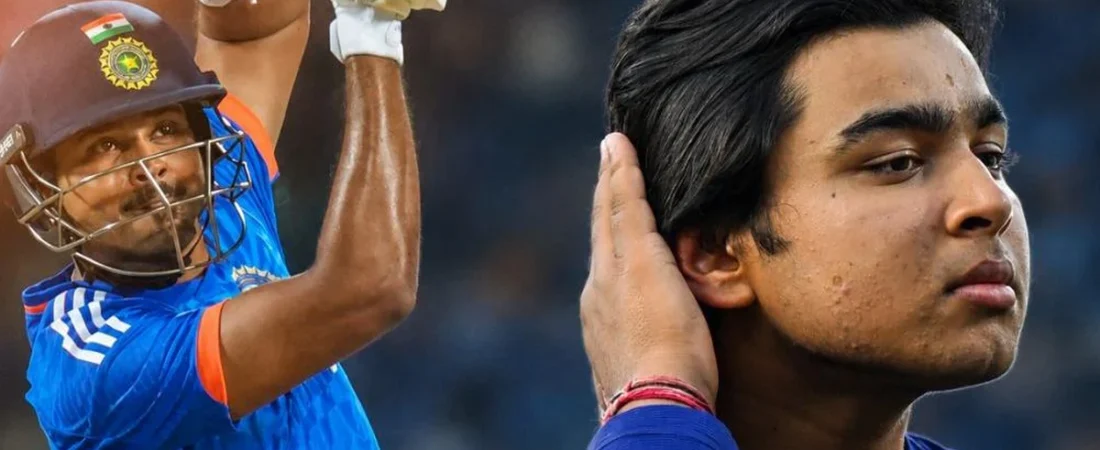
Cricket tournaments are supposed to be settled by cricket. Yet the India vs Sri Lanka semifinal at the Asian Games 2026 was arranged by the one force no captain can control: the weather. On October 1, at the Korogi Sports Park in Nisshin, Shreyas Iyer’s defending champions will walk out for a semifinal they never earned on the field. Waiting for them will be Sri Lanka — equally untested, equally undercooked, and equally determined to finally play some actual cricket.
Consider the absurdity. Three quarterfinals in a row were washed out, and a fourth abandoned tie completed the sweep. Under the tournament’s seeding regulations, the higher-ranked side advanced every single time. As a result, the India vs Sri Lanka semifinal was confirmed without a single knockout ball being bowled. Four semifinalists. Zero quarterfinals played. Nobody asked for this, and nobody benefited from it — unless you count the rain itself.
Still, do not look away. Nepal’s exit stings, and the process deserves scrutiny. But once the first ball is bowled in Nisshin, none of that will matter. The India vs Sri Lanka semifinal could be the most honest contest of the entire Games — two teams stripped of form, rhythm, and excuses, reduced to raw quality and nerve. When the sun finally comes out, the real tournament begins.
India vs Sri Lanka Semifinal: How Rain Wrote the Script
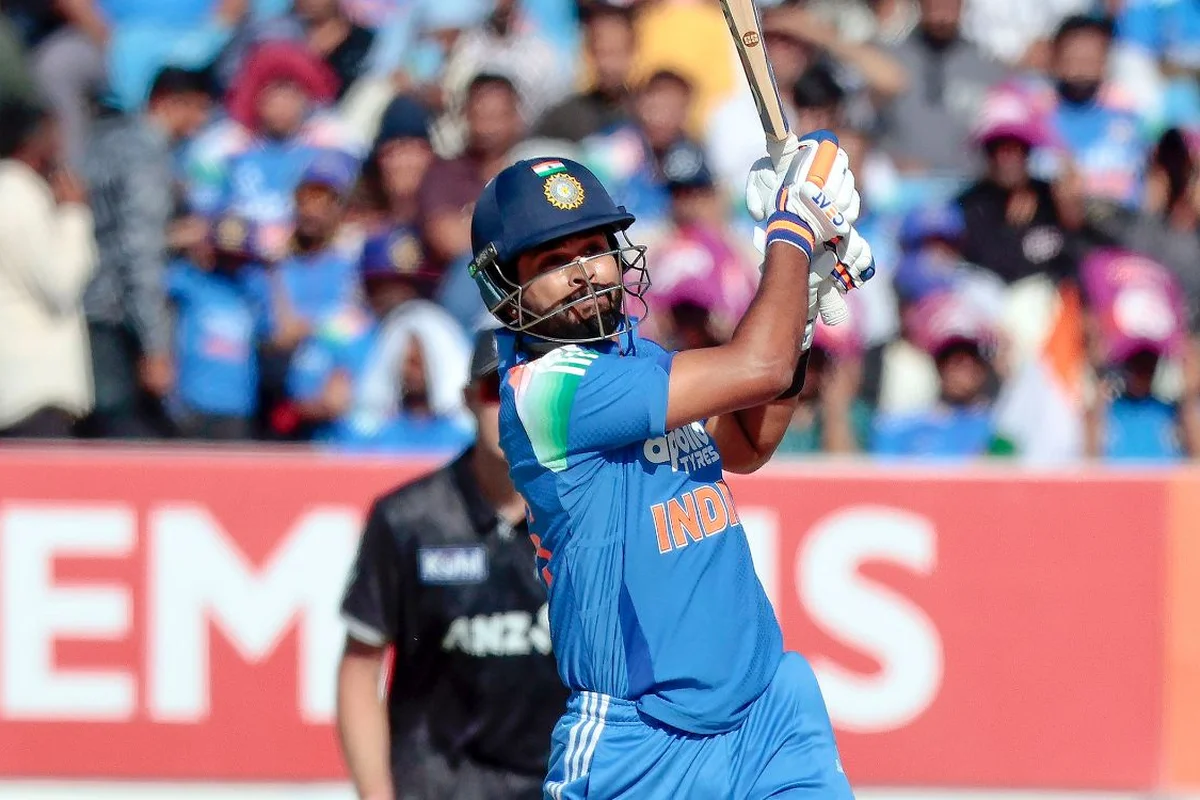
The washout unfolded over two miserable days. On September 28, India’s quarterfinal against Afghanistan was abandoned without a toss, and Pakistan’s clash with Hong Kong met the identical fate. Seedings did the talking: top-seeded India and their Pakistani counterparts marched on without facing a ball. Then September 29 delivered the heaviest blow of all, when Sri Lanka’s quarterfinal against Nepal was called off before the toss, after rain that had begun hours before the 9 am local start showed no sign of easing.
The rankings told the rest of the story. Sri Lanka, ninth in the ICC T20I standings, progressed ahead of 14th-ranked Nepal. Bangladesh’s tie against Malaysia — abandoned as well — completed the farce, with eighth-ranked Bangladesh going through over 25th-ranked Malaysia. That is how the India vs Sri Lanka semifinal became official: not through yorkers and sixes, but through a spreadsheet and a storm.
September 28: The First Washout
India’s meeting with Afghanistan never stood a chance. Relentless rain at the Korogi Sports Park left the outfield sodden and the umpires with no option at all. There was not even a toss to speculate about, no team news to debate. For the defending champions, the abandonment extended a frustrating pattern — they had barely played since landing in Japan, and the quarterfinal was supposed to be their sharpener. Instead, the covers stayed on all day, and the nets stayed empty.
Pakistan’s evening brought more of the same misery. Their tie against Hong Kong was washed out, and the higher seed progressed without breaking sweat. At that stage, the damage seemed contained: two semifinal places settled by seedings, with two quarterfinals still left to decide matters properly on the field. The weather, however, was not finished. Not even close. The worst was yet to come — and within 24 hours, the India vs Sri Lanka semifinal would be confirmed.
September 29: Sri Lanka’s Quarterfinal Without a Toss
If September 28 was frustrating, September 29 was cruel. Sri Lanka’s quarterfinal against Nepal was the tie neutrals most wanted to watch. Nepal had beaten Afghanistan in the group stage — the previous edition’s semifinalists — and arrived with genuine momentum, belief, and a sizeable, passionate following in the stands. They never got to play for their place. Rain arrived hours before the 9 am local start and simply never left Nisshin.
The regulations were unambiguous: the higher-seeded side advances. Ninth-ranked Sri Lanka walked through; 14th-ranked Nepal walked home. Later that day, Bangladesh’s abandoned tie against Malaysia sealed the pattern beyond dispute. Four quarterfinals, four washouts, four seedings upheld. And so the India vs Sri Lanka semifinal was locked in — a contest neither team had bowled a single ball to reach.
The Seeding Rule Behind the India vs Sri Lanka Semifinal
Seeding-based progression is not some Asian Games invention. It is standard practice across multi-sport events and rain-hit tournaments worldwide: when the weather makes play impossible, the higher-ranked team advances. The logic is simple — reward the body of work that earned the seeding in the first place. The problem is that this logic feels very different when it decides who gets to play and who gets sent home without facing a ball. It is also the logic that produced the India vs Sri Lanka semifinal.
How Seeding Progression Works
Here is the mechanism in plain terms. Each team enters the knockout draw with a seeding derived from its standing in the ICC T20I rankings. If a match cannot be completed — no toss, no result — the higher seed goes through automatically. There is no reserve-day lottery, no bowl-out, no appeal. It is blunt, but it is predictable, and tournament organisers prize predictability when monsoon-season scheduling is already a gamble.
That predictability is exactly what produced the India vs Sri Lanka semifinal. India’s No. 1 seeding carried them past Afghanistan. Sri Lanka’s ninth-place ranking carried them past Nepal. Pakistan and Bangladesh advanced the same way. Nobody gamed the system. The system simply did what it was designed to do — and the rain made sure it did it four times in a row.
Why Nepal Paid the Cruelest Price
Spare a thought for Nepal. They had beaten Afghanistan — the previous edition’s semifinalists — in the group stage, and they arrived at the quarterfinal with momentum, belief, and fans who had travelled to see them. Against a Sri Lankan side that was eliminated by Afghanistan at this same stage in the last edition, Nepal had every right to fancy their chances. Instead, the rain returned, and the regulations sent them home.
This is the sharp end of a rule that has now shaped two straight Asian Games. In Hangzhou 2023, rain handed India gold over Afghanistan in a final that lasted just 18.2 overs of the first innings. This time it has denied Nepal a semifinal they had every right to contest. Rules are rules — but it sits uneasily when a tournament’s most romantic story ends under an umbrella. Whenever the India vs Sri Lanka semifinal is discussed, Nepal’s absence will hang over it like the clouds over Nisshin.
India vs Sri Lanka Semifinal Preview: Two Cold-Start Teams
Forget the form guide; there isn’t one. For Shreyas Iyer’s defending champions, the situation is stranger than strange. India entered the tournament as the No. 1 seed, landed in Japan around September 20, and have since played exactly one proper fixture: a rain-truncated one-off T20I against the hosts on September 22, won by two runs — modest preparation for an India vs Sri Lanka semifinal. Their first outdoor training session came only on the eve of the quarterfinal, under gloomy cloud.
Sri Lanka are in precisely the same boat. The Lankans have not played a competitive knockout ball either, and their preparation has been equally shredded by the weather. That symmetry matters enormously. The India vs Sri Lanka semifinal is not a clash between a battle-hardened favourite and a rusty underdog. It is a cold start for both sides — a contest of raw quality and nerve rather than rhythm, and on paper India’s depth still gives them the edge.
India’s One Match in Nine Days
Let that sink in: one completed fixture in more than a week. A two-run win over the hosts in a rain-shortened game is hardly a launchpad for a semifinal. India’s batters have faced almost no competitive bowling since arriving in Japan, their bowlers have had no chance to find their lengths, and the fielding unit has barely been tested under pressure. Defending champions or not, that is a genuine handicap. The coaching staff will have leaned on indoor sessions and net throwdowns, but nothing replicates real match intensity.
There is, however, a powerful counterweight: sheer talent. India’s squad was picked for depth, with options in every department and a captain in Shreyas Iyer who has thrived in high-pressure T20 cricket for years. In a strange way, the lack of preparation levels the mental game — nobody can overthink form that does not exist. The India vs Sri Lanka semifinal will be won by whichever side adapts fastest to conditions they have barely seen.
Sri Lanka’s Equal Rust
It would be a mistake to treat Sri Lanka as a mere formality. The Lankans are ranked ninth in the world — three places above the Nepal side that had beaten Afghanistan in the group stage — and they carry the same cold-start problem India have, which makes the usual form guide completely useless. Knockout T20 cricket is volatile enough when both sides are battle-hardened; when neither has played, it becomes a lottery of execution under pressure.
Sri Lanka’s own recent history in this tournament adds real spice. In the last edition, they were eliminated in the quarterfinal by Afghanistan. This time they are one win from a guaranteed medal without having won a single game. Both semifinalists, in other words, are defending reputations built entirely on rankings. Somebody’s seeding finally has to be tested on the field — and that test is the India vs Sri Lanka semifinal itself.
The Iyer Factor
Much will rest on Shreyas Iyer’s shoulders. India’s T20I captain has built a reputation on calm, calculated batting in crunch moments, and this semifinal demands exactly that temperament from the very top. With the squad desperately short on match practice, the captain’s clarity — in selection, in batting order, in bowling changes — becomes the team’s most valuable asset. Iyer has the game for it; now he needs the afternoon to prove it.
There is also a telling subplot to Iyer’s presence in Japan. He is India’s T20I captain and ODI vice-captain, yet he will miss the entire West Indies ODI series because of this Asian Games commitment — a measure of how seriously the BCCI now takes the multi-sport stage. When the India vs Sri Lanka semifinal begins, India’s leader will be exactly where his board wants him: chasing a medal, not a bilateral.
What If Rain Hits the India vs Sri Lanka Semifinal?
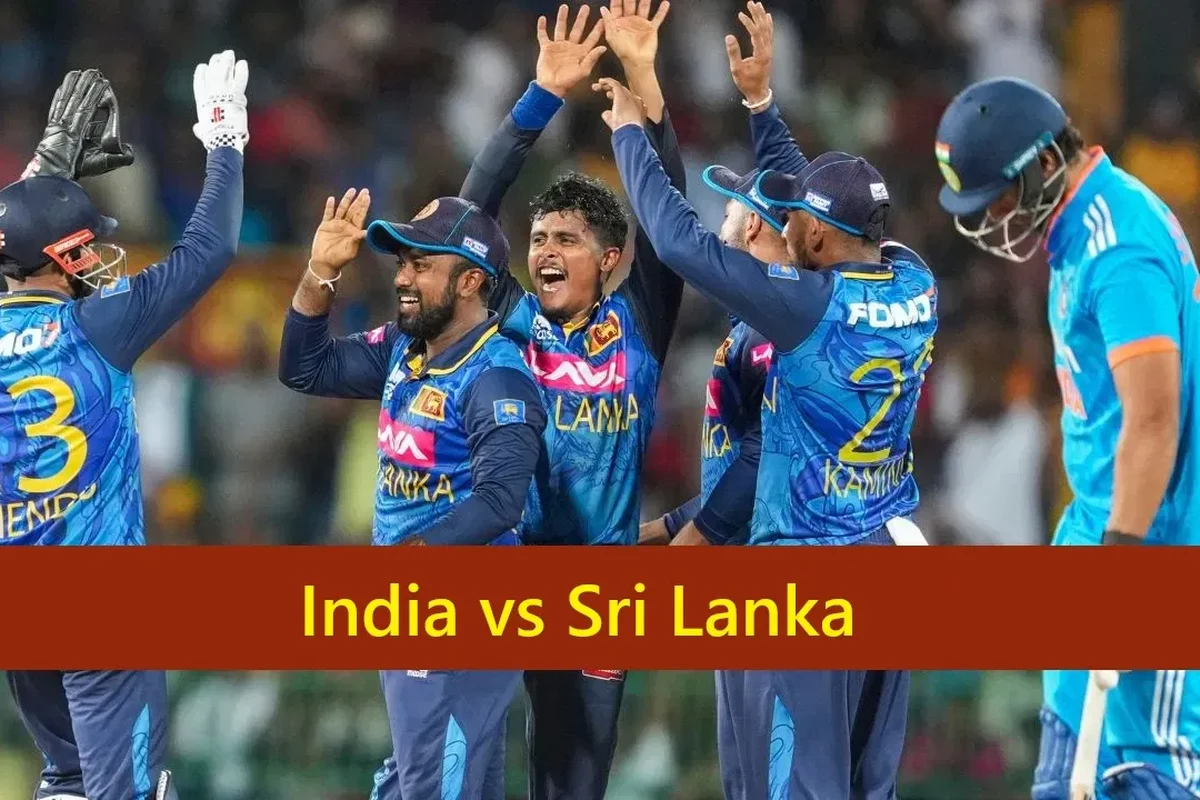
Here is the question nobody wants to ask, but everybody must: what if October 1 is washed out too? The forecast will be watched as closely as the team sheets in the build-up to the India vs Sri Lanka semifinal. If the rain persists into the semifinals, the seeding rule kicks in once again — and the consequences are dramatic. A washed-out semifinal sends the higher-ranked team through, which would produce an India–Pakistan gold-medal match and a Sri Lanka–Bangladesh bronze playoff.
Think about that for a moment. The India vs Sri Lanka semifinal could be decided without a ball being bowled, delivering the most box-office final in Asian cricket: India vs Pakistan for gold. Purists will hate it. Broadcasters will love it. And Nepal’s players, watching from home, will feel the sting all over again. The rain has already written most of this tournament’s script; it may yet write the ending too.
A Washout Means India vs Pakistan for Gold
The arithmetic is brutally simple. India are the No. 1 seed; Pakistan outrank Bangladesh. If both semifinals fall to the weather, seedings advance both favourites, and October 3 gives us India vs Pakistan with gold on the line. It would be a final nobody earned on the field and everybody wants to watch. For the India vs Sri Lanka semifinal, the stakes of a washout are therefore enormous. For now, though, it remains only a contingency — and both camps will be praying for clear skies over Nisshin.
The Shared-Gold Rule: A Fix Born of 2023
But the final has a new twist. Since the last edition, the rules have changed: if the gold-medal match is washed out, the two finalists share the gold rather than the higher-ranked side taking it outright. It is a fairer rule, born of the awkwardness of Hangzhou 2023, when rain handed India gold over Afghanistan in a final that lasted 18.2 overs of the first innings. Nobody wanted a repeat of that hollow coronation — least of all the players themselves.
The change matters for the India vs Sri Lanka semifinal too, because it alters the incentives. Teams no longer need to fear that one more washout hands their rivals an outright title. A shared gold is a compromise, but it is an honest one. After a tournament defined by seedings, the organisers have at least ensured the final cannot be decided by a spreadsheet.
October 1 and October 3: The Dates That Matter
The schedule remains October 1 for the semifinals and October 3 for the medal matches. Two days, four teams, three medals. For India, the equation is beautifully simple: win the India vs Sri Lanka semifinal and a medal is guaranteed; win twice and it is gold. The path is short. The only question is whether a team that has spent its entire tournament under umbrellas can remember how to play cricket when the sun comes out.
And if India reach the final, Indian cricket gets a scheduling oddity for the ages: the T20 side contesting Asian Games gold in Japan while a different Indian XI plays the third ODI against the West Indies in New Chandigarh. Two teams, two countries, one day — with the India vs Sri Lanka semifinal at the very heart of it. Only in modern cricket’s packed calendar could a gold-medal match share a date with a bilateral ODI — and only India have the depth to contest both at once.
Why the India vs Sri Lanka Semifinal Matters Beyond the Medal
There is a wider point here about what the Asian Games mean to cricket. The sport returned to the Games in 2023 after a long absence, and with T20 cricket now an Olympic sport from LA 2028, these tournaments are no longer exhibitions. They are auditions — for players, for systems, for the idea that cricket belongs on the world’s biggest multi-sport stages. A washout-riddled edition is an unfortunate advert, but the stakes could not be more real.
Medals, rankings, and a generation of cricketers learning to perform outside the bubble of bilateral tours — that is what is on the line in Japan. The template for handling the pressure was set a week earlier, when Harmanpreet Kaur’s women beat Sri Lanka to take the women’s cricket gold — India’s first gold of these Games. The men now carry the other half of a possible golden double. The India vs Sri Lanka semifinal is their gateway to it.
Cricket’s Olympic Audition
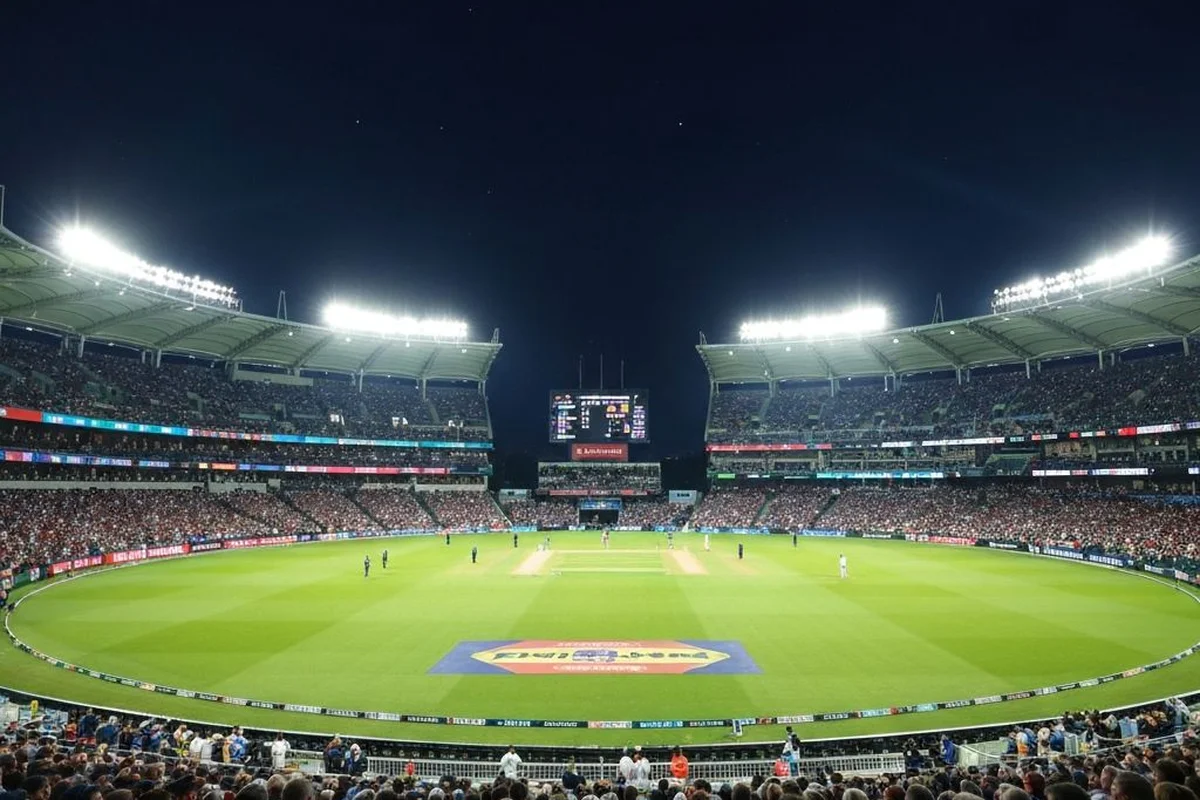
Every Asian Games cricket tournament from here on is a rehearsal for the Olympics. LA 2028 will put T20 cricket in front of the largest audience the sport has ever known, and administrators are watching closely how these events run — the crowds, the coverage, the competitive integrity. A semifinal decided partly by seedings is not the ideal shop window. But a thrilling India vs Sri Lanka semifinal played in front of a buzzing Nisshin crowd would be a powerful corrective.
For the players, the Olympic horizon changes what a medal means. Gold at the Asian Games used to be a nice line on a CV; now it is a down payment on Olympic selection. Young cricketers in both squads know that performances in Japan will be remembered when 2028 squads are picked. That is why, washouts notwithstanding, the intensity on October 1 should be very real. The ICC rankings that shaped this draw will keep shaping careers long after the rain stops.
India’s Wider White-Ball Calendar
The semifinal does not exist in isolation. While Iyer’s T20 side chases gold in Japan, India’s ODI squad is in the middle of a home series against the West Indies — with the same October 3 date hosting both the Asian Games medal matches and the third ODI in New Chandigarh. It is a vivid snapshot of modern Indian cricket: two XIs, two formats, two countries, all at once. For the full picture of the home leg, read our IND vs WI 2nd ODI preview.
The split has a human cost as well. Iyer will miss the entire West Indies ODI series because of his Asian Games commitment — the T20I captain and ODI vice-captain sacrificing bilateral cricket for a medal. That tells you how far the multi-sport stage has come in Indian cricket’s eyes. A decade ago, no Indian star would have skipped a home ODI series for the Asian Games. Now the gold chase in Japan takes precedence. The India vs Sri Lanka semifinal is no sideshow; for its captain, it is the main event.
A Gold That Feeds the Medal Tally
Cricket’s gold carries weight far beyond the boundary rope. India’s first gold of these Games came from Harmanpreet Kaur’s women, who beat Sri Lanka in the women’s final — and the men’s team now have the chance to complete the double. In a multi-sport Games, every gold shifts the narrative of a nation’s entire campaign, and cricket, as India’s most-watched sport, delivers the biggest spotlight of all. Track how every medal shapes the standings in India’s Asian Games 2026 medal tally.
That is the broader prize waiting on October 1. Win the India vs Sri Lanka semifinal, and India guarantee themselves a medal — silver at minimum, with gold just one win away. For a contingent measuring itself against the world’s best across dozens of sports, a cricket gold is both a statement and a springboard. The rain may have cheapened the route, but it cannot cheapen what the medal itself means.
Conclusion: Where the India vs Sri Lanka Semifinal Truly Begins
So here we stand: a semifinal that nobody played for, between two teams that have barely played at all. The seedings have done their work, the rain has had its say, and Nepal’s heartbreak will linger whatever happens next. Nobody played to reach this India vs Sri Lanka semifinal, yet both teams must now win it the hard way. But sport has a way of redeeming its own absurdities. All it takes is one sunlit afternoon in Nisshin, one genuine contest, and one team brave enough to seize a cold start.
India are the favourites — the No. 1 seed, the defending champions, the deeper squad. Sri Lanka are dangerous — ninth in the world, equally rested, with nothing to lose and a medal one win away. When the India vs Sri Lanka semifinal finally gets underway on October 1, the seedings will stop mattering and the cricket will start. Four semifinalists, zero quarterfinals played — but from here, someone finally has to win on the field.
Why this story matters: Four semifinalists, zero quarterfinals played — the rain has turned this into a tournament of seedings, not cricket. But from October 1, someone finally has to win on the field. India vs Sri Lanka is where the real tournament begins.