
Table of Contents
- Introduction
- The Paradox in the Asian Games 2026 Medal Tally
- Where the Golds Came From on the Asian Games 2026 Medal Tally
- The Silver Mountain Behind the Asian Games 2026 Medal Tally
- The Conversion Question the Asian Games 2026 Medal Tally Asks
- The Fortress Strategy Behind the Asian Games 2026 Medal Tally
- Five Days Left: What the Asian Games 2026 Medal Tally Still Needs
- Conclusion: What the Asian Games 2026 Medal Tally Will Mean
Introduction
The Asian Games 2026 medal tally has a strange look to it this week. India have 47 medals — one of the largest hauls of the entire Games — and yet sit 11th in the standings, trailing nations with barely half their total. How does a country win this much and rank this low? The answer is colour: five golds against a mountain of more than 20 silvers.
This is the defining story of India’s campaign in Aichi-Nagoya — a contingent that keeps reaching finals and keeps finishing second. A 503-strong squad, led into the opening ceremony by flag bearers Manu Bhaker and Pawan Sehrawat, has spread medals across 36 sports. Yet the gold column of the Asian Games 2026 medal tally barely moves. With the closing ceremony set for October 4, the question is no longer how many medals India can win, but how many they can turn into gold.
The Paradox in the Asian Games 2026 Medal Tally
What the Asian Games 2026 Medal Tally Rewards
A glance at the Asian Games 2026 medal tally explains the contradiction at a stroke. India: 47 medals, 11th place. Scroll up the table and you find nations with half that total sitting comfortably ahead — because the standings rank by golds first, and India’s gold column reads five. The official table, updated through every session, is tracked in Olympics.com Asian Games coverage, and it makes for uncomfortable reading.
The system is not conspiring against anyone. It simply reflects a philosophy that winning matters most: one gold outweighs any number of silvers. But for India, the rule exposes an uncomfortable truth. The contingent is elite at reaching finals and ordinary at winning them. And the Asian Games 2026 medal tally has no column for “almost”.
India 11th: How the Standings Mislead
Consider what India 11th actually means. It means a nation that has out-medalled nearly the entire continent sits behind countries whose athletes saw the podium far less often. It means the most consistent contingent in the Games — medals in 36 sports, podiums in disciplines that barely registered a decade ago — is officially ranked as an also-ran. The standings do not lie about golds. But they say nothing about depth, and depth is the harder thing to build.
Compare that with the top of the table. China sit first with over 130 golds, a number so large it turns dominance into arithmetic. Japan and South Korea complete the top three. These are nations that do not merely produce finalists; they produce winners. On the Asian Games 2026 medal tally, the gap between India and the top three is not a gap in talent, or even in medals. It is a gap in finishing.
A Medal Machine That Cannot Find the Top Step
That phrase — a medal machine that cannot quite find the top step — has followed this contingent around Aichi-Nagoya, and it fits because it is precise. The machine works: scouting, funding, sports science, foreign exposure, all humming. The final step does not. Whether that is temperament, preparation, or simply the cruelty of small samples in finals, the Asian Games 2026 medal tally keeps a merciless record of it.
Five golds from a 503-strong contingent is not the return India planned. The realistic target now is not the standings position — 11th is what it is — but the gold count. Everything from here is about conversion.
Where the Golds Came From on the Asian Games 2026 Medal Tally
The golds, such as they are, tell their own story. Every one of them came from a fortress: cricket, shooting, kabaddi. The sports where India has institutional depth, professional leagues, and a genuine winning culture. Everywhere else, the contingent reaches the final and blinks.
Harmanpreet Kaur Sets the Tone
The first gold belonged to the women’s cricket team, who beat Sri Lanka on September 22 under the captaincy of Harmanpreet Kaur. It was the perfect start: a team that arrived as favourites, played like it, and gave the country its first champion of the Games. For Harmanpreet Kaur, it was another landmark in a career built on delivering when the stage is biggest — and it put the first line in India’s gold column on the Asian Games 2026 medal tally.
Cricket’s gold matters beyond the metal. It was proof of concept: when India arrives with a professional setup, genuine depth, and the confidence of a team that wins routinely, gold follows. The question hanging over the rest of the contingent is why that template travels so poorly to other sports.
Shooting’s Steady Hand
The 10m air pistol mixed team of Suruchi Singh Inder and Kamaljeet added the second gold with a composed, clinical performance. Shooting has been one of India’s most reliable gold sources for decades, and this pair’s triumph continued the tradition — athletes who trust their preparation, execute under pressure, and treat finals as business as usual. It is exactly the temperament the rest of the contingent is searching for.
The Kabaddi Double
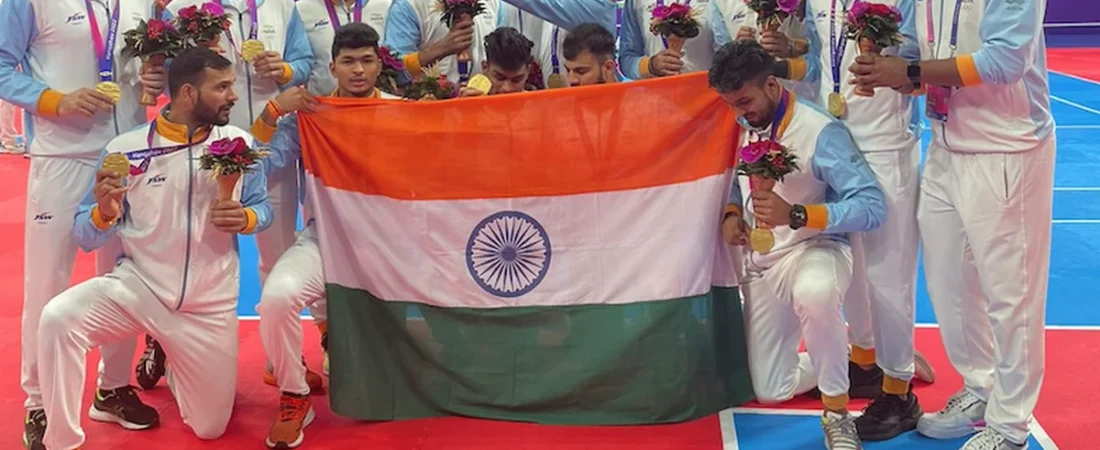
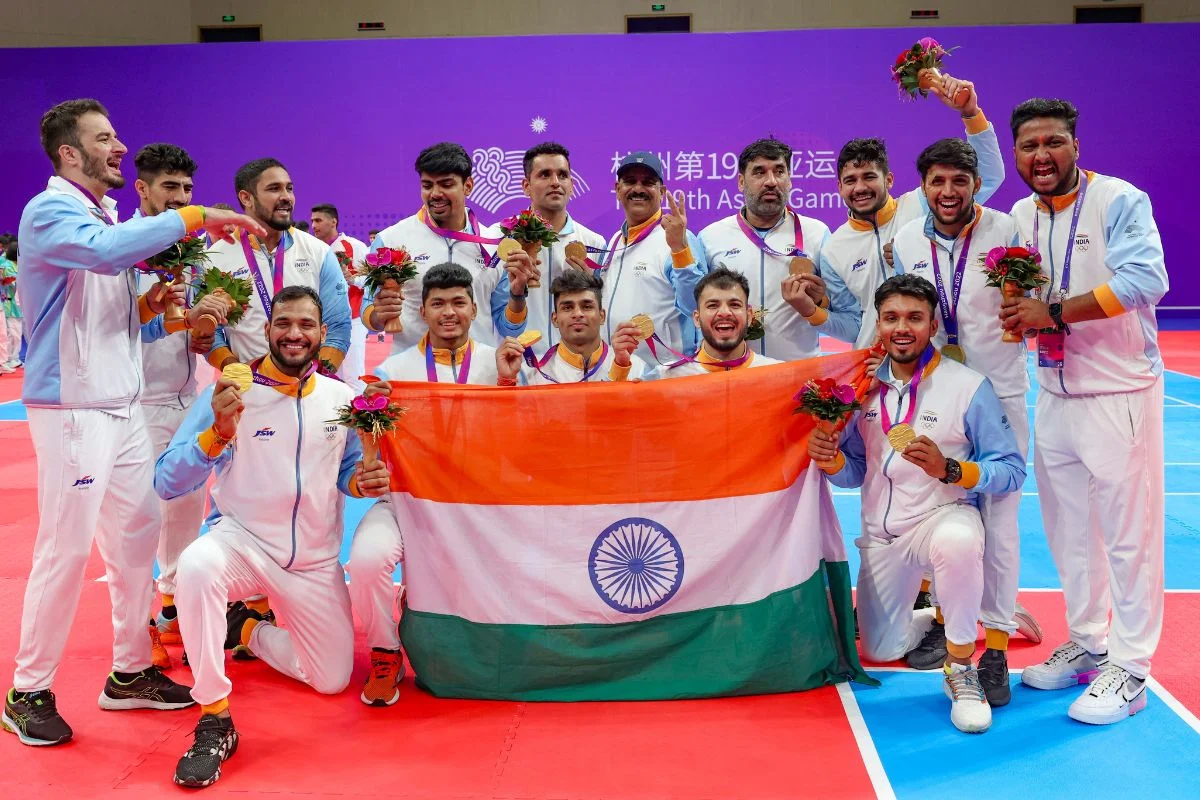
Then came the kabaddi double — both the men’s and women’s teams taking gold. In the sport India gave to the world, India still wins, and the double was the loudest statement of the Games that the fortresses still stand. The Pro Kabaddi League turned a rural pastime into prime-time television; Aichi-Nagoya turned that investment into gold, twice over.
Neeru Dhanda’s Record Gold
The latest entry came on September 29, when Neeru Dhanda’s record-breaking trap gold made it five. It was India’s first individual gold of the Games — the first time in Aichi-Nagoya that a single Indian athlete, standing alone, climbed to the top step — and she broke the record along the way. Five golds, three fortresses. Everywhere else, silence.
The Silver Mountain Behind the Asian Games 2026 Medal Tally
The silvers deserve their due, because they represent something real. Scroll past the top line of the Asian Games 2026 medal tally and the silver column is a roll call of fine achievements — each one the product of years of work. Together, though, they form a pattern that is hard to ignore: the silver surplus, final after final reached and lost.
Silver by Silver: The Faces of the Surplus
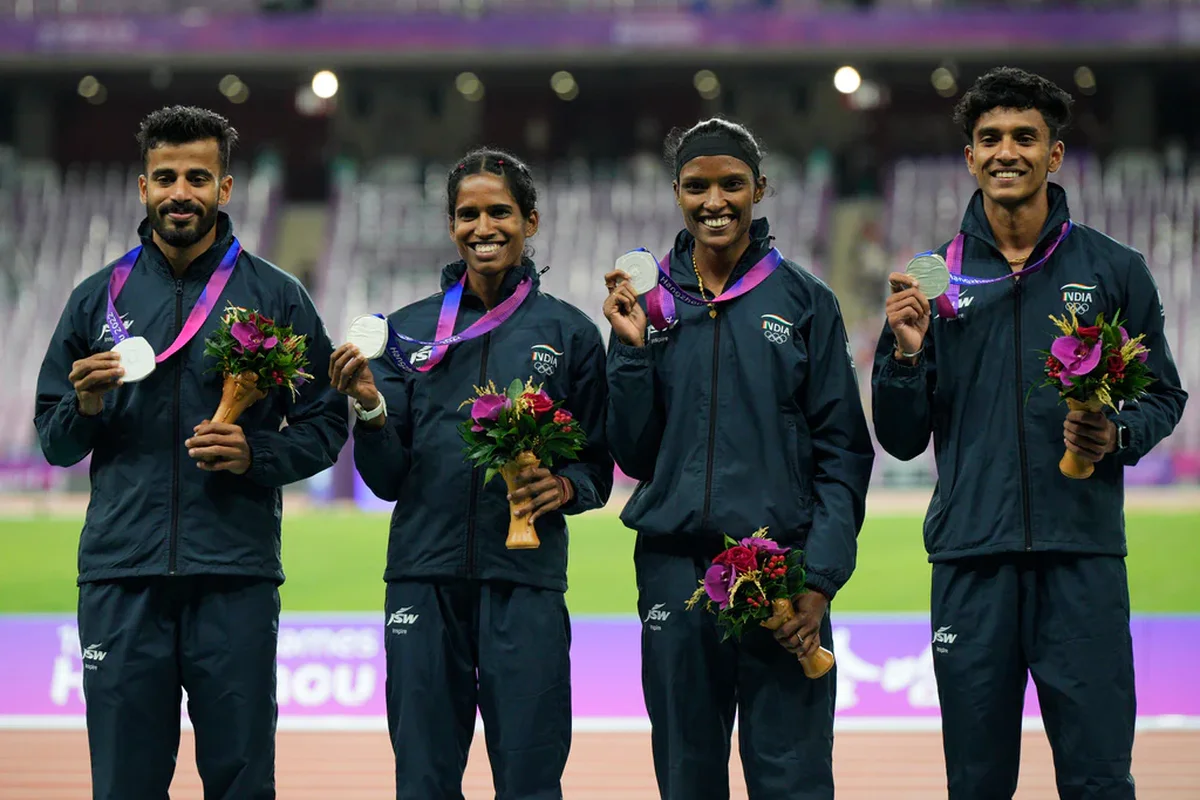
Esha Singh took silver in the 25m air pistol in a final that could have gone either way. Sreeshankar’s comeback silver in the long jump was one of the emotional high points of the athletics programme — a jumper returning from adversity to stand on a Games podium. Yashvir Singh and Rohit Yadav produced a javelin double-silver day that announced India as a genuine throwing nation.
Gulveer Singh added silver in the 1500m, running bravely against deeper fields. The women’s trap team stood on the podium behind Dhanda’s individual heroics. None of these results should be diminished; each is a fine achievement in isolation. But the silver surplus is not about any single defeat. It is about the accumulation — the growing sense that India have forgotten how to win the last round.
Breadth Without Medal Conversion
The breadth is genuinely impressive. India are competitive across 36 sports now — Pincky Balhara’s kurash bronze, Narender Berwal’s boxing bronze, medals in squash, archers advancing deep into the knockout rounds. These are disciplines that barely registered a decade ago, and the pipeline across athletics, shooting, boxing, wrestling and the racquet sports is healthier than it has ever been.
But breadth without medal conversion is a story of almost. A decade ago, India hoped for medals at the Asian Games. Now India expects them — and is disappointed by their colour. That shift in expectation is itself a measure of how far Indian sport has come. The next shift, from expecting medals to expecting golds, is the one this contingent has not yet made — and the Asian Games 2026 medal tally will not credit them for trying.
The Psychology of Second Place
There is a particular cruelty to losing finals repeatedly. Each silver is celebrated, rightly, and each celebration quietly normalises second place. Coaches talk about the difference between athletes who have won finals and athletes who have only reached them: the former know the feeling of the last five minutes; the latter are still guessing. India’s contingent is full of athletes learning what the last 10 per cent feels like in real time.
The generous view calls this tuition — today’s silver medallists are tomorrow’s champions, and losing finals is paradoxically what teaches athletes to win them. Perhaps. But tuition has a cost, and the Asian Games 2026 medal tally is currently invoicing it in gold.
The Conversion Question the Asian Games 2026 Medal Tally Asks
Two readings of the silver surplus are available, and both contain truth. Which one history keeps will be decided in the final five days.
The Generous Reading: Depth
Depth is how sporting nations are built. No country wakes up with champions; it builds pipelines, and pipelines produce podiums long before they produce golds. India’s medal conversion rate may be poor, but the raw material is undeniable — finalists across shooting, athletics, boxing, wrestling, archery and squash. The system is producing contenders at a rate it never has before.
In this reading, Aichi-Nagoya is a staging post. The medals are the leading indicator; the golds are a lagging one. Keep the funding flowing, keep the exposure coming, and the colour split corrects itself. It is a comforting theory — and it has the virtue of being how nearly every sporting power actually developed.
The Harsh Reading: A Finishing Problem
The harsh reading is harder to dismiss. Too many finals, too few won. At some point the gap between reaching the last round and winning it stops being luck and starts being temperament, preparation, or the absence of a killer instinct that dominant nations cultivate as a matter of policy.
Medal conversion is not an accident. The nations above India on the Asian Games 2026 medal tally do not just produce more finalists — they produce athletes who expect to win finals and have been trained since their teens to close them out. India have built the first half of that machine: scouting, funding, exposure, science. The second half — the psychology of winning — is still under construction.
Why the Next Five Days Decide
Both readings can be true at once, which is what makes the run-in so compelling. If India start converting — if the cricketers, boxers, archers and athletes turn finals into golds — the generous reading wins, and these Games become the making of a generation. If the silvers keep coming, the harsh reading hardens into the official history. The Asian Games 2026 medal tally does not do nuance. It does golds.
The Fortress Strategy Behind the Asian Games 2026 Medal Tally
If there is a lesson in where the golds came from, it is this: India wins where it has built genuine ecosystems. Look closely at the gold column of the Asian Games 2026 medal tally and none of the five are accidents. Each is the output of a system that knows how to produce champions rather than merely hopefuls.
What the Fortresses Have in Common
Cricket has the IPL and a ruthless domestic structure that turns talent into winners as a matter of routine. Shooting has academies, private investment, and a federation that learned hard lessons from Olympic heartbreaks. Kabaddi has the Pro Kabaddi League, which turned a rural pastime into prime-time television and, eventually, an Asian Games fortress.
The common thread is professionalism: leagues, money, depth, and a culture in which winning is the expectation rather than the surprise. Athletes from these systems do not arrive at finals hoping; they arrive expecting. That is not arrogance. It is what a decade of winning does to a sporting culture.
The Gap in the Middle
The silvers come from sports where the ecosystem is thinner — where athletes reach finals on talent and hard work, then meet opponents from systems that have been winning finals for decades. An Indian boxer or archer who fights through to a gold-medal bout has often overachieved just by getting there. Their opponent was raised in a system where anything less than gold is failure.
Closing that gap is not about trying harder. It is about building the same professional depth in athletics, boxing, wrestling and archery that cricket and kabaddi already enjoy. The talent is clearly there. The infrastructure is catching up. The golds will follow — but only if the investment does.
The Blueprint Is Already Written
Here is the optimistic coda the Asian Games 2026 medal tally cannot show: India already know how to do this. They did it in cricket, in shooting, in kabaddi. The blueprint exists, written in domestic leagues, academies, and federations that learned from failure. The task now is replication — taking what worked in three sports and building it in ten more.
That is a decade’s work, not a week’s. But it starts with admitting the problem, and 47 medals with five golds is an admission stated in numbers. The silver surplus is not a verdict on Indian athletes. It is an invoice for the ecosystems still to be built.

Five Days Left: What the Asian Games 2026 Medal Tally Still Needs
The mathematics of the run-in are simple. With the closing ceremony on October 4, India are out of time for a slow build. Every final from here is a medal conversion opportunity, and the contingent needs to start winning them. The full session schedule is published by the Olympic Council of Asia, and India’s remaining chances are scattered across the final five days.
Cricket’s Gold-or-Bust Swing
The biggest swing is the men’s cricket semifinal on October 1 — the India vs Sri Lanka semifinal that could complete a historic double. One win guarantees a medal; two wins match the women’s triumph under Harmanpreet Kaur — and deliver the statement gold this Asian Games 2026 medal tally needs most.
The semifinal line-up is confirmed: India vs Sri Lanka and Pakistan vs Bangladesh on October 1, with the medal matches on October 3. It is gold or bust, and the whole contingent knows it. After a tournament of near-misses, cricket offers the cleanest path to the top step.
Boxing, Archery, Squash and Athletics
Beyond cricket, the chances are scattered but real. The boxing medal bouts feature Parveen, Ankush Panghal and Narender — fighters guaranteed at least bronzes, with silvers on the line and golds within reach. The archery knockouts have already shown Indians advancing deep; now they must go one step further than the silver specialists before them.
Squash holds chances, and the closing rounds of athletics offer last opportunities on the track and in the field. The trap and shooting ranges have already shown the way — Dhanda’s record gold is the template. Win a fair share of these finals, and the narrative flips from silver surplus to golden finish on the Asian Games 2026 medal tally. Lose them, and Aichi-Nagoya goes down as the nearly Games.
The Two Endings
Consider the two endings. In one, India convert — three, four, five more golds in five days — and the story of these Games becomes the great fightback, the week the contingent learned to win. The silver surplus becomes the foundation myth of the next golden generation.
In the other, the silvers keep coming, the gold column stalls at five, and the Asian Games 2026 medal tally records the most bittersweet campaign in recent memory: proof that India can medal everywhere, and a warning that medalling everywhere is not the same as winning. Either way, this contingent has already changed something — a decade ago India hoped for medals; now it expects them, and is disappointed by their colour.
Conclusion: What the Asian Games 2026 Medal Tally Will Mean
When the Games close on October 4, the Asian Games 2026 medal tally will show one of India’s biggest-ever hauls next to a standings position that feels like an underachievement. Both numbers will be true. India proved in Aichi-Nagoya that it can medal everywhere — across 36 sports, through a 503-strong contingent, in disciplines old and new.
Whether these Games are remembered as the moment India learned to win is still, just about, an open question. The answer will be written in the next five days — not in the Asian Games 2026 medal tally’s total column, but in its first one. That is where legacies are decided. That is where this team’s real test lies.
The shift from hoping for medals to expecting them took a decade. The next shift — from expecting medals to expecting golds — is the one these final five days can deliver. Whatever the Asian Games 2026 medal tally finally says, Indian sport will not look at silver the same way again.
Why this story matters: 47 medals and 11th place is the defining contradiction of India’s campaign — depth without dominance. The last days of the Games are about one thing: turning silver into gold.