
Table of Contents
- A Night That Redefined Indian Athletics
- Setting the Stage for the Athletics Asian Games 2026 in Aichi
- The Jump That Meant More: Sreeshankar's Comeback Silver
- Two Spears, One Podium: The Javelin One-Two at the Athletics Asian Games 2026
- The Engine Room: Gulveer Singh's 1500m Silver at the Athletics Asian Games 2026
- Six Medals, Four Disciplines: The Full Haul
- A Golden Day Across Indian Sport
- What Silver Teaches
- The Bigger Picture of the Athletics Asian Games 2026: Depth, Not Outliers
- Conclusion: The Colour Will Follow
A Night That Redefined Indian Athletics
Why This Night Mattered
A single night of track and field in Aichi delivered one of the most productive days Indian athletics has ever enjoyed at the continental level. Six medals across four disciplines. A comeback silver that moved an entire contingent. A javelin one-two that announced a new order. And a distance man who simply refuses to leave a podium. The athletics Asian Games 2026 programme turned one evening at the Aichi stadium into a showcase of everything India’s athletics project has become: deep, resilient, and arriving in numbers.
This was not the story of one hero. It was the story of a system — the long jumper fighting back from injury, two young throwers sharing a podium, the distance runner collecting his second silver of the Games, and two women adding bronzes. Together, their performances made India’s athletics Asian Games 2026 campaign one of the most rewarding chapters of the entire Games.
What This Article Covers
Here is how the night unfolded at the athletics Asian Games 2026, what each medal means, and why this six-medal track day in Aichi might matter far more than the colour of the medals suggests.
Setting the Stage for the Athletics Asian Games 2026 in Aichi
The athletics Asian Games 2026 programme was always going to be a measure of where India stands against the continent’s giants. Asian athletics is dominated by nations with deep, state-backed systems — China, Japan, and Bahrain’s imported talent pool. For India, every final in Aichi was a test: could the country’s athletes convert promise into podiums at the athletics Asian Games 2026?
Why Aichi Was the Perfect Crucible
The answer, delivered over one extraordinary evening, was an emphatic yes. The Aichi stadium hosted finals across jumps, throws, distance events, and hurdles — and India found a way onto the podium in every one of them. Six medals across four disciplines is the kind of spread that federation planners dream about — and at the athletics Asian Games 2026, it arrived all at once.
The Context That Made It Hard
Consider the competition. China’s jumpers and throwers arrive with world-class marks. Japan’s middle-distance programme is among the finest in Asia. Bahrain and others field naturalised Kenyan-born runners who dominate the distance track. For an Indian athlete to take medals against those fields, across such different events, is a sign that the federation’s long-term investments are maturing. The athletics Asian Games 2026 story is, at its heart, the story of those investments paying off.
The Jump That Meant More: Sreeshankar’s Comeback Silver
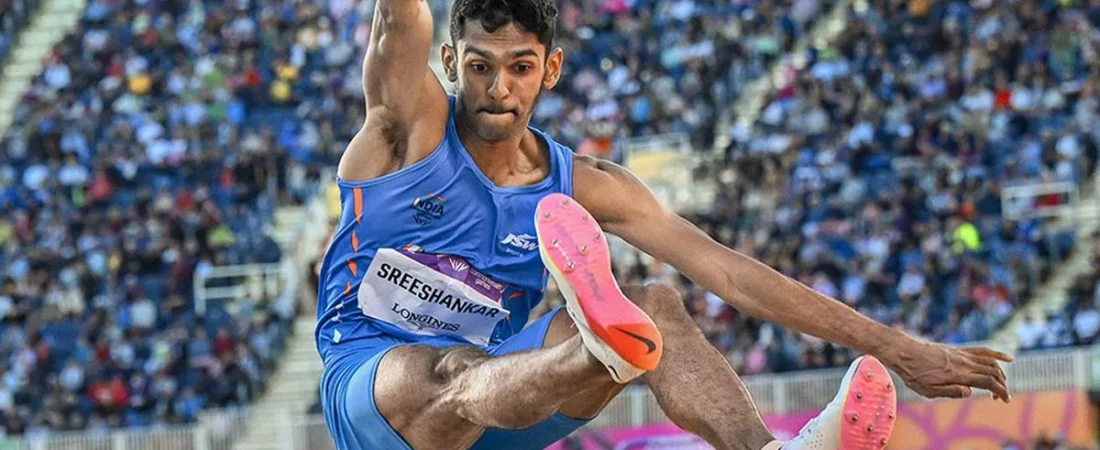
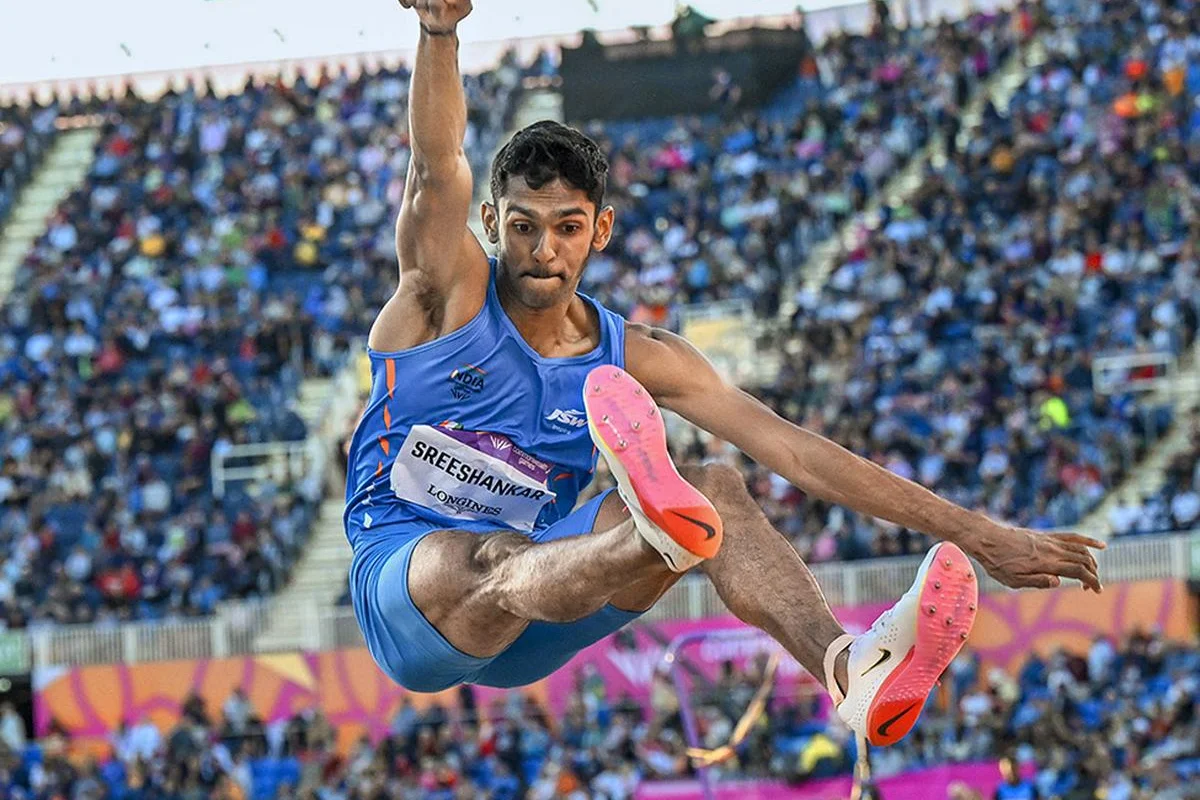
Murali Sreeshankar’s silver in the men’s long jump, 8.07m behind China’s Yuhao Shi (8.17m), will not go down as the longest leap of his career. It may go down as the most important. The Sreeshankar long jump story at the athletics Asian Games 2026 was never really about the distance — it was about the distance travelled to get back to the runway at all.
The Long Road Back from Injury
The Kerala athlete has spent the recent past battling injury setbacks, and his return to a major podium — at an Asian Games — was the emotional high point of India’s athletics campaign. Comeback medals hit differently. They are not measured in metres; they are measured in the mornings when the body said no and the mind had to insist.
Every athlete who has rehabbed through the lonely months knows that the real competition was never the final. It was the quiet, unseen work of getting the body to trust itself again. Sreeshankar’s journey back to elite long jumping demanded patience, precision, and the kind of stubborn belief that cannot be coached. His silver at the athletics Asian Games 2026 was the public proof of a private victory.
8.07m on the Night
On the evening itself at the athletics Asian Games 2026, the Sreeshankar long jump final unfolded as a duel with China’s Yuhao Shi, who sealed gold at 8.17m. Sreeshankar’s best of 8.07m was enough to hold off the rest of a world-class field and secure silver for India. In a discipline decided by centimetres, ten of them separated gold from silver — a margin that sounds wide until you consider the quality of the field behind him.
What mattered more than the number was the manner of it. This was a competitor performing with freedom, not fear.
What the Silver Signals at the Athletics Asian Games 2026
The significance of this medal extends beyond one evening in Aichi. Sreeshankar represents the established class of Indian athletics — the proven talent fighting back from adversity. His podium return sends a message to every injured athlete in the country: the way back exists, and it leads somewhere.
Moreover, it gave India’s contingent one of its most genuinely moving moments of the athletics Asian Games 2026. Medals are won every day at the Asian Games, but few carry the weight of a comeback completed. When the trajectory of Indian athletics at these Games is written, the Sreeshankar long jump silver will be remembered as the night the old star proved he was still shining.
Two Spears, One Podium: The Javelin One-Two at the Athletics Asian Games 2026
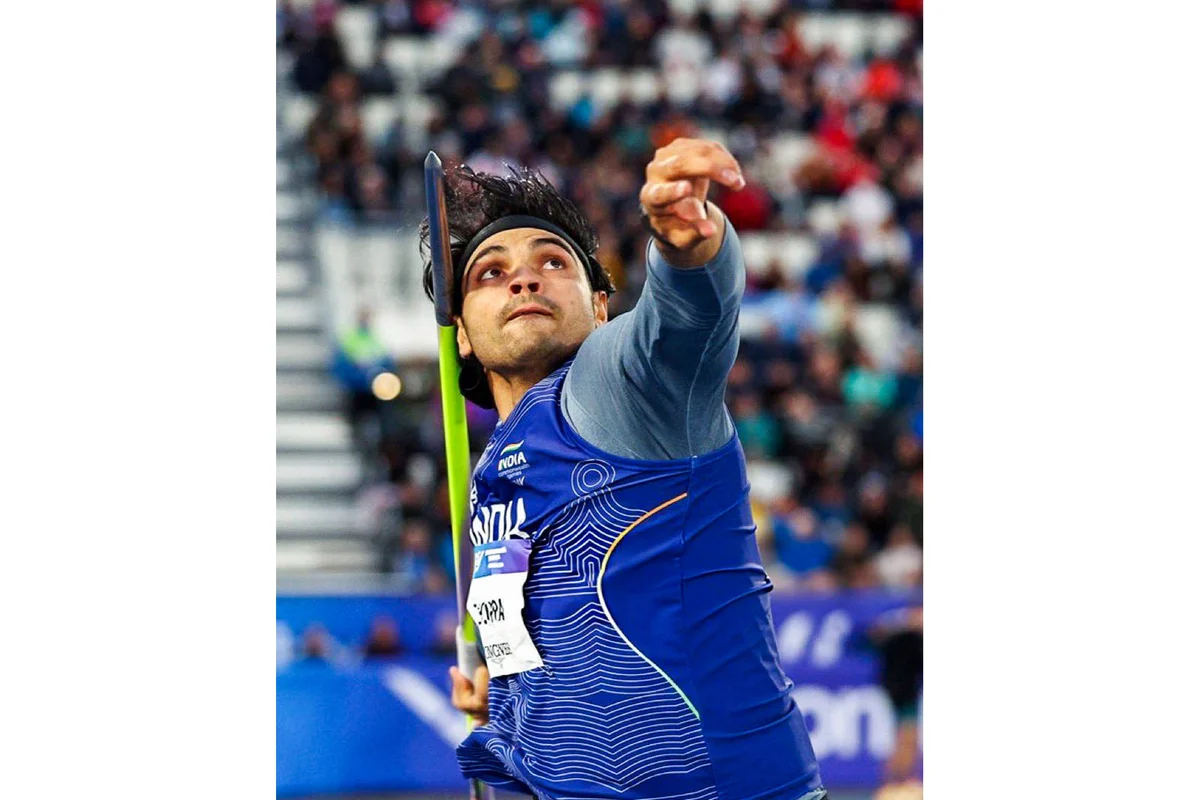
If Sreeshankar’s silver was about redemption, the men’s javelin was about arrival. Yashvir Singh threw a personal best of 85.72m to take silver, and Rohit Yadav threw 84.35m for bronze — an Indian one-two on the podium in an event the country has come to expect medals from. The javelin one-two in Aichi was not just a result at the athletics Asian Games 2026; it was a declaration.
Yashvir Singh’s 85.72m Personal Best
There are personal bests, and then there are personal bests delivered on the biggest night of your life. Yashvir Singh’s 85.72m belonged firmly in the second category. The throw that secured his silver at the athletics Asian Games 2026 was the kind that announces a new name to the continent — a distance that would contend in most finals anywhere in the world.
For a young thrower, producing a lifetime best under the pressure of an Asian Games final is the truest test of temperament. Yashvir passed it with room to spare.
Rohit Yadav’s 84.35m Bronze
Rohit Yadav’s bronze deserves its own spotlight. His 84.35m would win most Asian finals outright; on this night in Aichi, it was good for bronze — which says everything about the standard India are now setting for themselves. To throw beyond 84 metres and finish third is the hallmark of a programme operating at genuine world depth.
The two medals together transformed the narrative of the athletics Asian Games 2026 for India. When one athlete medals, it is a triumph. When two do, it is a message — to the rest of Asia, and to the next generation back home, that the pathway is real and repeatable.
From One-Man Show to Production Line
India’s javelin pipeline is now officially a production line rather than a one-man show. Javelin in India was, for decades, an afterthought — an event the country watched from a distance. The transformation into a medal factory did not happen by accident. It happened because success bred infrastructure: better coaching, better facilities, better competition at home. Yashvir and Rohit are the dividend of that investment — and the future of Indian javelin at the athletics Asian Games 2026 and beyond.
Somewhere in India right now, a teenager is watching Yashvir’s 85.72m and believing it could be them. That is how sporting cultures are built: not by lone heroes, but by clusters. The javelin one-two at the athletics Asian Games 2026 will be remembered as the night India’s throwing depth became impossible to ignore.
The Engine Room: Gulveer Singh’s 1500m Silver at the Athletics Asian Games 2026
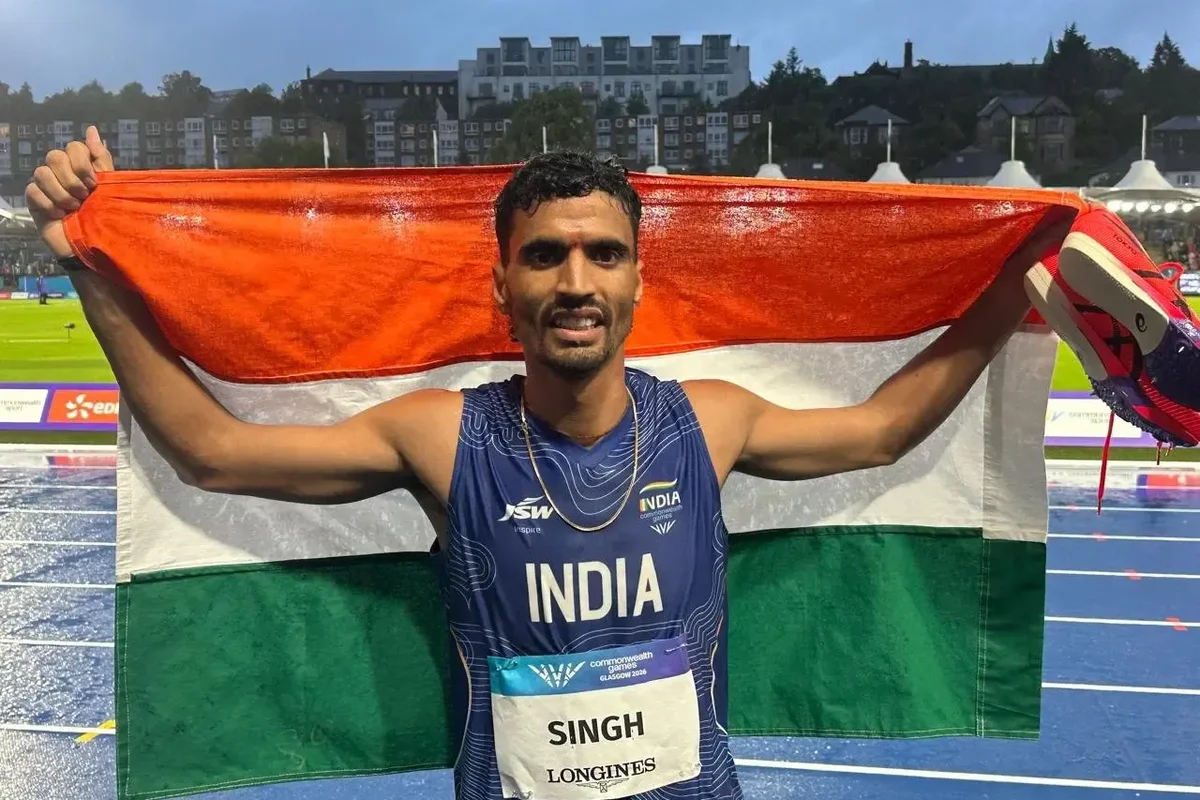
And then there is Gulveer Singh, whose silver in the 1500m — his second silver of the Games after the 10,000m, run in a personal best of 3:36.72 — added to India’s distance-running returns. The Gulveer Singh 1500m silver was the engine-room medal of the night at the athletics Asian Games 2026: less glamorous than the jumps and throws, harder to win than almost anything else on the programme.
From 10,000m to the Metric Mile
Doubling across the 10,000m and 1500m is a rare and punishing assignment. The two events demand entirely different engines — one built for sustained grinding, the other for searing, tactical speed. For Gulveer to medal in both at the same athletics Asian Games 2026 speaks to an extraordinary range and an even more extraordinary competitive temperament.
His 10,000m silver had already marked him as a distance find of the Games. To return days later and go faster than he ever had over 1500m, in a championship final, elevated his campaign from excellent to exceptional.
3:36.72 Against the Continent’s Best
Middle-distance medals are among the hardest to win in Asian athletics — the East Africans of the continent, quite literally, with Bahrain and others fielding naturalised Kenyan-born runners who dominate the track. For an Indian athlete to take silver in the 1500m, in a personal best of 3:36.72, is a genuine achievement against the toughest fields in the sport at the athletics Asian Games 2026.
Championship 1500m races are won in the last 200 metres and lost in the years of training nobody sees. Gulveer’s kick, his positioning, and his nerve under pressure all belonged to a runner operating at the peak of his powers.
Why Distance Medals Mean More
Distance running is the grinding, unglamorous heart of athletics. There is only the work, repeated daily for years, and then one evening when it all has to come together. Gulveer’s two silvers are the reward for exactly that kind of patience, and they give Indian distance running its most visible standard-bearer in years at the athletics Asian Games 2026.
Six Medals, Four Disciplines: The Full Haul
Beyond the four medals above, the night had more to give. Parul Chaudhary took bronze in the women’s 5000m in 15:14.61, adding to her steeplechase bronze from earlier in the Games. Vithya Ramraj claimed bronze in the women’s 400m hurdles with a personal best of 54.75. Together with the long jump silver, the javelin silver and bronze, and the 1500m silver, athletics delivered six medals across four disciplines at the athletics Asian Games 2026 — jumps, throws, distance, and hurdles.
Parul Chaudhary and Vithya Ramraj Complete the Day
Parul’s 5000m bronze, following her steeplechase medal, confirmed her as one of the most reliable championship performers in the Indian squad at the athletics Asian Games 2026. Doubling medals across two gruelling distance events at a single Asian Games is the mark of a world-class competitor. Vithya’s hurdles bronze, meanwhile, arrived with a personal best of 54.75 — the perfect combination of medal and milestone.
Their contributions underscore the night’s central theme: no single event carried the flag alone.
Where Athletics Sits in India’s Medal Tally
Put together, and athletics once again did what it has done all Games at the athletics Asian Games 2026: kept the medal tally ticking while the golds stayed scarce. For the full picture of how these six medals fit into the national campaign, see India’s Asian Games 2026 medal tally — athletics remains the single biggest contributor to India’s podium count, and this night in Aichi was the clearest demonstration of why.
That is both the strength and the story of this contingent. India’s athletes are reaching finals and podiums across disciplines. The next step — turning those silvers into golds — is the difference between a good Asian Games and a great one. But there is no shame in the foundation being built here. Depth is what sustains a sporting nation between the headline triumphs, and India’s athletics depth is now undeniable.
A Golden Day Across Indian Sport
Medals Beyond the Track
The athletics heroics in Aichi were part of a broader golden day for Indian sport at these Games. While the track delivered six medals, the shooting ranges produced their own history — including Neeru Dhanda’s record gold in trap shooting, one of the standout performances of India’s entire campaign. For authoritative context on the sport’s global standards and championship records, see World Athletics and the Olympics.com athletics coverage.
Days like this reveal the breadth of India’s sporting project at the athletics Asian Games 2026. Medals were coming from the range, the track, and the field — proof that the country’s investment in elite sport is paying off across disciplines, not just in one or two strongholds. The athletics Asian Games 2026 campaign did not happen in isolation; it was the loudest voice in a national chorus.
What Silver Teaches
There is a temptation to treat silver as failure, especially in a campaign as silver-heavy as India’s. That would be a mistake. Silver medals are not consolation prizes at the Asian Games — they are earned against the best in the continent at the athletics Asian Games 2026, often by margins of centimetres or fractions of a second. Sreeshankar’s 8.07m, Yashvir’s personal best, Rohit’s 84.35m, the Gulveer Singh 1500m silver: every one of these performances would have been celebrated as a triumph in any other context.
The Habit of the Podium
The real question is what the athletes do next. History suggests that silver medallists who keep showing up become gold medallists — the podium is a habit, and winning is a skill learned in finals. India’s athletics contingent has now learned how to reach finals in numbers at the athletics Asian Games 2026. The next lesson, winning them, is the hardest one in sport. But it is a lesson you can only learn by being there, and India are there, again and again.
Margins, Not Chasms
Consider how close these contests were. Ten centimetres separated Sreeshankar from gold. Personal bests were falling across the board. These are margins, not chasms — the difference between silver and gold at this level is often a single perfectly timed effort on the right night. The athletics Asian Games 2026 results show India consistently within touching distance of the top step.
The Bigger Picture of the Athletics Asian Games 2026: Depth, Not Outliers
There is also a generational story here. Sreeshankar represents the established class fighting back from adversity; Yashvir and Rohit represent the new wave arriving all at once; Gulveer represents the grinding, unglamorous excellence of distance running; Parul and Vithya represent the women’s contingent matching the men stride for stride. Between them, they cover the full arc of an athlete’s journey — and they all ended up on the same podium day at the athletics Asian Games 2026.
A System Coming of Age
Zoom out, and this was one of the most productive single days Indian athletics has had at an Asian Games in years. The broader context matters too. For India to consistently take medals across sprints, jumps, throws, and distance events is a sign that the federation’s long-term investments are maturing. The medals may be silver today, but the trajectory is unmistakable: India belongs in every final it reaches, and sooner or later the colour will follow the consistency.
Conclusion: The Colour Will Follow
The Takeaway
Sreeshankar’s comeback, the javelin double, Gulveer’s distance medal: three different events, three different stories, one message. Indian athletics isn’t waiting for its next star. It’s already here, in numbers.
What Comes Next
The athletics Asian Games 2026 campaign in Aichi will be remembered as the night depth became the headline. Six medals, four disciplines, personal bests falling, comebacks completed, and new names announced to the continent. The golds stayed scarce — but foundations were poured that will support Indian athletics for a decade.
The medals are coming. The colour is the next frontier. And on the evidence of one extraordinary night in Aichi at the athletics Asian Games 2026, it will not stay silver for long.
Why this story matters: Sreeshankar’s comeback silver, a javelin double, and Gulveer’s 1500m medal show India’s athletics depth is real. The medals are coming; the colour is the next frontier.