
Table of Contents
- The Final Day in Samarkand
- India Open Team: How Silver Was Won
- Women’s Bronze at the Chess Olympiad 2026
- Nona Gaprindashvili Cup: India’s Combined Supremacy
- The New World Order in Chess
- India’s Wider 2026 Sporting Campaign
- India’s Multi-Sport Success Story
- What India Must Fix Before the Next Chess Olympiad
- Conclusion: The Road Beyond Samarkand
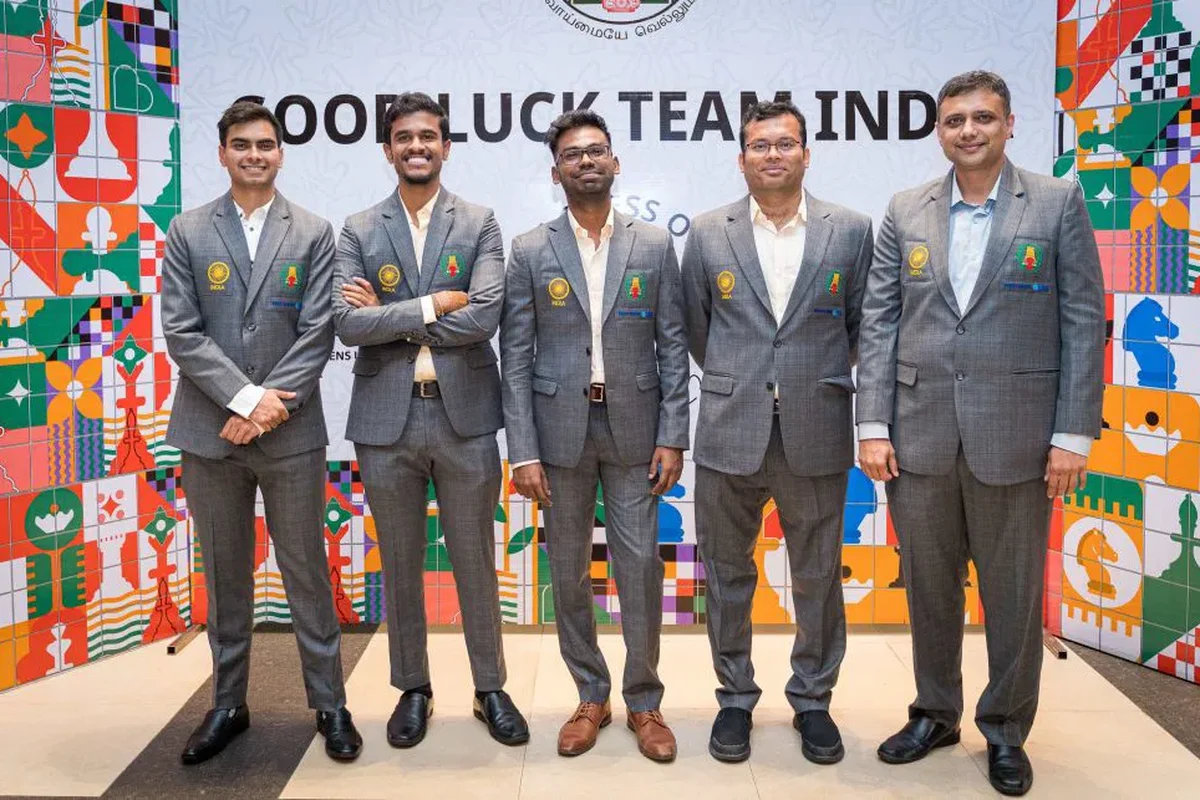
India signed off from the Chess Olympiad 2026 in Samarkand on September 27 with two medals — silver in the Open section and bronze in the women’s event — and two very different emotions attached to them. The Chess Olympiad 2026, the 46th edition of the sport’s great biennial team championship, ended with Uzbekistan’s men and China’s women lifting gold, while India claimed the two remaining podium places that mattered most. For a nation that arrived in Uzbekistan as defending champions in both sections after the historic double gold at Budapest 2024, silver and bronze might have felt like a step back. In truth, the double podium at the Chess Olympiad 2026 confirmed something far more durable: India are now permanent residents of world chess‘s top table. Both Indian teams drew their final-round matches. Neither draw felt like a triumph. But the retained Nona Gaprindashvili Cup for the best combined performance tells the deeper story. The question is no longer whether India belong among the elite. It is why, twice in two Olympiads, the top step stayed just out of reach — and what must change before the next edition.
The Final Day in Samarkand
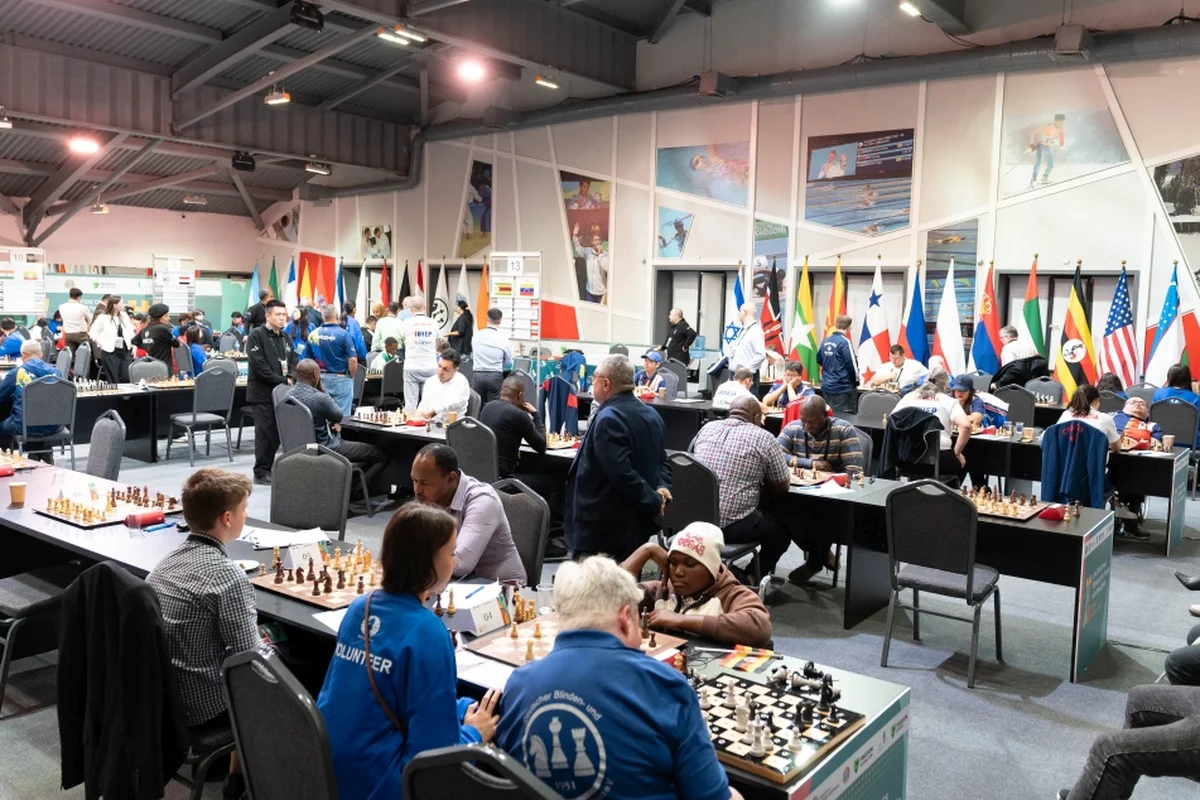
The last round of the Chess Olympiad 2026 had everything a team championship demands: tension, heartbreak, and margins measured in tiebreak decimals.
Uzbekistan Seal Open Gold on Home Soil
The Open section went into round 11 with Uzbekistan in control of their own destiny, and the hosts finished the job in style. Uzbekistan beat Ukraine 2.5-1.5 in the final round, with Mukhiddin Madaminov’s win over Roman Dehtiarov proving decisive, and took gold with 20 match points — their second Olympiad title. Winning a Chess Olympiad 2026 crown in front of a home crowd in Samarkand is a feat that will live long in Uzbek chess history. It was the culmination of a systematic programme that has turned the Central Asian nation into one of the world’s great chess powers in less than a decade.
India’s Double Podium
While Uzbekistan celebrated, India were fighting for scraps of hope on the adjacent boards. The India Open team needed to beat Hungary and hope for a slip that never came. They could do neither half of the equation: the match ended 2-2, and Uzbekistan won the Chess Olympiad 2026 Open title anyway. In the women’s section, India drew 2-2 with Georgia — a result that, combined with results elsewhere, secured the bronze medal on tiebreaks. Thus the Chess Olympiad 2026 ended for India exactly as it had been building toward all week: two podiums, two near-misses, and a haul that any nation except the defending double champions would call a dream tournament.
Two Medals, Two Moods
Silver in the Open and bronze in the women’s section — that was India’s final account at the Chess Olympiad 2026. The men finished second behind a rampant Uzbekistan; the women finished third behind a dominant China. Both teams drew their final-round matches, and neither draw felt like a triumph in the moment. Yet step back from the immediate disappointment, and the picture brightens considerably. A nation that medals in both sections of the world’s toughest team event, while retaining the Nona Gaprindashvili Cup, has not failed. It has merely discovered where the next frontier lies.
India Open Team: How Silver Was Won
The silver medal of the India Open team at the Chess Olympiad 2026 was decided by the finest of margins — and by one rescue act of the highest quality.
Gukesh’s Defeat Against Hungary
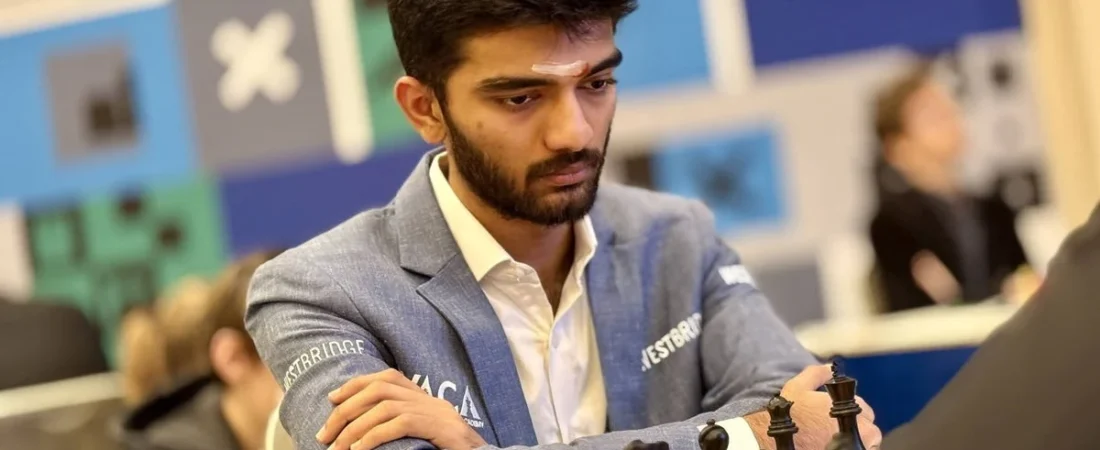
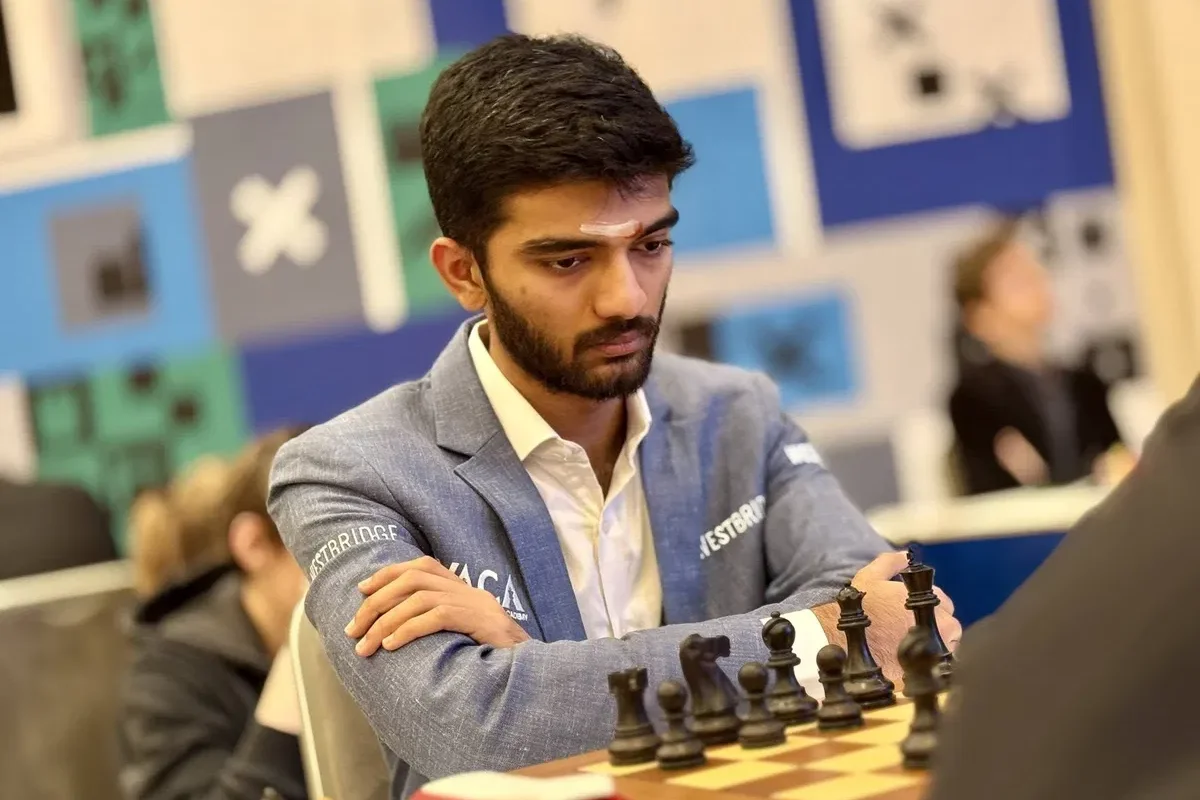
The draw against Hungary told the whole story of India’s tournament in miniature. World champion D Gukesh, the spearhead of the India Open team, lost to Gleb Dudin — a defeat that will sting precisely because Gukesh so rarely loses with the weight of a team on his shoulders. The world champion losing the decisive game of a Chess Olympiad 2026 final round is the kind of moment that gets remembered, and sometimes misremembered. The temptation will be to read it as a crack in the armour. The reality is more mundane and more interesting: even world champions are human in team events, where the pressure is different from individual tournaments. You are not just playing your board; you are playing everyone else’s nerves too. Gukesh’s loss in Samarkand will dominate the inquest, but it should not define it.
Erigaisi’s Rescue Act
What matters is how India responded. Arjun Erigaisi’s win over Peter Leko salvaged the match points and, crucially, the tiebreaks: India finished level with Germany on 18 match points but took silver ahead of them after Germany beat the Netherlands 2.5-1.5. Erigaisi’s victory over Leko — a veteran of the highest calibre — was exactly the kind of senior-pro performance the team needed. It is why India are bringing home silver from the Chess Olympiad 2026 rather than finishing fourth. A team that can lose its top board and still medal is a deep team. That depth is the real story of the India Open team’s campaign, even if the final round left a what-if hanging over it.
Tiebreaks Decide the Podium
Silver by the finest of margins, gold two points away. That is the distance the India Open team must now close. Finishing level with Germany on 18 match points and edging ahead on tiebreaks after Germany’s win over the Netherlands shows how little separated second from fourth at the Chess Olympiad 2026. In the modern Olympiad, where nearly every top team is stacked with 2700-rated talent, tiebreaks have become the silent arbiters of glory. India’s superior tiebreaks in Samarkand were earned across eleven rounds, not gifted in the last one.
Women’s Bronze at the Chess Olympiad 2026
If the men’s silver was decided by tiebreaks, the women’s bronze at the Chess Olympiad 2026 was decided by pure nerve.
Savitha Shri’s Great Escape
India drew 2-2 with Georgia in the final round, and the result that mattered most was not a win at all — it was Savitha Shri holding Meri Arabidze to a draw from a difficult position. In Olympiad chess, the draws you grind out from worse positions are worth as much as the wins; this one was worth a medal at the Chess Olympiad 2026. India finished on 17 match points, edging the United States, Poland, Armenia and Mongolia on tiebreaks to take third. The women’s team showed, round after round in Samarkand, the grit that has become their trademark.
China’s Seventh Women’s Crown
Above them, the women’s event told a familiar story of Chinese dominance. China beat Vietnam 3-1 in the final round of the Chess Olympiad 2026 to finish on 20 points — two clear — and claim their seventh women’s Olympiad title. Kazakhstan took silver on 18 after drawing 2-2 with Poland. For India, bronze behind those two is no disgrace; it is confirmation that the women’s team, like the men’s, now expects to medal at every global team event. That expectation itself is new, and it is worth more than it sounds.
Bronze Won in the Margins
For the women, the gap to gold is slightly larger — three points behind China — and the task is clearer: convert more of those hard-fought draws into wins. Savitha Shri’s great escape saved bronze in Samarkand; the next step is not needing great escapes. The Chess Olympiad 2026 women’s section demonstrated that India belong in every medal conversation. Turning that belonging into gold will require turning half-points into full ones.
Nona Gaprindashvili Cup: India’s Combined Supremacy
Beyond the two medals, India retained the Nona Gaprindashvili Cup at the Chess Olympiad 2026 — the trophy awarded for the best combined performance across the Open and women’s sections. This is the prize that measures a federation’s overall strength, and India keeping it in Samarkand is arguably the most significant statement of the entire fortnight. No other nation matched India’s consistency across both events at the Chess Olympiad 2026. Uzbekistan won the Open but could not match India’s combined total; China won the women’s but fell short in the Open. The Nona Gaprindashvili Cup says that India, uniquely, fields two world-class teams at once. That is the mark of a true chess superpower, and Samarkand proved it beyond doubt.
The New World Order in Chess
Look at the two podiums of the Chess Olympiad 2026 together and a pattern emerges that will shape the sport for years.
Uzbekistan’s Blueprint Works
The Open gold went to Uzbekistan — the second Olympiad title for a nation that has built, in less than a decade, one of the world’s great chess programmes. Their triumph at the Chess Olympiad 2026 is the clearest proof that systematic investment — academies, state backing, a generation of prodigies maturing together — beats tradition. India know this better than anyone, because India’s own rise followed the same blueprint. The lesson of Samarkand is that the blueprint now has competition, and it is fierce.
A Multipolar Chess Map
This is the new map of world chess: deep, multipolar, and unforgiving. The era when one or two nations hoarded the medals is over. Uzbekistan’s rise, China’s women’s dynasty, India’s double podium, Germany’s Open medal and Kazakhstan’s women’s silver at the Chess Olympiad 2026 — all of it points to a sport where six or seven nations can realistically dream of gold. In such a field, every half-point matters, every final round is a knife fight, and the margins between glory and regret shrink to tiebreak decimals.
What the Podiums Mean
The Chess Olympiad 2026 confirmed that dominance is now distributed. Uzbekistan own the Open crown, China own the women’s, and India own the best combined record. No single nation rules both sections anymore. For fans, that is thrilling: the next Olympiad promises the most open title races in the event’s history. For India, it is a warning and an opportunity in equal measure. The warning is that standing still means going backwards. The opportunity is that the gap to gold, in both sections, is genuinely bridgeable.
India’s Wider 2026 Sporting Campaign
Chess did not happen in isolation for India in 2026. The Chess Olympiad 2026 arrived in the middle of a golden year for Indian sport, with the Asian Games 2026 producing one of the country’s finest multi-sport performances.
A Golden Year Across Sports
From athletics tracks to wrestling mats, Indian athletes delivered breakthrough after breakthrough through 2026. The same hunger that drove the India Open team in Samarkand was visible across disciplines, as a generation of Indian athletes converted promise into podiums. Chess has become one of the flagship sports of this surge — no longer a niche pursuit but a headline act in India’s sporting story.
The Medal Tally Story
The scale of India’s 2026 success is best understood through the numbers. For a full breakdown of how the country performed across every discipline at the continental showpiece, read India’s Asian Games 2026 medal tally. The Chess Olympiad 2026 medals sit proudly alongside those achievements as proof that India’s sporting rise spans both physical and mind sports. When historians look back at 2026, Samarkand’s silver and bronze will be remembered as part of a much larger wave.
India’s Multi-Sport Success Story
The Chess Olympiad 2026 is one chapter in a broader narrative: India becoming a genuine multi-sport nation.
Beyond Cricket’s Shadow
For decades, Indian sporting success was measured almost entirely in cricket. That era is ending. The medals at the Chess Olympiad 2026, won by teams blending teenage prodigies and seasoned professionals, show a sporting culture that now nurtures excellence wherever it appears. Chess, once an afterthought in India’s sporting conversation, now commands prime-time attention — and the India Open team’s silver in Samarkand earned every headline it received.
Athletics Leads the Charge
Track and field has been at the heart of India’s 2026 surge, with record-breaking performances capturing the nation’s imagination. The full story of those exploits is told in India’s athletics campaign at the Asian Games. Just as India’s athletes learned to win on the biggest stages, India’s chess players have learned to medal when it matters most. The Chess Olympiad 2026 proved that the mindset — expect to win, prepare to win — now runs through Indian sport from the board to the track.
What India Must Fix Before the Next Chess Olympiad
The analysis of the Chess Olympiad 2026 is not whether India had a good tournament — two medals and the Nona Gaprindashvili Cup is objectively a superb return — but what separates silver and bronze from gold.
Converting Half-Points in the Open
In the Open section, the difference was the final round: a win against Hungary, combined with any slip from Uzbekistan, and the colours change. Fine margins, but elite sport is played in fine margins. The India Open team will know that the gold was not lost in round 11 alone; it was lost in the half-points dropped across eleven rounds at the Chess Olympiad 2026 — the draws that could have been wins. Between now and the next Olympiad, the unglamorous work is converting those half-points, hardening nerves in final rounds, and treating every board as a potential gold-medal board.
Closing the Gap in the Women’s Event
For the women, the task is clearer: turn more hard-fought draws into wins. Three points behind China is a real gap, but it is not a chasm. The Chess Olympiad 2026 showed India’s women can hold anyone — Savitha Shri’s escape against Arabidze proved that — and the next step is pressing those advantages home. The talent pipeline behind the current team is the envy of most federations; the challenge is turning depth into dominance.
Handling the Pressure of Defending
There is also a psychological dimension. India arrived in Samarkand as defending champions in both sections, having won double gold at Budapest 2024. Defending a title is harder than winning one — everyone prepares for you, everyone raises their game against you. That India still medalled in both sections of the Chess Olympiad 2026 under that pressure, with a teenage world champion carrying the heaviest expectations in the sport, speaks to the maturity of this setup. The next Olympiad brings a different pressure: the hunger of the challenger. India have worn both crowns now; the trick is wanting the next one more.
Conclusion: The Road Beyond Samarkand
The Chess Olympiad 2026 will be remembered in India with a mixture of pride and what-if. Pride, because two medals and the retained Nona Gaprindashvili Cup confirm India as a permanent power in world chess. What-if, because gold in either section was genuinely within reach in Samarkand, and the final-round draws against Hungary and Georgia will linger. But regret is only useful if it fuels the next campaign, and everything about this Indian setup suggests it will.
The 46th Chess Olympiad showed a sport transformed: Uzbekistan’s Open triumph, China’s women’s dynasty, and India’s unmatched combined strength. For the India Open team, the mission is now explicit — turn silver into gold. For the women’s team, it is to turn bronze into something brighter. The next Olympiad will come around soon enough, and India will arrive not as underdogs or even as defending champions, but as the team everyone measures themselves against. In the new world order of chess, that is the most powerful position of all. Samarkand proved India belong at the top table. Now comes the harder, more thrilling task: owning it.
Why this story matters: Silver and bronze at the Chess Olympiad 2026 confirm India as a permanent power in world chess — but with Uzbekistan and China taking gold, the gap between contending and winning is now the defining challenge.