
Table of Contents
- A Rainy Night at Mizuho Park: The Javelin Asian Games 2026 Final
- The Javelin Asian Games 2026 Rivalry That Never Was
- Yashvir Singh: India's Silver Lining
- Indian Javelin: From One-Man Show to a Real Programme
- What Pathirage's Gold Means for South Asian Athletics
- Javelin Asian Games 2026 in the Bigger Picture
- What's Next: The Rivalry's Second Act
- Conclusion
The rain was falling sideways at Mizuho Park Athletic Stadium on Monday night, and the javelin asian games 2026 final was down to its last throw. Sri Lanka’s Rumesh Tharanga Pathirage, already the man of the season, launched the spear 88.55 metres into the Nagoya night and sealed the gold. Behind him, two Indians — Yashvir Singh with a personal best of 85.72m and Rohit Yadav with 84.35m — completed a South Asian sweep of the medals. It was a fine night for Indian athletics: silver and bronze, two personal milestones, a podium shared with a neighbour.
And yet the story of the night was the man who wasn’t there. Neeraj Chopra, the defending champion, the two-time Olympic medallist, the biggest name in Asian athletics, watched from home with a torn ankle ligament. After winning the gold, Pathirage said the quiet part out loud: he had missed Chopra. “Yeah, he had a little injury on the ankle after Lausanne Diamond League. It’s his bad luck,” the 23-year-old told PTI. It was a gracious thing to say. It was also the defining quote of the competition. This is the full story of a javelin asian games 2026 final that confirmed a changing of the guard — and of the duel the whole athletics world was denied.
A Rainy Night at Mizuho Park: The Javelin Asian Games 2026 Final
The javelin asian games 2026 men’s final arrived with everything a championship final should have: a favourite, a challenger, a defending champion-shaped hole in the field, and weather that made every run-up an act of faith. By the final round, the rain had turned Mizuho Park’s runway treacherous, and every thrower had to adjust to the slick conditions.
The Last Throw That Decided the Javelin Asian Games 2026 Final
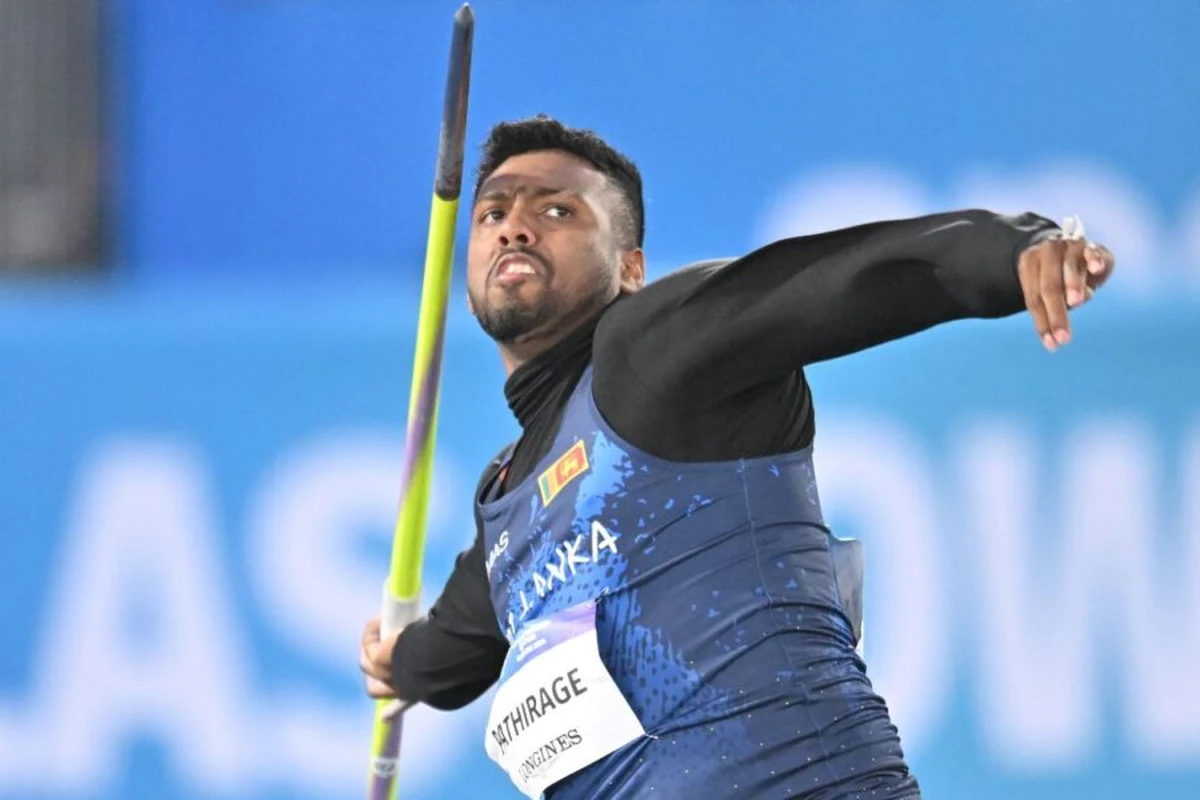
Pathirage had led from early in the competition, but finals are won on the last throw as often as the first. When he stepped onto the runway for his final attempt of the javelin asian games 2026 final, the Sri Lankan knew exactly what he needed: control in the crosswinds, commitment on the slick runway, and one clean release. He got all three. The spear left his hand on a flat, fast trajectory and landed at 88.55m — not his season’s best, but more than enough in the conditions. The celebration was immediate and total: arms wide, chest out, a roar into the rain. In driving rain, that margin over the field was a statement in itself.
A South Asian Sweep of the Podium
If gold belonged to Sri Lanka, silver and bronze belonged to India. Yashvir Singh’s 85.72m personal best and Rohit Yadav’s 84.35m meant the javelin asian games 2026 podium was an all–South Asian affair. It was a striking image: three throwers from two neighbouring nations, medals around their necks, standing together in the rain. For a region that once watched Europeans dominate this event, it felt like a line in the sand.
The sweep mattered for another reason too. India had arrived in Nagoya without its talisman, and there was genuine fear that the javelin — an event the country had come to take for granted — would go begging. Instead, two young men stepped into the biggest void in Asian athletics and filled it with personal milestones. The medals were silver and bronze, but the message was gold.
The Javelin Asian Games 2026 Rivalry That Never Was
To understand why Pathirage’s words about missing Chopra mattered so much, you have to understand what 2026 had become: the year the student became the master. The javelin asian games 2026 final was supposed to be the fourth act of the season’s defining duel. Instead, it became the first act of a rivalry interrupted at its peak.
Three Meetings, Three Defeats: Pathirage’s Perfect Season
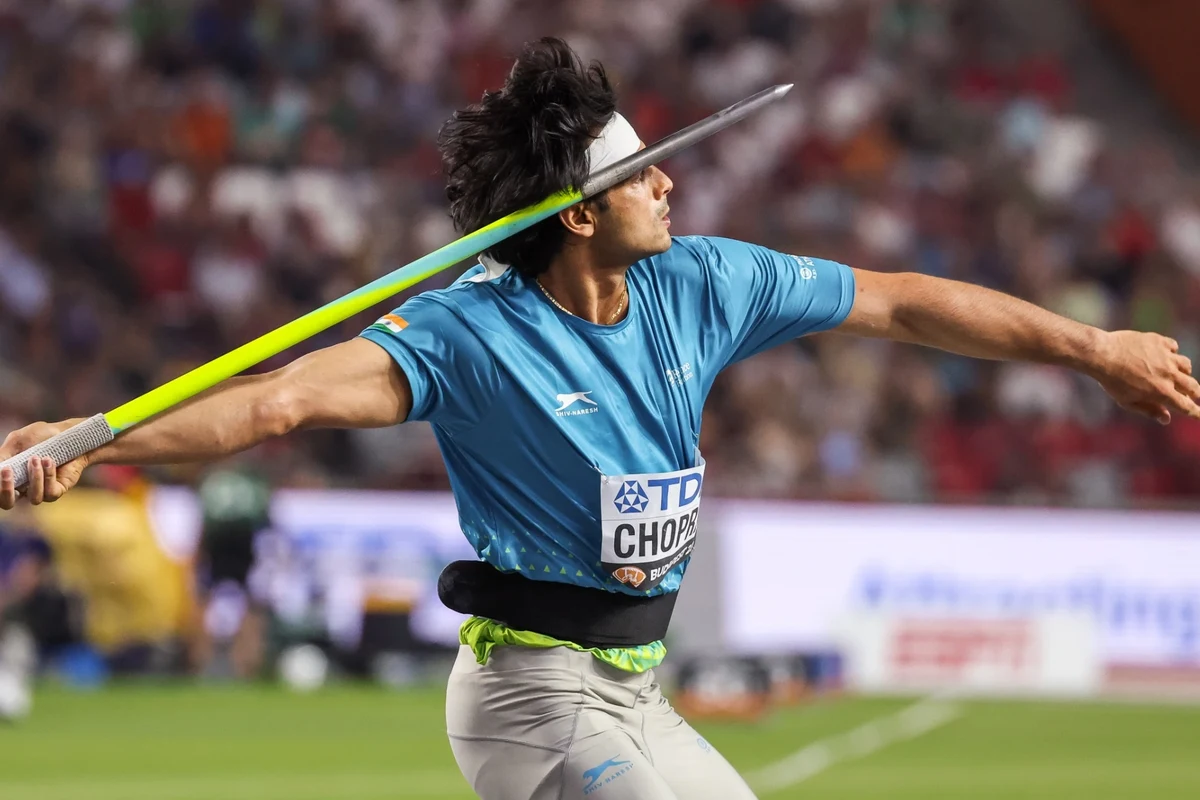
Pathirage arrived in Nagoya having beaten Chopra in all three of their meetings this season. At the Doha Diamond League in June, the Sri Lankan finished ahead while Chopra could only manage fourth. At the Commonwealth Games in Glasgow, Pathirage took gold and Chopra silver. At Lausanne in August, Pathirage edged Chopra by nine centimetres — even though the Indian had thrown a season’s best of 88.05m. Three 90m-plus throws across the season. The form of his life.
That sequence changed the psychology of Asian javelin. For years, every Pathirage throw had been measured against Chopra’s shadow. By August, the shadow had reversed: Chopra was the one chasing, and the javelin asian games 2026 was supposed to be his stage for the reckoning. Three defeats had turned a challenger into a genuine rival — and a champion into the hunter.
The Ankle Injury That Ended a Season
Chopra, for his part, was finally finding his rhythm after a long injury layoff — the season’s best in Lausanne felt like the corner turning. “It’s disappointing, especially because I felt close to finding my rhythm,” he wrote on Instagram when announcing he would sit out the rest of the season. Then the ankle gave way in training, and the most anticipated duel of the javelin asian games 2026 — defending champion versus the man who had owned him all year — never happened.
The torn ligament was cruel in its timing. An injury in May is a setback; an injury in September, days before the Games, is a tragedy of scheduling. Chopra had spent the season rebuilding toward exactly this kind of championship final. Sport is full of Sliding Doors moments; this was one of the cruellest. The defending champion’s title would be decided without him, and everyone in the stadium knew it.
The Quote That Defined the Competition
Which is what made Pathirage’s post-final honesty so striking. “Yeah, he had a little injury on the ankle after Lausanne Diamond League. It’s his bad luck,” he told PTI — and in one sentence, the 23-year-old did what few champions manage: he acknowledged that his gold, however deserved, was missing its defining ingredient. He had missed Chopra. The champion had missed the champion.
It was gracious, and it was also strategically honest. A gold won without beating the defending champion invites questions no athlete wants to answer alone. By naming Chopra, Pathirage framed his triumph as part of a larger story — one in which the javelin asian games 2026 final was a chapter, not the whole book.
Yashvir Singh: India's Silver Lining
There is a temptation to frame India’s silver and bronze as consolation prizes. That would be unfair to Yashvir Singh and Rohit Yadav, who earned their medals the hard way — in the rain, against a 90-metre thrower, with the pressure of replacing a legend.
From Replacement to Javelin Asian Games 2026 Podium
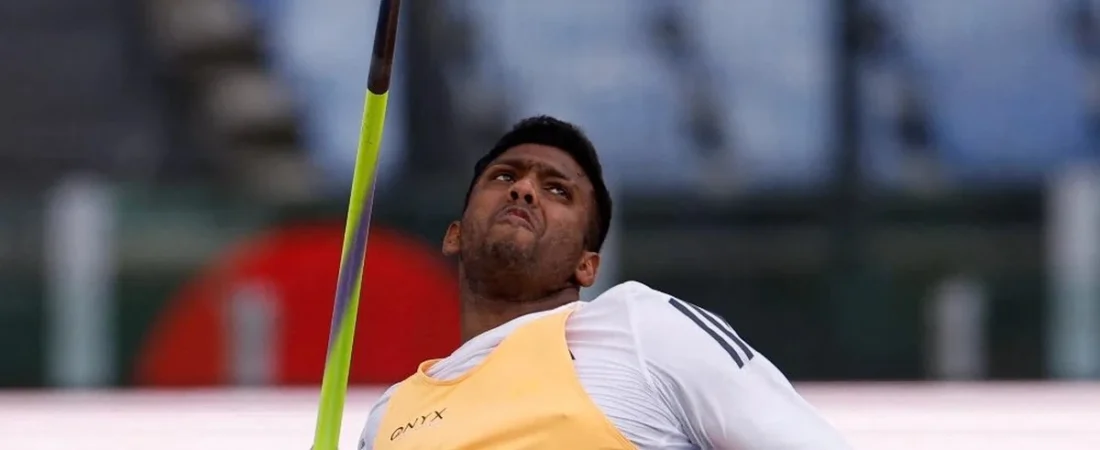
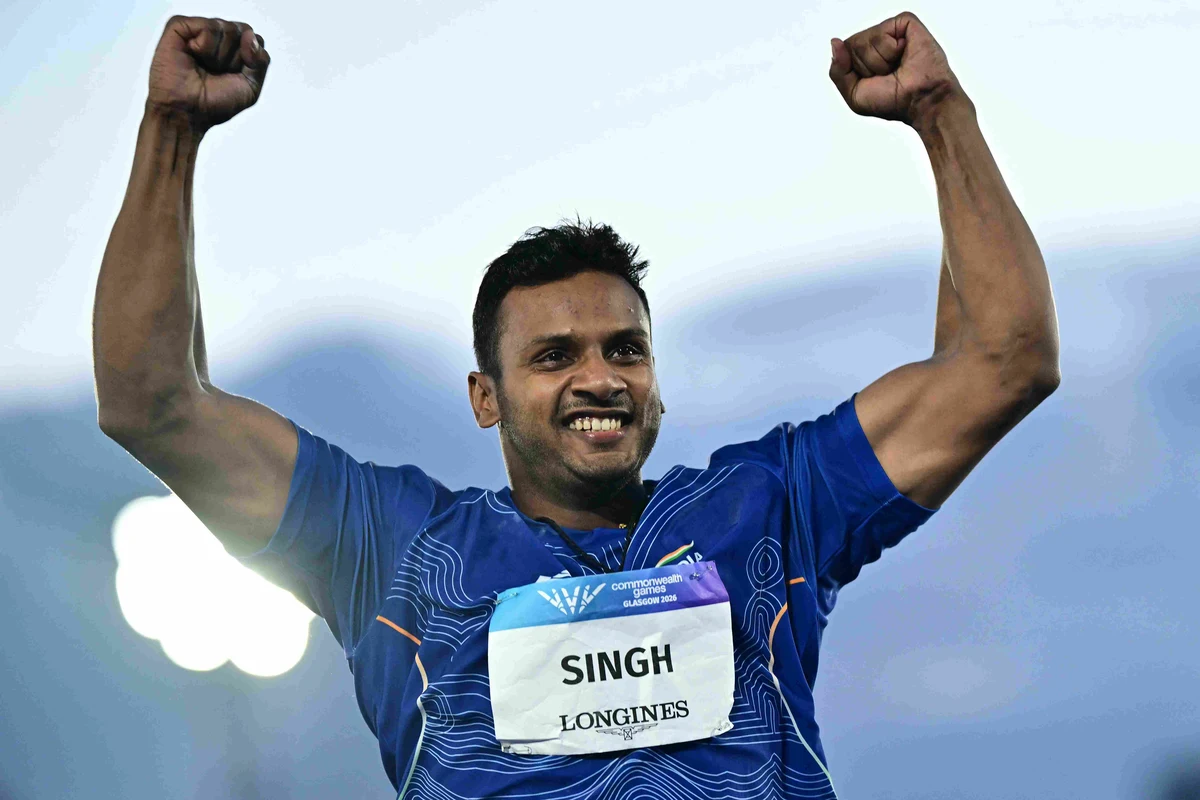
Yashvir Singh’s story is the stuff of sporting folklore. Drafted into the squad when Chopra asked the Athletics Federation of India to give his place to another athlete, the young Indian responded with a personal best of 85.72m and a silver medal at the javelin asian games 2026. To be called up as a replacement and leave as a medallist — in rotten conditions, against the form thrower on the planet — is the kind of performance that builds a career.
The Commonwealth bronze in Glasgow hinted at this temperament; Nagoya confirmed it. His technique held up when the runway was at its most treacherous, and his composure held up when the occasion was at its biggest. India has spent years wondering who might one day carry the javelin after Chopra. In Nagoya, Yashvir offered an answer — not with words, but with a throw that was nearly four metres beyond anything he had managed before.
Rohit Yadav Holds His Nerve for Bronze
Beside him, Rohit Yadav took bronze with 84.35m — a mark below his best, but a medal earned in the most testing circumstances. Rohit had pushed his own best to 87.68m in Bhubaneswar in August, and his presence in the field gave India two genuine medal contenders rather than one hopeful and one passenger. In the javelin asian games 2026 final, that depth proved decisive.
Bronze medals are often won through attrition — who avoids the fouls, who stays calm when the rain intensifies. Rohit’s 84.35m did exactly that: not his farthest throw, but perhaps his most valuable.
Indian Javelin: From One-Man Show to a Real Programme
For years, Indian javelin has been Neeraj Chopra and then daylight. On Monday night in Nagoya, the daylight produced two medals. That sentence, more than any medal count, is the legacy of the javelin asian games 2026 final for Indian athletics.
The AFI Decision That Showed Chopra’s Grace
The most underrated moment of the whole saga came before a single spear was thrown in Nagoya. When Chopra’s ankle gave way, he could have held his squad place and travelled with the team. Instead, he asked the Athletics Federation of India to give his place to another athlete — the mark of a champion who understands the event is bigger than he is.
Yashvir Singh was the beneficiary, and the rest is history. But the gesture deserves to be remembered alongside the medals. Great athletes are often accused of blocking the next generation; Chopra, at 28 and in the form of his late-blooming life, did the opposite. He opened the door, and Yashvir walked through it with a silver medal around his neck.
The Pipeline Behind the Podium
Zoom out from Nagoya, and a pattern emerges. Rohit’s 87.68m in Bhubaneswar in August. Yashvir’s Commonwealth bronze in Glasgow. Two medals at the javelin asian games 2026. This is what depth looks like — not one prodigy, but a pipeline, the product of a decade of investment in coaching, facilities and international exposure.
What Pathirage's Gold Means for South Asian Athletics
Zoom out further, and the javelin final was a landmark for South Asian athletics: gold for Sri Lanka, silver and bronze for India, and a shared narrative of a region that now owns an event once dominated by Europeans. The javelin asian games 2026 podium told a story bigger than any single athlete.
From Bengaluru to Nagoya: Pathirage’s Remarkable Rise
Pathirage’s rise — from third behind Chopra at the inaugural NC Classic in Bengaluru last year to unbeatable this season — mirrors the investment and ambition spreading across the region’s throwing programmes. Twelve months ago, he was the promising youngster in Chopra’s shadow at a home-away-from-home meet. Now he is the javelin Asian Games 2026 champion, a three-time 90-metre thrower, and the man everyone else is chasing.
That arc matters because it is replicable: Pathirage emerged from a system that converted a fast-bowling talent into a world-class thrower and gave him the competitions he needed to grow. His praise for Yashvir and Rohit after the final was genuine — rivals who push each other to 88 metres are good for everyone.
A Region Now Owns the Event
There is a deeper significance to an all–South Asian podium. The javelin was, for most of its modern history, a European event — a contest between Germans, Finns, Czechs and Norwegians, with the rest of the world watching from the stands. The javelin asian games 2026 final suggested that era is over, at least in Asia. Three of the continent’s throwers now operate at a level that would contend anywhere in the world.
For India, the takeaway is double-edged. The medals prove the system behind Chopra is working. But the gold went to Colombo, and it will stay there in the record books with an asterisk no one will print but everyone will feel: the champion wasn’t in the field. That tension — pride in the programme, hunger for the gold — is exactly what will drive Indian javelin into its next phase.
Javelin Asian Games 2026 in the Bigger Picture
Great finals are never just about the distances. They are about conditions, context, and what the results unlock. The javelin asian games 2026 final scores on all three counts.
Throwing in the Rain: The Conditions Factor
The sideways rain at Mizuho Park deserves its own paragraph, because it shaped everything. A wet runway robs throwers of the plant-foot stability that generates power; a wet javelin changes the grip; a wet crosswind turns a perfectly released spear into a lottery ticket. That Pathirage still reached 88.55m, and that Yashvir still produced a personal best of 85.72m, speaks to the quality of the field as much as the marks themselves.
India’s Wider Athletics Campaign
The javelin medals were the headline, but they were part of a broader story. For the full picture of how India’s track and field athletes fared across the Games, read our coverage of India’s athletics campaign at the Asian Games, and for the numbers behind the nation’s overall performance, see our breakdown of India’s Asian Games 2026 medal tally. The javelin asian games 2026 double was one of the standout moments of a campaign that will be debated for weeks.
Context matters here. Athletics remains the Games’ blue-riband sport, and medals in the throws carry a particular weight in India — they are the events where the nation has historically struggled against the world’s best. Two medals from the javelin asian games 2026, in Chopra’s absence, suggest the country’s athletics programme has genuine, transferable depth. That is a bigger story than any single final.
What's Next: The Rivalry's Second Act
Chopra’s statement said his focus is on “recovering well and coming back even stronger.” At 28, with his best years still ahead, there is no reason to doubt him. But Pathirage is 23, throwing 90 metres, and getting better. The next time they meet — and the whole athletics world will be watching — it won’t be a coronation for either man. It will be a contest. That is exactly what the sport needed.
Chopra’s Road Back
Ankle ligament injuries are among the most delicate in a thrower’s body. The plant leg absorbs forces several times body weight on every throw, and a compromised ankle changes the entire kinetic chain. Chopra’s decision to sit out the rest of the season was the right one — the conservative one — and it gives him a full winter to rebuild. At 28, he remains in the prime window for a javelin thrower, with a history of coming back strong from layoffs.
Where the World Will Be Watching
The javelin asian games 2026 may be over, but the calendar now becomes the story. Diamond League meetings, the World Championships cycle, and the next Commonwealth and Asian Games will all carry the same question: what happens when Chopra and Pathirage finally share a runway again? Three meetings in 2026 all went the Sri Lankan’s way. The fourth — whenever and wherever it comes — will be one of the most anticipated duels in world athletics.
Conclusion
The rain has long since stopped at Mizuho Park, but the echoes of the javelin asian games 2026 final will linger. Championships are remembered for their winners, but the great ones are remembered for their stories — and this one, with its gracious champion, its breakthrough youngsters and its absent king, has all the ingredients of a classic.
What Nagoya proved is that Asian javelin no longer belongs to one man or one nation. It belongs to a rivalry — Chopra versus Pathirage, India versus Sri Lanka, experience versus youth — that was interrupted just as it reached its peak. The medals have been awarded and the anthems played, but the real contest hasn’t happened yet. When it does, the whole athletics world will be watching. Until then, the javelin asian games 2026 stands as both a coronation and a cliffhanger: the night the spear landed in Nagoya, and the night everyone started counting down to the rematch.
For authoritative context on the sport’s global landscape, the official rankings and records are maintained by World Athletics, while Olympics.com carries detailed athlete profiles and competition histories for Chopra, Pathirage and their rivals.
Why this story matters: Pathirage’s gold confirmed a changing of the guard in Asian javelin — but with Chopra injured and India’s youngsters stepping up, the rivalry is only getting started.