
Table of Contents
- The Sawan Barwal Marathon Story: 2:11:37 in Aichi-Nagoya
- Sawan Barwal Marathon Splits: How the National Record Was Built
- 44 Years of Waiting: India's Marathon History at the Asian Games
- Why the Sawan Barwal Marathon Silver Outweighs Many Golds
- The Road Ahead: What the Sawan Barwal Marathon Means for the Future
- Conclusion
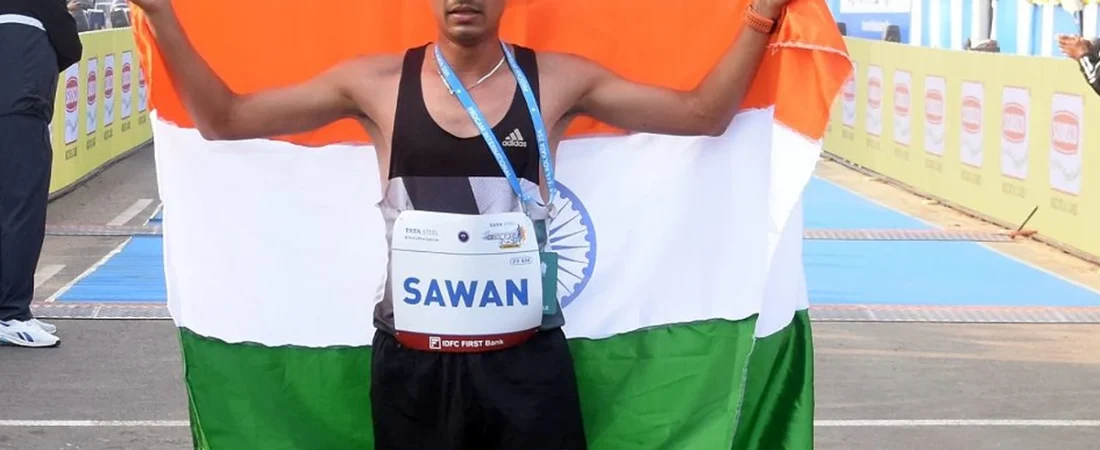
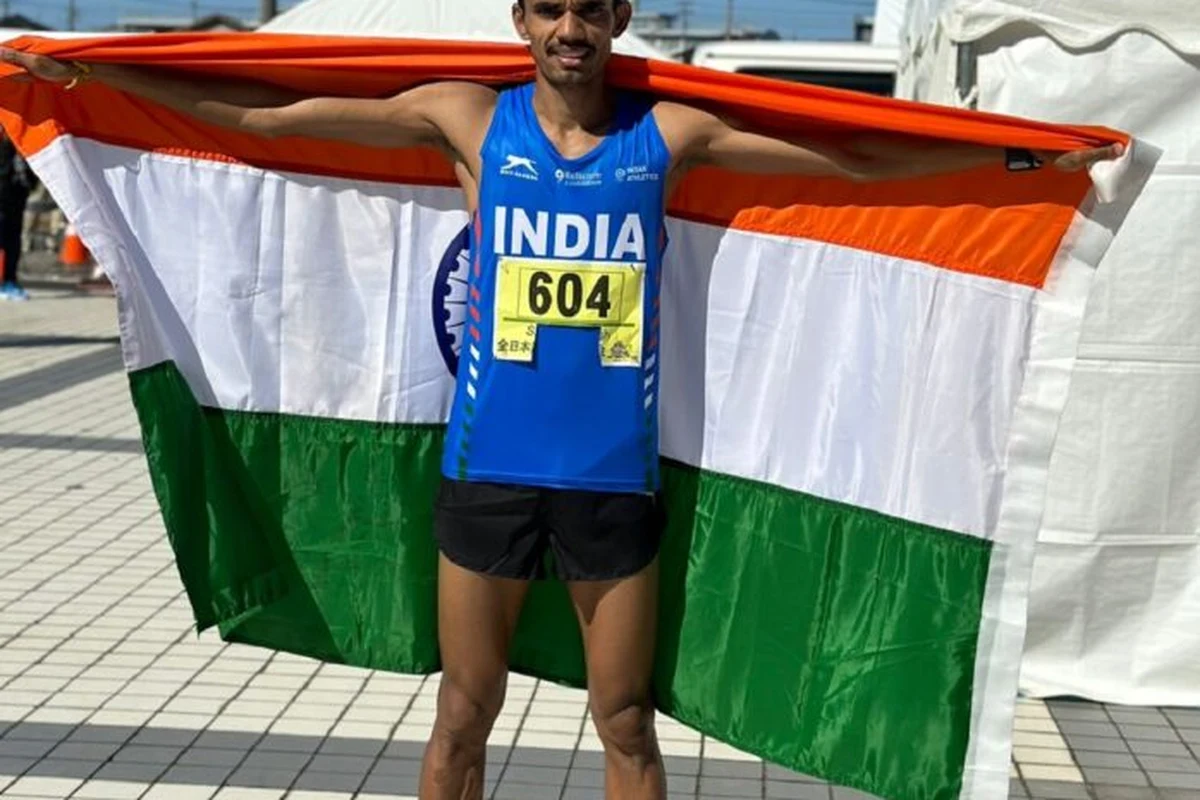
The Sawan Barwal marathon story begins with a number: 2:11:37. On Saturday in Aichi-Nagoya, the Indian distance runner spent large portions of the Asian Games men’s marathon at the front of the pack, refused to fade when Japan’s Ichitaka Yamashita made his move, and crossed the line in a new national record. It was the fastest marathon ever run by an Indian man, and it ended a wait that had stretched across 44 years.
Let that number sit for a moment. 2:11:37 made Barwal only the fourth Indian marathon runner to medal at the Asian Games — after Chhota Singh’s gold and Surat Singh Mathur’s bronze at the inaugural 1951 Games, and a bronze three decades later. More remarkably, it made him the first Indian man to win an Asian Games marathon medal outside India. Ever. Records like that do not come around often; when they do, they deserve far more than a line in the results column.
This is the full story of that race: how the Sawan Barwal marathon silver was won kilometre by kilometre, why the front-running tactics mattered so much, what the 44-year gap tells us about Indian distance running, and where Barwal — and the country’s marathon culture — can go from here.
Beyond the medal itself, the Sawan Barwal marathon performance raises bigger questions. What does it take for a nation without a marathon tradition to produce a 2:11 runner? How much faster can Barwal go in a race built for time rather than position? And perhaps most importantly, can one breakthrough performance reshape an entire event’s culture in India? The answers begin on the roads of Aichi-Nagoya.
The Sawan Barwal Marathon Story: 2:11:37 in Aichi-Nagoya
Marathons are not won in stadiums. They are won on lonely roads, in the 30th kilometre, when the legs are gone and the mind has to do the running. Sawan Barwal knows this better than most. Consequently, his approach in Aichi-Nagoya was never going to be cautious. From the early kilometres, he positioned himself where the race was being decided rather than where it was being survived.
A Front-Runner’s Race Plan
The details of the race tell you everything about the runner. Barwal did not sit in the pack and sprint for bronze. Instead, the Sawan Barwal marathon game plan was gloriously simple: run at the front — leading, pushing, daring the field to follow. Front-running a championship marathon is the bravest tactic in distance running and the easiest to punish. Nevertheless, Barwal made it work, staying in the medal contest deep into the race, not hanging on but hunting.
That distinction matters enormously. There is a world of difference between clinging to third place and genuinely contesting the win, and the Sawan Barwal marathon performance belonged firmly to the second category. He forced his rivals to respond to him rather than the other way around. Moreover, he did it on Japanese roads, against Japan’s own champion, in conditions that favoured the home runners.
There is also a psychological dimension to front-running that rarely gets discussed. When you lead, you cannot hide; every competitor behind you can see exactly how you are moving, breathing, and responding. It takes rare self-belief to accept that exposure for two hours. Yet the Sawan Barwal marathon tactic also carried a hidden advantage: by dictating the rhythm, Barwal ran his own race instead of reacting to someone else’s, and that autonomy may have been worth seconds when the decisive surge finally came.
The Decisive Move: Yamashita’s Surge and Barwal’s Response
Every championship marathon has a moment when the pretenders are separated from the contenders. In Aichi-Nagoya, that moment arrived when Ichitaka Yamashita made his move. The Japanese runner surged, the elastic stretched, and the field faced a choice: follow or fade. Barwal followed. He refused to let the gap grow, matched the surge as best he could, and kept himself in the silver-medal contest all the way to the line.
Yamashita eventually won in 2:10:49, with China’s Feng Peiyou taking bronze in 2:12:13 — and the Sawan Barwal marathon silver, 2:11:37, sitting proudly between them. The 48-second gap between gold and silver tells its own story — Barwal was beaten by a better runner on the day, not by his own limitations. Meanwhile, the fact that he finished 36 seconds clear of bronze underlines how decisively he separated himself from the rest of the field.
Sawan Barwal Marathon Splits: How the National Record Was Built
A time of 2:11:37 over 42.195 kilometres works out to roughly three minutes and seven seconds per kilometre, sustained for more than two hours. To put that in perspective, most club runners would struggle to hold that pace for a single kilometre. Barwal held it for forty-two of them, in warm championship conditions, while racing tactically for position rather than running a flat-out time trial.
Kilometre by Kilometre: The Anatomy of a National Record
The defining feature of the Sawan Barwal marathon record was its construction from the front. Leading a championship marathon means running without shelter — no drafting, no pack to carry you through the difficult middle kilometres, no one else’s rhythm to lock onto. Every surge you cover costs more when you are the one setting the pace. Barwal absorbed those costs and still produced the fastest marathon in Indian history.
Furthermore, championship marathons are rarely run for fast times. They are run to win medals, which means surges, slowdowns, and tactical games that make even pacing nearly impossible. A 2:11:37 produced in those circumstances — tactical, warm, contested from the front — suggests the clock was not the limit of the performance. The record, in other words, may be softer than it looks.
Championship Racing vs the Clock
This is a crucial distinction for understanding what comes next. There are two kinds of fast marathons: the paced time trial, with pacemakers and ideal conditions, and the championship grind, where the only thing that matters is the medal. Barwal’s 2:11:37 belongs to the second, harder category. Consequently, there is every reason to believe a paced race on a fast course could take him significantly quicker.
The history of distance running is full of athletes whose championship times understated their ability. When the tactics disappear and the pacemakers take over, seconds melt away. For Indian distance running, that possibility is genuinely exciting: the national record was set the hard way, which means the next one might come considerably easier.
It is also worth noting how the modern marathon rewards aggressive racing more than it once did. Advances in footwear, in-race fueling, and training science have all raised the ceiling — and crucially, they have made fast times more accessible to athletes outside the traditional powerhouses. The Sawan Barwal marathon record is therefore not just a personal milestone; it is evidence that the globalisation of marathon performance has finally reached Indian distance running.
44 Years of Waiting: India's Marathon History at the Asian Games
To understand the magnitude of the Sawan Barwal marathon silver, you have to understand the drought that preceded it. Forty-four years is not just a long time in sport; it is two full generations of runners who came, trained, raced, and retired without an Indian man standing on an Asian Games marathon podium.
Chhota Singh and Surat Singh Mathur: The 1951 Breakthrough
India’s marathon story at the Asian Games began at the very first edition, in New Delhi in 1951. There, Chhota Singh won gold and Surat Singh Mathur took bronze, announcing India as a distance-running nation at the birth of the continental Games. Those medals were won on home soil, in front of home crowds, at a time when the Asian Games themselves were finding their feet.
For a brief moment, it must have seemed like the start of something. Two medals in the inaugural marathon suggested India belonged in this event. However, the decades that followed told a very different story, as the marathon became one of the events where India was most conspicuously absent from the podium.
The Bronze Three Decades Later — and the Long Silence After
A bronze three decades after 1951 kept the flame flickering, but only just. After that, the silence stretched on and on. Japan built the deepest marathon culture on the planet. China invested systematically. East African-born athletes began representing Gulf nations. Meanwhile, India — a country of 1.4 billion people — could not produce a single man capable of medalling over 42.195 kilometres at the Asian Games for 44 years.
That context is what makes the Sawan Barwal marathon breakthrough so significant. He did not merely end a drought; he ended it on foreign soil, against the Japanese, in the event Japan considers its own. The 1951 medals were won at home. Every medal since the inaugural Games had been won at home. Barwal is the first Indian man to win an Asian Games marathon medal outside India — a line that deserves to be repeated until its full weight sinks in.
The length of the silence also reveals something structural. Forty-four years without a medal does not happen because of a shortage of talent; it happens because the systems that convert talent into marathon medals — high-altitude training bases, regular exposure to world-class road races, event-specific coaching — were never built. Barwal’s silver, achieved without those systems fully in place, hints at how much untapped potential Indian distance running may still hold.
Why the Sawan Barwal Marathon Silver Outweighs Many Golds
In the cold arithmetic of medal tables, a silver is a silver. But some silvers change a sport. When an athlete from a country with no marathon tradition runs a national record to take silver at the Asian Games, the effects ripple outward: into training groups, into federation planning, into the minds of young runners who now have a time to chase rather than a ceiling to accept. 2:11:37 is not just Barwal’s record; it is Indian marathon running’s new reference point.
A New Reference Point for Indian Distance Running
Before Saturday, the ceiling for an Indian marathoner was theoretical — which is why the Sawan Barwal marathon breakthrough matters far beyond a single medal. Coaches could talk about potential, about what might be possible with better training and more belief, but they had no number to point to. Now they do. The Sawan Barwal marathon record gives every young Indian distance runner a concrete target: 2:11:37, set in a championship, from the front, against Asia’s best.
Consider the context of India’s athletics campaign at the Asian Games. The headlines went to the javelin, the jumps, and the middle distances — the medals in the 1500m and 10,000m at these Games prove that Indian track running is in fine health. The marathon, however, was supposed to be an afterthought. Japan and China own this event. Instead, it produced one of the most significant Indian performances of the entire Games.
Records also reshape expectations inside the sport itself. Selectors, sponsors, and federations all calibrate their ambitions to what has been proven possible, and the Sawan Barwal marathon silver recalibrates everything. A federation that once viewed the marathon as a participation event must now view it as a medal event. Sponsors who overlooked distance runners will look twice. Most importantly, young athletes choosing between the track and the roads now have proof that the roads can lead to the Asian Games podium.
The Marathon Is a Different Beast
That contrast deserves emphasis. Indian distance running has produced fine track runners, but the marathon is a different beast. It demands a different training culture, a different relationship with suffering, and, frankly, belief that Indians can compete with the East Africans and Japanese over 42.195 kilometres. Track success does not automatically translate to the roads; the fueling, the pacing, the sheer durability required are all distinct disciplines.
Barwal just supplied the belief. The stopwatch supplied the proof. Together, the Sawan Barwal marathon silver and the stopwatch dismantle the quiet assumption that the marathon “isn’t ours” — an assumption that has held Indian distance running back for decades. Furthermore, his front-running style demolishes it in the most emphatic way possible: he did not sneak a medal; he raced for one.
The Road Ahead: What the Sawan Barwal Marathon Means for the Future
The obvious question is how far Barwal can go. A 2:11:37 in championship conditions — tactical, warm, run to place rather than time — suggests there is more in the tank in a paced race. The sub-2:10 barrier, once unthinkable for an Indian, is now a realistic target. Beyond that lies the territory where global finals become possible. One race does not make a marathon programme, but every marathon programme starts with one race like this.
The Sub-2:10 Barrier: From Unthinkable to Realistic
Sub-2:10 has long been the invisible wall for Indian marathon running — discussed in hopeful tones, never seriously threatened. The Sawan Barwal marathon silver changes that calculus completely. A runner who can produce 2:11:37 while leading a championship race, responding to surges, and racing for position is a runner who can go faster when the only objective is the clock.
World marathoning has moved on dramatically in the era of super shoes and sophisticated fueling, and the global standard keeps rising. The Sawan Barwal marathon performance must be measured against that moving target, not just against Indian history. Nevertheless, the trajectory is unmistakably upward: from national record to sub-2:10 contender is a smaller step than the one he has just taken. For context on how marathon standards are tracked globally, World Athletics maintains the official records and rankings that will now include Barwal’s name at a new level.
Building a Marathon Culture, Not Just a Medal
One race does not make a marathon programme — but every marathon programme starts with one race like this. The challenge now facing Indian athletics is to convert a singular breakthrough into a system: better long-run infrastructure, more opportunities to race quality marathons abroad, sports science support tailored to the event’s unique demands, and patience. Marathoners peak late; the investment horizon is measured in Olympic cycles, not seasons.
Japan offers the template. Its marathon dominance was not an accident of talent but the product of decades of corporate team systems, university ekiden culture, and relentless domestic competition. India does not need to copy that model wholesale, but the Sawan Barwal marathon breakthrough proves the raw material exists. What comes next is a choice: treat Saturday as a delightful anomaly, or treat it as the foundation stone of something lasting.
The Sawan Barwal marathon story also belongs in the broader picture of India’s Asian Games 2026 medal tally, where breakthrough performances in non-traditional events signal a maturing sporting nation. Medals in events a country has never contested seriously before are worth more than their metal — they expand the map of what is considered possible. For a deeper look at the marathon’s place in multi-sport history, Olympics.com chronicles how the event has defined distance running since antiquity.
Conclusion
A 44-year wait, ended by a man willing to lead from the front. There is a lesson in that for every Indian athlete who has been told their event “isn’t ours.” The Sawan Barwal marathon silver was not a fluke of tactics or a gift from a weak field — it was earned kilometre by kilometre, on the roads of Aichi-Nagoya, against the best in Asia, in a national record time.
Marathons are not won in stadiums, and neither are marathon cultures built in a single season. But cultures have to start somewhere, and they usually start with a single runner refusing to accept the ceiling everyone else sees. The Sawan Barwal marathon silver is what that refusal looks like, sustained for 42.195 kilometres. Indian distance running will be chasing his 2:11:37 for years — and that, ultimately, is the point. The record is not a finish line. It is a starting line.
Why this story matters: Sawan Barwal’s 2:11:37 national record won India’s first men’s marathon medal outside India — and gave Indian distance running a new horizon.