
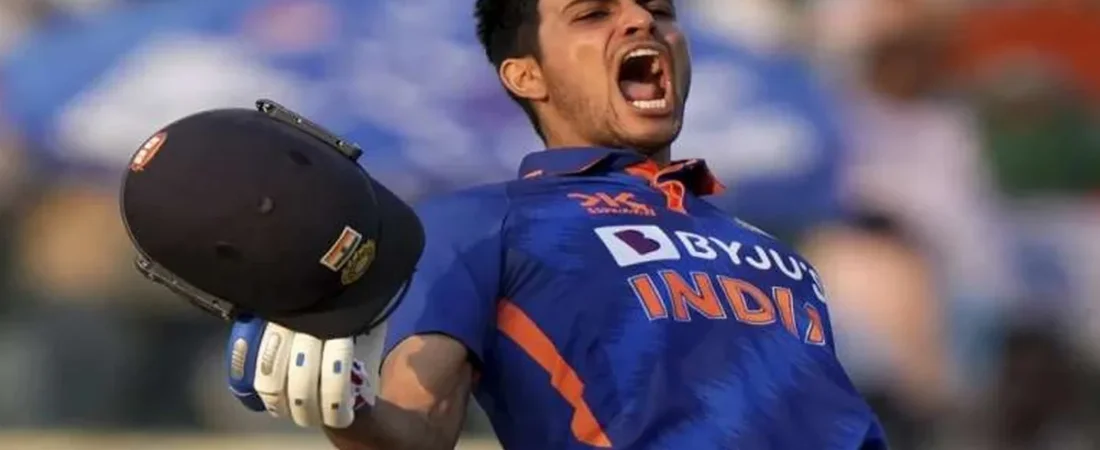
The IND vs WI 2nd ODI result will be talked about for years, because what happened at the Barsapara Cricket Stadium in Guwahati on September 30, 2026 was not a normal one-day international. It was a run-fest that rewrote records, bent logic and still finished early. West Indies made 405 for 7. India chased it down in 43.3 overs, losing only two wickets, with 39 balls to spare. At the centre of the IND vs WI 2nd ODI result stood captain Shubman Gill, unbeaten on 223 from 133 balls, the fastest double century in ODI history. Alongside him, Rohit Sharma scored 101, crossed 12,000 ODI runs and helped build a 255-run opening partnership that turned a mountain into a statement. This is the full story of a remarkable night.
IND vs WI 2nd ODI Result: Match Overview
The simplest version of the IND vs WI 2nd ODI result is this: India won by eight wickets and took an unassailable 2-0 lead in the three-match series. The fuller version is far more dramatic. West Indies batted first and produced 405 for 7, a total that would win the overwhelming majority of ODIs ever played. Three of their batters made centuries. They attacked India’s spinners, cleared the ropes with confidence and walked off at the innings break believing they had finally produced the complete performance that had eluded them in the series opener at Thiruvananthapuram.
India’s response was ruthless. Gill and Rohit opened with the calm of men chasing 250 and the intent of men who understood the required rate from the first over. By the time Rohit departed for 101 off 75 balls, the opening pair had added 255 runs and the contest had changed character. The question was no longer whether India would win; it was whether Gill would reach a double hundred and how many records would fall along the way. He did, at record pace, and Ruturaj Gaikwad’s unbeaten 31 helped finish the job at 406 for 2.
As our complete IND vs WI 2nd ODI preview with date, time, venue, squads and prediction noted, India were favourites in Guwahati — but nobody predicted a record chase like this.
Why Guwahati Delivered a Classic
Barsapara has a reputation as a batting-friendly venue, and Wednesday’s surface gave both sides full value for their shots — quick outfield, reachable boundaries and a ball that came on under lights. Yet a good pitch alone does not explain 811 runs in fewer than 94 overs. West Indies refused to consolidate after losing wickets, and India refused to treat 406 as a total that required caution.
West Indies Post 405/7: Three Centuries in One Innings
Before Gill’s masterpiece can be properly appreciated, West Indies deserve their share of the story. Losing a match after scoring 405 is a cruel fate, but their innings was bold, skilful and, for most of the evening, apparently decisive. John Campbell set the tone with 101 from only 68 balls, an innings of clean power and fearless intent. He attacked the new ball, punished anything short and forced India to spread the field far earlier than planned.
Captain Shai Hope then supplied the innings with its spine. His 104 from 94 balls was less explosive than Campbell’s hundred but no less important. Hope rotated strike, chose his moments against spin and ensured that West Indies did not waste their electric start. Later, Amir Jangoo produced the acceleration that carried the visitors beyond 400. His 114 from 77 balls blended improvisation with orthodox power, and his late assault transformed a strong total into a seemingly impregnable one.
Three Centurions, One Lost Cause
Three individual hundreds in the same ODI innings is rare — and following it with defeat is rarer still. Campbell attacked the powerplay, Hope managed the middle overs and Jangoo attacked at the death, forcing India to spread the field and defend for long stretches.
Kuldeep Yadav was again India’s most effective bowler with 2 for 65. Ravindra Jadeja took 2 for 75 and Gurnoor Brar 2 for 96 — figures that show even India’s wicket-takers could not slow the scoring for long. West Indies were not reckless; they were relentlessly positive, and their 405 appeared to be both a challenge and a declaration. India did not chase down a careless total — they chased an innings containing three centuries.
Shubman Gill’s 223 Not Out: The Fastest ODI Double Century
Every generation produces innings that become reference points. Gill’s 223 not out has an immediate claim to that status. He faced 133 balls, struck 26 fours and eight sixes, and remained unbeaten while India completed the highest successful ODI chase in their history. What separated the innings from a conventional big hundred was its control. There were no desperate swings or visible moments of panic. Gill simply kept finding boundaries while the required rate, supposedly daunting at the start, melted away.
The early overs offered a clue. Rather than treating the chase as a late assault waiting to happen, Gill attacked immediately. He drove through cover, pulled with authority and used his feet against spin. Rohit’s presence at the other end allowed him to bat with freedom, but Gill quickly became the dominant partner. His timing was so pure that even defensive pushes raced across the fast Guwahati outfield.
How Gill Built the Innings
Gill’s innings had distinct gears: placement and punished width in the powerplay, efficient rotation with a boundary in most overs through the middle, and an expanded range once past 150. The double century arrived at record speed, yet the milestone never consumed him — he celebrated, acknowledged the crowd and immediately returned to the task. That composure reflects his growth as captain: in the series opener he scored 110 to control a chase of 296; here the target was 110 runs larger and he responded with greater violence but no less clarity.
Reuters described Gill’s fastest ODI double century as the centrepiece of India’s extraordinary run-fest against West Indies, and that description captures the scale of the achievement without exaggeration. Double centuries remain rare in ODI cricket. To score one at this speed, in a chase of 406, while captaining the side, places Gill in a conversation few batters of his age have entered.
Rohit Sharma’s Milestone Night and the 255-Run Opening Stand
History will lead with Gill, but Rohit Sharma’s contribution deserves far more than a supporting mention. His 101 from 75 balls was his 35th ODI century, reached from 72 deliveries, and during the innings he passed 12,000 runs in one-day internationals. For a batter whose ODI legacy is already secure, this was another reminder that his value at the top of the order remains immense.
Rohit and Gill added 255 runs for the first wicket. That partnership did not simply give India a platform; it effectively broke the chase. West Indies had to defend 406, yet by the time the stand ended, fielders were spread, bowlers were protecting boundaries and the required rate had become manageable for the middle order. The psychological shift was total. A record target had become a procession.
Experience Meets the Next Era
The partnership also symbolised a transition: Rohit, the former captain with three ODI double centuries of his own, attacking early to free up Gill, the current captain and face of the next cycle. When Rohit fell, Gaikwad joined Gill with an unbeaten 31 and ensured there was no late twist.
It was also a golden week for Indian sport more broadly, as our analysis of India’s silver and bronze at the Chess Olympiad 2026 in Samarkand showed — a new generation performing with calm on major stages.
Turning Points That Decided the IND vs WI 2nd ODI Result
It may seem strange to search for turning points in a chase completed with 39 balls remaining. Yet the IND vs WI 2nd ODI result contained several moments when West Indies could have regained control. The first arrived during their own innings. At various stages, India threatened to restrict them below 370. Jangoo’s late assault ensured that did not happen. His scoring against pace at the death pushed the target beyond 400 and forced India to sustain risk for longer.
The second turning point came in India’s first ten overs. A cautious start would have allowed West Indies to protect their total and build scoreboard pressure. Instead, Gill and Rohit attacked the new ball and ensured India stayed ahead of the required rate. Once the field spread, singles became easy and the boundary options multiplied. West Indies were caught between attacking for wickets and defending runs, and that uncertainty showed in their field placements.
The Overs That Broke West Indies
The middle phase was equally decisive. Successful chases of 400 often stall when spinners slow the game and force batters to manufacture shots. India never allowed that stall. Gill used his reach and footwork, Rohit targeted his favoured zones, and both men rotated strike well enough to prevent any bowler from settling. West Indies needed one cluster of wickets. They never got it.
Rohit’s dismissal could have been another opening. Instead, Gill immediately reasserted control, while Gaikwad played low-risk cricket. From that point, the only uncertainty surrounded Gill’s double century and the final margin. According to Reuters’ report of the Guwahati match, the chase ranked as India’s highest successful pursuit in ODI cricket and the second-highest in the format’s history. That is the context in which these turning points should be judged: every time West Indies searched for a door back into the game, India closed it within an over or two.
Scorecard: The IND vs WI 2nd ODI Result in Numbers
For all the emotion attached to the evening, the numbers are astonishing enough on their own. The scorecard below summarises the essential facts behind the IND vs WI 2nd ODI result:
| Team | Score | Top scorers | Best bowling |
|---|---|---|---|
| West Indies | 405/7 in 50 overs | Amir Jangoo 114, Shai Hope 104, John Campbell 101 | Kuldeep Yadav 2/65, Ravindra Jadeja 2/75, Gurnoor Brar 2/96 |
| India | 406/2 in 43.3 overs | Shubman Gill 223*, Rohit Sharma 101, Ruturaj Gaikwad 31* | India won by 8 wickets with 39 balls remaining |
The headline figures deserve repeating. Gill’s 223 not out came from 133 balls and included 26 fours and eight sixes. Rohit’s 101 came from 75 balls. The opening partnership was worth 255. India scored 406 while losing only two wickets, and still had 6.3 overs unused. In a chase of this size, surviving with wickets in hand is notable; finishing so early is extraordinary.
Records That Fell in Guwahati
The IND vs WI 2nd ODI result carried several layers of history. Gill recorded the fastest double century in ODI cricket and was named Player of the Match. Rohit passed 12,000 ODI runs and added his 35th century in the format. India completed their highest successful ODI chase, a pursuit bettered only once in the history of one-day internationals. The match also produced the unusual sight of four individual centuries: three for West Indies and, in effect, the platform for Gill’s double hundred alongside Rohit’s ton for India.
What This Result Means for the Series and ODI History
The immediate consequence of the IND vs WI 2nd ODI result is straightforward: India lead 2-0 and have already won the series with one match remaining. The third ODI now becomes an opportunity for experimentation, workload management and squad depth. Players who have waited for opportunities may receive a chance, while the established top order can approach the finale without series pressure.
For West Indies, the emotional calculation is harder. They produced 405, celebrated three centuries and still lost by eight wickets. Few defeats will sting like the IND vs WI 2nd ODI result. Their batters have now shown in consecutive matches that they can build substantial totals against India. The first ODI brought 295; the second brought 405. The problem is no longer simply scoring runs. It is controlling India’s top order when the pitch offers little margin and the outfield rewards placement.
A Warning for Bowlers Everywhere
The broader lesson is clear: totals once considered safe are now merely competitive on true surfaces. Defending 400 requires early wickets, disciplined middle-overs bowling and near-perfect death execution — West Indies managed none for long enough. Gill’s intent as a captain who opens the batting told West Indies from the first over that 406 would not intimidate India.
What Happens Next: Series Sealed, Pride Left to Play For
India will head into the final ODI with confidence and options — rotation, bench strength or a push for a clean sweep. West Indies, meanwhile, need a response that goes beyond pride: a win in the finale would validate the progress shown by Campbell, Hope and Jangoo, but their bowlers need early powerplay wickets and a clearer plan against India’s openers. Without them, this batting line-up is almost impossible to contain.
Whatever happens next, the IND vs WI 2nd ODI result has already defined this series. It will be remembered not merely as the night India sealed a 2-0 lead, but as the night Gill produced one of the great ODI innings. West Indies scored 405 and played their part in a classic. India simply produced a chase for the ages.
Supporters searching for the definitive IND vs WI 2nd ODI result need only remember four numbers: 405, 406, 223 and 255. West Indies made 405. India replied with 406. Gill scored 223 not out. He and Rohit shared 255. That is the IND vs WI 2nd ODI result in one line.
Why this story matters: The IND vs WI 2nd ODI result was not just a series win; Gill’s record 223 not out showed that even a 406 target can be chased with control, changing what teams believe is possible in ODI cricket.