
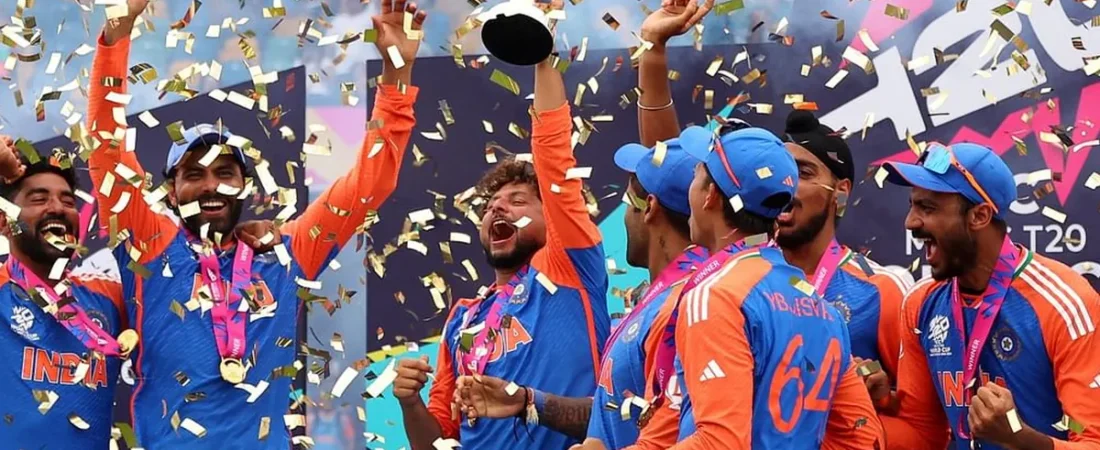
Some finals are remembered for a single shot. Others are remembered for a single over. The India beat Pakistan cricket final at the Asian Games 2026 will be remembered for something larger — the audacity of the occasion itself. A first-ever men’s cricket meeting between India and Pakistan at the Asian Games, played for a gold medal, in front of a crowd that knew exactly what this fixture means. At the Korogi Sports Park in Nisshin on October 3, 2026, India posted 211 for 6 in their 20 overs, watched Hasan Nawaz nearly chase it down single-handedly with a magnificent 96, and still held their nerve to win by 19 runs.
This India beat Pakistan cricket final was never going to be ordinary. It was the first time the two nations had faced each other in men’s cricket at the Asian Games, and it carried the weight of everything that rivalry means. India arrived as the defending champions, having won the T20 gold at Hangzhou 2023. Pakistan arrived having grown through the tournament, dangerous and fearless. For three hours, the final swung between certainty and chaos — Abhishek Sharma’s 28-ball assault, Tilak Varma’s ice-cold finish, and then one man’s lone resistance that almost turned the whole thing upside down.
In the end, the margin was 19 runs, but the story of the India beat Pakistan cricket final is told in the small moments: a yorker that missed by inches, a catch held under pressure, a bowler backing himself at the death. India’s 211 for 6 proved just enough against Pakistan’s 192 for 6. Gold stayed with India. The cricket double — women’s and men’s — was complete. And a rivalry that had never touched the Asian Games stage finally had its chapter.
India Beat Pakistan Cricket Final: How the 19-Run Win Unfolded
The India beat Pakistan cricket final began with India batting first, and from the first over it was clear this would not be a cautious, feeling-out final. Abhishek Sharma took the attack to Pakistan’s new-ball bowlers immediately, and the scoreboard moved at a pace that suggested India were targeting something well beyond par. By the time the powerplay ended, the tone of the evening had been set: India would try to bat Pakistan out of the game, and Pakistan would have to chase under lights against a disciplined attack.
India’s innings finished at 211 for 6 — a total that felt imposing without feeling unbeatable. In T20 cricket, 211 is the kind of score that demands respect but invites ambition, and Pakistan’s reply showed exactly why. For long stretches of the chase, Hasan Nawaz made 211 look gettable, striking the ball with a freedom that had the Indian camp visibly tense. But cricket is a game of partnerships, and Pakistan never found the second substantial stand their chase needed. When Nawaz fell for 96, the required rate climbed beyond reach, and India closed out a 19-run victory.
What made this India beat Pakistan cricket final genuinely gripping was the shape of it. It was not a one-sided procession, nor a last-ball heist. It was a proper contest between two good T20 sides, decided by the depth of India’s batting and the discipline of their bowling at the moments that mattered most. The 19-run margin flatters neither side and insults neither: it reflects a final where the better team on the day won, but only after being pushed harder than the scoreboard might suggest.
Abhishek Sharma’s 28-Ball Storm at the Top
If the India beat Pakistan cricket final had a defining passage of play, it came in the first few overs of India’s innings. Abhishek Sharma, opening the batting, produced an innings of breathtaking intent: 61 runs from just 28 balls, decorated with three fours and seven sixes. It was the kind of knock that does not merely score runs — it rearranges the psychology of a final. Pakistan’s bowlers, who had planned for pressure, were instead defending from the very start.
Seven sixes in 28 balls tells its own story. Abhishek did not wait for the bad ball; he manufactured scoring opportunities against good ones, stepping down the track, swivelling across the stumps, and clearing the rope with a clean, unhurried swing. In a final, where the temptation is always to play safe and protect wickets, his approach was a deliberate statement: India would set the terms. By the time he departed, the platform was so strong that the rest of the innings could be built without panic.
There is a broader pattern here worth noting. Indian cricket’s T20 identity in recent years has been built on exactly this kind of fearless top-order batting, and Abhishek’s 61 was its purest expression on a finals stage. The India beat Pakistan cricket final will be remembered for many things, but the image of Abhishek launching Pakistan’s attack into the Nisshin evening will be the first that comes to mind. Finals are often won by the team that lands the first blow, and he landed it with both fists.
Tilak Varma’s Perfect Finish: 51 Not Out
Every great T20 innings needs a finisher, and in this India beat Pakistan cricket final, Tilak Varma played that role to perfection. Walking in after Abhishek’s fireworks had lit up the powerplay, Tilak produced 51 not out from just 22 balls, with three fours and four sixes. Where Abhishek had been pure adrenaline, Tilak was controlled acceleration — picking his moments, targeting the right bowlers, and ensuring India’s momentum never stalled through the middle and death overs.
The value of an unbeaten 51 off 22 in a final cannot be overstated. T20 innings so often collapse in the final five overs as batters chase boundaries and lose their shape. Tilak did the opposite: he remained at the crease, kept the strike rotating when boundaries were not available, and then struck decisively when Pakistan’s bowlers erred. His four sixes were not slogs; they were calculated hits against balls that deserved to be punished. It was the innings of a player who understands that finishing is a skill, not just a temperament.
Together, Abhishek and Tilak accounted for 112 of India’s 211 runs, and their contrasting styles told the story of the innings. The India beat Pakistan cricket final was shaped by this one-two punch: the opener who took the game away from Pakistan in the powerplay, and the middle-order man who made sure it never came back. Pakistan’s bowlers fought hard — Arafat Minhas and Ahmed Daniyal took two wickets apiece, with Saim Ayub and Abrar Ahmed chipping in with one each — but they were always reacting rather than dictating.
The Numbers Behind the India Beat Pakistan Cricket Final
For all the drama of a final, the scorecard of the India beat Pakistan cricket final deserves to be laid out plainly, because the numbers explain exactly how India won and where Pakistan fell short:
| Team | Score | Top scorers | Best bowling |
|---|---|---|---|
| India | 211/6 in 20 overs | Abhishek Sharma 61 (28), Tilak Varma 51* (22) | Arafat Minhas 2 wkts, Ahmed Daniyal 2 wkts, Saim Ayub 1, Abrar Ahmed 1 |
| Pakistan | 192/6 in 20 overs | Hasan Nawaz 96 (51), Saim Ayub 29, Maaz Sadaqat 23, Saad Masood 12* (5) | Axar Patel 4-0-29-2, Washington Sundar 4-0-29-2, Shivam Dube 3-0-33-2, Jasprit Bumrah 4-0-33-0 |
India won by 19 runs. The headline figures deserve repeating: Abhishek’s 61 came from 28 balls with seven sixes; Tilak’s unbeaten 51 came from 22. For Pakistan, Hasan Nawaz’s 96 from 51 balls — with five fours and seven sixes — was the innings of the match in a losing cause. India’s bowling was a collective effort: Axar Patel and Washington Sundar both returned 2 for 29 from their four overs, Shivam Dube took 2 for 33, and Jasprit Bumrah, wicketless, still went for only 33 in his four overs — economy that squeezed the chase at exactly the right time.
Look closely at those bowling figures and the shape of the India beat Pakistan cricket final becomes clear. No Indian bowler was taken apart. Axar and Washington’s identical 2 for 29 figures show how the spinners controlled the middle overs, Dube’s two wickets broke partnerships, and Bumrah’s four overs for 33 without a wicket did the quiet work of building pressure. Pakistan’s chase needed one more significant contribution alongside Nawaz. It never came.
Hasan Nawaz’s Lone Resistance: 96 in a Losing Cause
No account of the India beat Pakistan cricket final would be honest without centring Hasan Nawaz. Chasing 212 to win a gold medal, against an Indian attack featuring Jasprit Bumrah, Nawaz produced 96 runs from 51 balls, with five fours and seven sixes. It was an innings of remarkable courage and skill — the kind that, on another day, wins finals single-handedly. For a long stretch of Pakistan’s reply, he was the only thing standing between India and a comfortable victory.
Nawaz’s seven sixes matched Abhishek’s tally, and there were moments — particularly through the middle overs — when the chase felt genuinely alive. He took on India’s spinners, found the boundary against pace, and kept the required rate within touching distance almost by force of will. The problem was the lack of support. Saim Ayub made 29, Maaz Sadaqat 23, and Saad Masood finished 12 not out from five balls, but no one stayed with Nawaz long enough to build the partnership that chases of this size demand.
When Nawaz fell for 96, four short of a century that would have been one of the great Asian Games innings, the India beat Pakistan cricket final effectively ended as a contest. The required rate, manageable while he was at the crease, became impossible without him. There is a particular cruelty in scoring 96 in a final and losing, but Nawaz’s innings deserves to be remembered on its own terms: it was the bravest performance of the night, and it came within one partnership of changing everything.
India’s Bowlers Hold Their Nerve at the Death
Defending 211 against a batter in the form Hasan Nawaz was in should never be comfortable, yet India’s bowlers made the decisive passages of the India beat Pakistan cricket final look controlled. Axar Patel’s 4-0-29-2 and Washington Sundar’s identical 4-0-29-2 were the twin pillars of the defence: two left-arm and off-spin options who bowled their eight overs for just 58 runs between them while taking four wickets. In a 212 chase, eight overs going at barely seven an over is match-defining control.
Shivam Dube’s 3-0-33-2 provided the seam-bowling breakthroughs, striking at the moments Pakistan threatened to build momentum. And then there was Jasprit Bumrah: 4-0-33-0, wicketless but utterly central to the outcome. Bumrah’s four overs cost just over eight an over on a night when the match run rate was above ten, and his presence at the death forced Pakistan’s batters into risks against others. Wicketless figures rarely tell the story of a bowler’s influence; in this India beat Pakistan cricket final, Bumrah’s economy was the quiet hand on the scales.
The collective nature of India’s bowling performance is the point. No single bowler won this final with the ball. Instead, four bowlers each did a specific job — spin control, seam breakthroughs, death-overs squeeze — and the chase was strangled gradually rather than ended suddenly. It was the bowling display of a team that trusted its plans, and it is why 211 proved to be 19 runs too many.
The Road to the Final: Two Very Different Semifinals
The India beat Pakistan cricket final was set up by two semifinals that could hardly have been more different. India’s route was a demolition: they beat Sri Lanka by 124 runs, posting 169 for 7 before bowling Sri Lanka out for just 45. Ishan Kishan’s unbeaten 80 from 46 balls and Vaibhav Sooryavanshi’s 38 from 21 had given India a total that already looked imposing; what followed with the ball was ruthless. A 124-run semifinal win is a statement, and India carried that momentum into the final.
Pakistan’s semifinal, by contrast, was a scrap. They beat Bangladesh by six wickets in a rain-shortened encounter — the kind of match that tests a team’s adaptability rather than its dominance. Chasing in reduced overs, with Duckworth-Lewis calculations and weather interruptions fracturing any rhythm, Pakistan held their nerve to reach the final. It was a different kind of preparation: less intimidating on paper, but arguably more useful in teaching a side how to win ugly.
Those contrasting semifinals shaped the India beat Pakistan cricket final in subtle ways. India arrived believing they could blow any team away; Pakistan arrived believing they could survive anything. For much of the final, both beliefs looked justified — India’s batting threatened to run away with it, Pakistan’s chase refused to die. In the end, India’s extra gear with the bat and extra discipline with the ball proved the difference, but Pakistan’s semifinal grit was visible in every over of their reply.
No Reserve Day: The Rule That Raised the Stakes
One of the most fascinating subplots of the India beat Pakistan cricket final had nothing to do with bat or ball. There was no reserve day for the final. Had rain washed out the gold-medal match at Korogi, India and Pakistan would have shared the gold medal — a very different outcome from Hangzhou 2023, where India were awarded the gold on the basis of their higher ranking after the final against Afghanistan was abandoned without a ball bowled.
This rule changed the texture of the occasion. In Hangzhou, India knew that a washout would still deliver gold via rankings; at Aichi-Nagoya, both teams knew that only a result would produce an outright champion. There would be no ranking safety net. For the players, that meant the final had to be won on the field or not won at all — and for the spectators, it guaranteed that the India beat Pakistan cricket final carried genuine jeopardy from the first ball to the last.
As it happened, the weather cooperated and the final was completed in full — 40 overs, 403 runs, and a definitive result. But the no-reserve-day rule deserves its place in the story of this India beat Pakistan cricket final, because it explains the intensity with which both sides approached the day. Nobody wanted to leave Nisshin with half a gold medal. India made sure they left with the whole thing.
A First-Ever Meeting With a Century of History Behind It
Here is the remarkable thing about the India beat Pakistan cricket final: despite everything this rivalry means, the two nations had never met in men’s cricket at the Asian Games before October 3, 2026. India won the gold at Hangzhou 2023 without facing Pakistan; Pakistan’s campaigns had always ended before the paths could cross. So when captains Shreyas Iyer and Sahibzada Farhan walked out for the toss at Korogi, they were writing the first page of a new chapter rather than adding to an old one.
That novelty gave the India beat Pakistan cricket final a strange, electric quality. There was no recent Asian Games history to lean on, no previous final to avenge or repeat. Instead, both teams carried the full weight of the broader rivalry — the World Cup meetings, the Asia Cup battles, the decades of shared cricketing history — into a contest that was simultaneously unprecedented and deeply familiar. Iyer, leading a young Indian side with calm authority, and Farhan, marshalling a Pakistan team built on fearless youth, both understood what was at stake beyond the medals.
The first-ever meeting delivered everything such an occasion demanded: big hitting, a lone heroic resistance, a tight finish, and a result that will be debated for years. The India beat Pakistan cricket final now exists as a reference point, and every future Asian Games meeting between these sides will be measured against the night at Korogi when India won by 19 runs. First meetings set the tone for rivalries; this one set it at full volume.
The Cricket Double: Women Started It, Men Finished It
India’s gold in this India beat Pakistan cricket final completed something special: a cricket double at the Asian Games 2026. Earlier in the Games, India’s women’s team had won their own gold, beating Sri Lanka in the women’s final. Now the men had matched them, defending the title won at Hangzhou. Two tournaments, two gold medals, one statement about the depth of Indian cricket.
The double matters because it reflects the structure beneath it. India’s women’s gold was built on the same foundations as the men’s — professional domestic cricket, international exposure from a young age, and a system that produces finishers like Tilak Varma and openers like Abhishek Sharma as a matter of routine. When a country wins both cricket golds at a multi-sport Games, it is not luck. It is the product of an ecosystem, the same kind of ecosystem that has made kabaddi a fortress sport for India, as we explored in our account of the kabaddi double gold against Iran.
There is a parallel here with India’s broader Asian Games campaign. Just as the cricketers completed their double, India’s archers swept all three compound team titles and the kabaddi teams beat Iran in both finals — the golden days we have tracked throughout these Games, including in our analysis of India’s medal tally at Aichi-Nagoya. The India beat Pakistan cricket final was the loudest of these triumphs, but it belonged to a pattern: Indian teams winning the matches that matter most. For the full match report from the wider cricket world, Daily Metro Time’s coverage of India beating Pakistan in the final captures the scale of the night, while myKhel’s build-up to the final and Sporting News on the gold-medal match details framed what was at stake.
What This Gold Means for Indian Cricket
The India beat Pakistan cricket final was broadcast across the Sony Sports Network on television and streamed on SonyLIV, and millions watched a young Indian side announce itself. That matters, because this was not the senior national team in its full-strength avatar — it was the next generation, led by Shreyas Iyer, winning a high-pressure final against Pakistan. Abhishek Sharma, Tilak Varma, Ishan Kishan, Vaibhav Sooryavanshi: these are names Indian cricket will be hearing for a decade.
There is also the manner of it. India did not stumble to this gold. They beat Sri Lanka by 124 runs in the semifinal and then outplayed Pakistan in the India beat Pakistan cricket final — posting 211, defending it with discipline, and winning by a clear 19-run margin. Defending a title is always harder than winning it, because every opponent prepares for the champions. India defended theirs against their greatest rivals, in the first-ever meeting between the sides at the Games, with no reserve day and no safety net.
It is worth placing this gold alongside the other great Indian batting story of the season. Just days before the Asian Games final, Shubman Gill produced his record-breaking 223 not out in the ODI against West Indies — an innings we covered in our report on Gill’s fastest ODI double century. From Gill’s 223 to Abhishek’s 61 off 28 to Tilak’s ice-cold finish, Indian batting is producing statement innings across formats and stages. The India beat Pakistan cricket final was simply the latest — and, played for gold against Pakistan, perhaps the most resonant of them all.
Why this story matters: The India beat Pakistan cricket final was the first-ever men’s meeting between the rivals at the Asian Games, and India won it by 19 runs to defend their gold and complete a cricket double — a young team, led by Shreyas Iyer, beating Pakistan on the biggest continental stage with no reserve day and no excuses.