
Table of Contents
- India Kabaddi Double Gold: A Saturday for the Ages
- The Men's Final: 40-34 and a Ninth Asian Gold
- The Women's Final: 37-34 and Back-to-Back Gold
- Inside the India Kabaddi Double Gold: Tactics That Won Two Finals
- Iran: The Rival That Made the India Kabaddi Double Gold Matter
- Sunil Kumar's Leadership and the Pro Kabaddi League Effect
- What the India Kabaddi Double Gold Means for the Medal Table
- Conclusion: The House Still Stands
India Kabaddi Double Gold: A Saturday for the Ages
There are some fixtures in sport where history does the talking before a whistle is blown. India versus Iran in a kabaddi final is one of them. On Saturday in Aichi-Nagoya, India didn’t just win one such final — they won two. The men beat Iran 40-34; the women beat Iran 37-34. Double gold, same opponent, same day. If kabaddi is India’s game — and it is — then this was India reminding the continent, emphatically, whose house it is.
That is the simple version of the india kabaddi double gold story, and it is already the stuff of legend. But the simple version hides the harder truth underneath: neither final was a procession, and that is worth saying plainly. Both Indian teams had to earn every point against the only nation in Asia built specifically to dethrone them. What follows is the full account — the two finals, the tactics, the rival, the captain, and what it all means for a campaign still chasing momentum.
Two Finals, One Opponent, One Day
Start with the arithmetic of the day, because it is extraordinary on its own. Two gold medal matches. Two Indian teams. One opponent in both. Two victories, separated by a handful of points each, delivered within hours of each other on the same Saturday in Aichi-Nagoya. In a Games campaign defined for India by near-misses — 21 silvers at last count — the india kabaddi double gold landed like a thunderclap. It was not just two more medals; it was a statement delivered twice, in stereo.
Why the India Kabaddi Double Gold Resonates Beyond the Medals
Kabaddi is not merely another sport on India’s Asian Games programme. It is the one sport at the Games that India gave the world — a game born on Indian soil, played in its villages long before it reached its arenas. Losing it would feel like more than a defeat; winning it feels like heritage defended. That is why the india kabaddi double gold matters more than the tally suggests. These were not just two of India’s four golds; they were the two that carried the heaviest emotional freight of the entire campaign.
The Men's Final: 40-34 and a Ninth Asian Gold
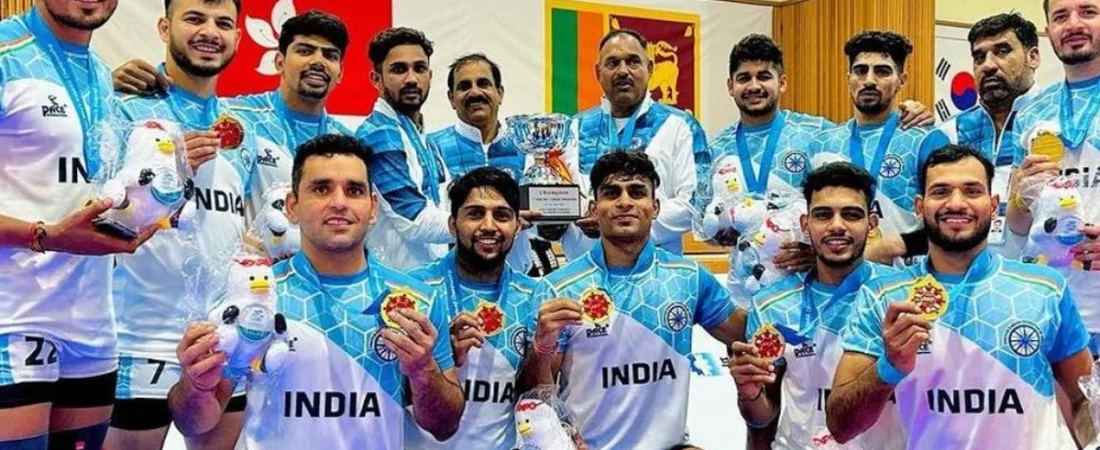
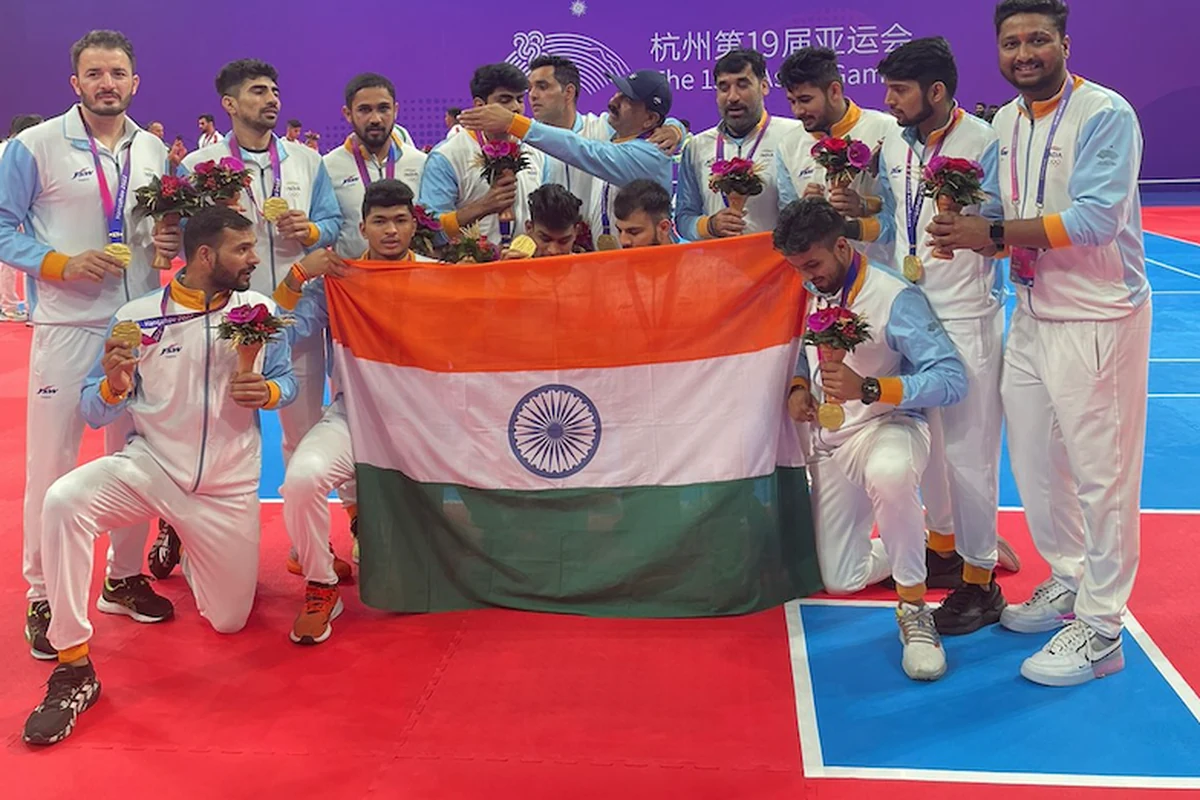
The men’s gold was India’s ninth in kabaddi at the Asian Games — a record of dominance that spans the entire history of the sport at the Games. It is easy, from a distance, to take that dominance for granted. Don’t. Iran have spent a decade building specifically to beat India: their players feature in the Pro Kabaddi League, their programme is professional, and they have come agonisingly close before. A 40-34 final scoreline is not dominance; it is a hard-earned win against the only team in Asia built to dethrone you.
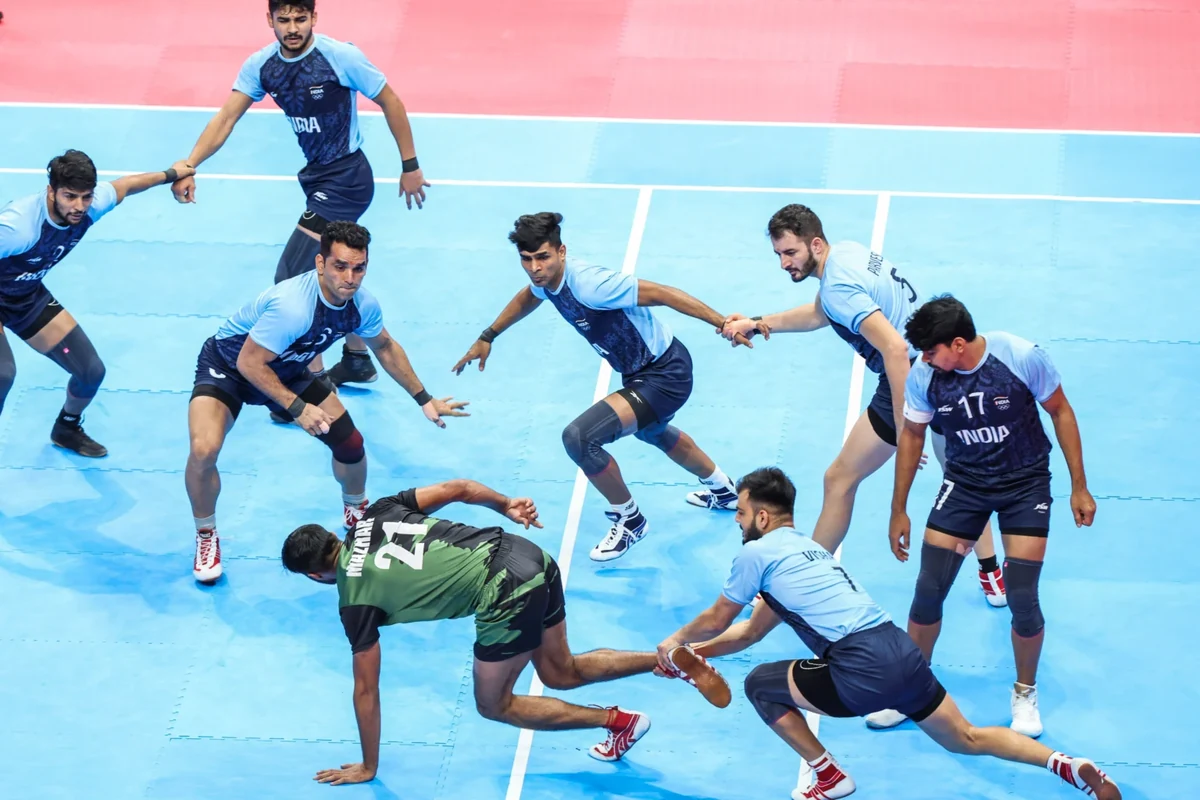
What won it for India was the thing that has always won it: composure in the raid-and-defend exchanges when the scoreboard tightens. The first half was a stalemate; the second was India playing championship kabaddi — the timed super tackles, the bonus-point raids at exactly the right moments, the refusal to panic when Iran closed the gap. This is institutional knowledge, passed down through generations of Indian raiders, and it remains the decisive edge behind the india kabaddi double gold.
Tight at Half-Time, Ruthless After
The men’s final followed the pattern of every great India–Iran Iran kabaddi final: cagey, physical, and unresolved deep into the contest. At half-time, the game was a stalemate, with neither side willing to gamble and both defences holding firm. Iran, as ever, were worthy finalists — physical, organised, fearless — and they came into the final believing this was finally their year.
However, the second half belonged to India. Sunil Kumar’s side raised their intensity precisely when the pressure mounted, converting tight exchanges into points and pulling clear to a 40-34 margin. That six-point gap, in a sport where a single raid can swing momentum, was the product of composure rather than fireworks.
Nine Golds and Counting
Nine Asian Games golds. The number deserves a pause, because it places this Indian men’s team in the rarest of company. Since kabaddi entered the Asian Games programme, India have owned the men’s event almost uninterrupted, and each new generation has shouldered the weight of that expectation without buckling. The india kabaddi double gold of 2026 extends that dynasty, and the manner of it — a hard-fought 40-34 over the fiercest rivals — may make this edition the most satisfying of the nine.
The Women's Final: 37-34 and Back-to-Back Gold
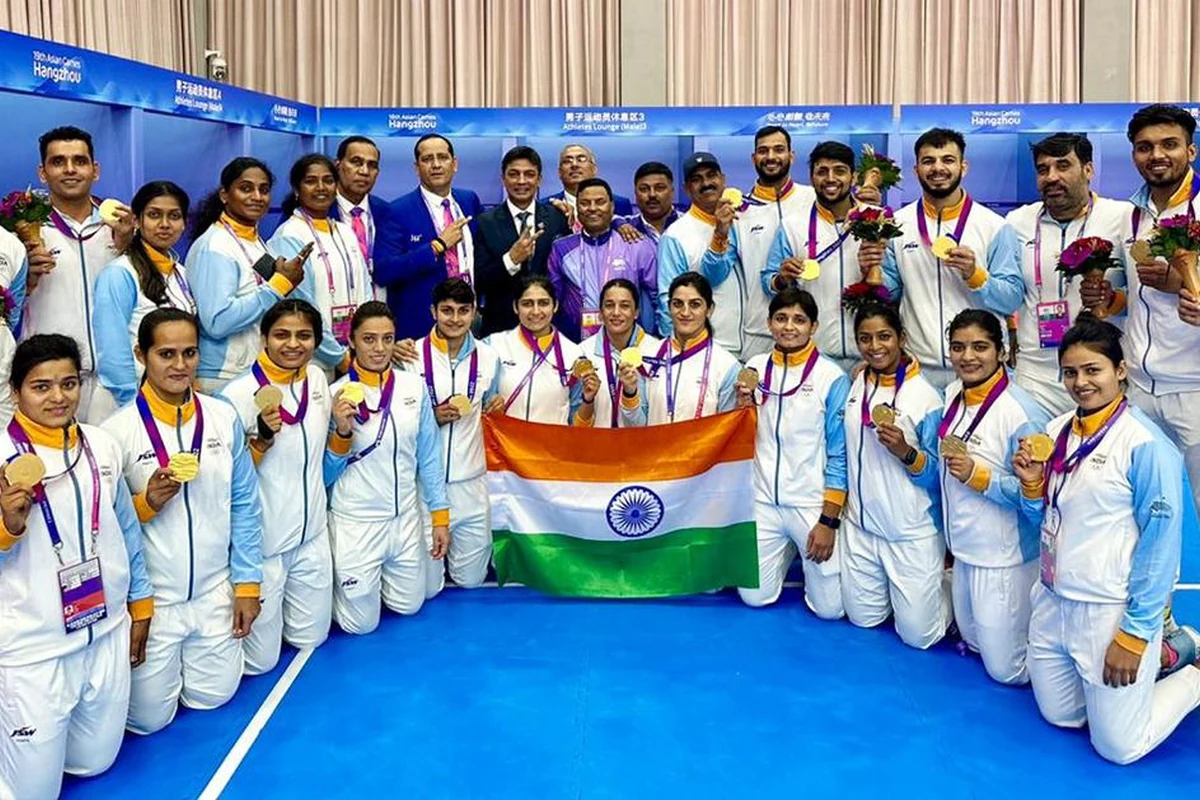
If the men’s gold was about extending a dynasty, the women’s was about confirming one. This was India’s fourth gold in women’s kabaddi since the event was introduced in 2010, and their second consecutive title — the only interruption in that run coming in 2018, when Iran won. Beating the same Iranian side that once broke the streak, in a 37-34 final, carries its own poetry.
The women’s game has grown enormously across Asia — the days of walkover finals are long gone, as the three-point margin proved. That India keep winning as the field gets stronger is the true measure of the programme. These are athletes who grew up watching the Pro Kabaddi League turn their sport professional; they play with a tactical sophistication that would have been unrecognisable a decade ago.
A Knife-Edge Contest
The women’s final was a knife-edge throughout, settled 37-34 in a contest that could have gone either way in the last five minutes. Every raid in the closing stages felt like it carried the weight of the gold itself, and the Indian defence had to produce its finest work of the tournament to close the game out — a defining passage of the india kabaddi double gold. Meanwhile, the Iranian raiders kept coming — fearless, physical, and fully aware that the title was within touching distance.
Back-to-Back, and the 2018 Scars Healed
Context turns this victory into something deeper. India’s only interruption in the women’s event came in 2018, when Iran broke the streak and claimed the gold. Defeating that same Iranian programme eight years later — in another final, by another narrow margin — is the kind of poetic justice athletes dream about. The india kabaddi double gold narrative is incomplete without this detail: the women’s title was not merely defended; it was avenged and reaffirmed.
Fourth Gold Since 2010
Four golds since the women’s event was introduced in 2010, with a single blip in 2018 — that is a record of dominance to match the men’s programme, achieved in a far shorter span. The india kabaddi double gold confirms what Indian fans already believed: the women’s programme is now a dynasty of its own, built on the same foundations of institutional knowledge, composure, and big-match temperament.
Inside the India Kabaddi Double Gold: Tactics That Won Two Finals
Strip away the emotion and you find the same engine underneath both victories: championship kabaddi, played the Indian way. The india kabaddi double gold was not an accident of fortune or a pair of lucky bounces. It was the product of tactical clarity in the moments that decide finals — the raid-and-defend exchanges where the scoreboard tightens and lesser teams reach for panic.
Composure in the Raid-and-Defend Exchanges
What won it for India was the thing that has always won it: composure in the raid-and-defend exchanges when the scoreboard tightens. This is institutional knowledge, passed down through generations of Indian raiders, and it remains the decisive edge. When Iran pressed, India did not chase the game; they played the next raid, then the one after, each with the same cold precision.
Super Tackles and Bonus Points at the Right Moments
The second half of the men’s final was India playing championship kabaddi — the timed super tackles, the bonus-point raids at exactly the right moments, the refusal to panic when Iran closed the gap. These are the marginal gains that decide finals: a super tackle converts a 3-point swing into a momentum-shifter, while a bonus point in a tight exchange keeps the scoreboard ticking when touches are scarce.
Similarly, the women’s team leaned on the same fundamentals in their knife-edge finish. When the last five minutes arrived with everything still to play for, India chose the high-percentage plays — secure tackles, smart raids, and clock management born of experience. Consequently, the 37-34 scoreline flattered Iran less than it frightened India; it was a margin built on control.
Ultimately, tactics won the day, but tactics of a particular kind — the institutional, inherited kind. The india kabaddi double gold was a triumph of the Indian school of kabaddi, played under the fiercest pressure the sport can generate.
Iran: The Rival That Made the India Kabaddi Double Gold Matter
No coronation is complete without a worthy challenger, and Iran played the role to perfection in Aichi-Nagoya. Iran, as ever, were worthy finalists — physical, organised, fearless. But when the medals were decided, both Indian teams found the extra gear that separates champions from contenders. The india kabaddi double gold shines brighter because of who stood on the other side of the mat.
A Decade Built to Dethrone India
Iran have spent a decade building specifically to beat India: their players feature in the Pro Kabaddi League, their programme is professional, and they have come agonisingly close before. This is not an accidental rivalry. It is a deliberate, well-funded, professionally executed project to end Indian dominance in kabaddi — and it has already succeeded once, in the women’s event in 2018.
Physical, Organised, Fearless
What makes Iran dangerous is the completeness of their game. They are physical — matching and sometimes exceeding India in the contact exchanges. They are organised — their defensive structures are among the most disciplined in world kabaddi. And they are fearless — no deficit, no occasion, and no crowd seems to diminish their belief. In both finals, Iran pushed India to the very edge before the champions’ experience told.
Both Finals Decided by Six Points or Fewer
The gap is no longer a gulf; it is a handful of points in a final. Both finals this year were decided by six points or fewer — 40-34 for the men, 37-34 for the women. Those margins tell the real story of the india kabaddi double gold and of modern Asian kabaddi: India remain the standard, but the standard is being chased harder every cycle.
However, there is a counter-reading worth holding onto. Dominance is not measured only by margin; it is measured by the ability to keep winning when the margin shrinks. By that measure, the india kabaddi double gold is arguably the most impressive of India’s recent kabaddi triumphs — won not in a procession, but in two genuine contests against the only team in Asia built to dethrone them.
Sunil Kumar's Leadership and the Pro Kabaddi League Effect
Behind every dynasty are the people and the systems that sustain it. The india kabaddi double gold rests on two pillars: leadership on the mat, exemplified by Sunil Kumar and his side in the men’s event, and the professional pipeline that now feeds both Indian teams — the Pro Kabaddi League.
The Captain’s Hand on the Men’s Gold
Sunil Kumar’s side pulled away to win 40-34 after a tight first half, and the captain’s imprint was all over that second-half surge. Championship teams need a figure who embodies calm when the scoreboard tightens — someone whose body language tells ten teammates that the plan is working even when the points are not yet flowing. In Aichi-Nagoya, Sunil Kumar was that figure for the men’s team — the on-mat leader of the india kabaddi double gold.
The Pro Kabaddi League Pipeline
Iran’s players feature in the Pro Kabaddi League — and so, of course, do India’s. The league has professionalised the sport on both sides of this rivalry, raising fitness standards, tactical sophistication, and the sheer volume of high-pressure minutes players bank before they ever wear national colours. The athletes who decided the india kabaddi double gold did not learn finals kabaddi at the Games; they learned it across seasons of the PKL, in packed arenas, with crores of viewers watching.
Consequently, the quality of both finals owed everything to the league era. The timed super tackles, the bonus-point raids at exactly the right moments — these are PKL-honed skills, executed on the biggest continental stage. The league has made Indian kabaddi deeper, and it has made Iranian kabaddi dangerous; on this Saturday, it made Indian kabaddi golden.
A Generation Raised on Professional Kabaddi
The women’s champions are athletes who grew up watching the Pro Kabaddi League turn their sport professional; they play with a tactical sophistication that would have been unrecognisable a decade ago. That sentence contains the whole arc of the women’s game in Asia: from walkover finals to a 37-34 knife-edge, achieved in barely a decade and a half since the event’s introduction in 2010.
In addition, this generational shift explains why the field keeps getting stronger while India keep winning. The programme’s true measure is not the margin of victory but the ability to keep producing champions as the sport professionalises around it. For deeper context on where these medals sit in the wider campaign, see India’s Asian Games 2026 medal tally.
What the India Kabaddi Double Gold Means for the Medal Table
In a campaign where India have piled up silvers — 21 of them at last count — the two kabaddi golds stand apart. Not just because golds are rarer, but because of what kabaddi is to India. This is the one sport at the Asian Games that India gave the world. Losing it would feel like more than a defeat; winning it feels like heritage defended. The india kabaddi double gold therefore carries a significance that no spreadsheet of medals can capture — though the spreadsheet matters too.
Twenty-One Silvers and the Weight of Gold
Twenty-one silvers at last count. That number tells its own story: India have been competitive across the programme but repeatedly one step from the top of the podium. In that context, golds are not just medals; they are psychological currency. The india kabaddi double gold doubled India’s gold count in a single day and, more importantly, showed the contingent that finals can be won — that the extra gear exists when it matters most.
Twelfth Place, Four Golds, Double Morale
With the medal table showing India down in 12th place on just four golds, every gold carries double weight — for the tally and for morale. The india kabaddi double gold, delivered on the same day, was the emotional high point of India’s Games so far. You could see it in the celebrations: this wasn’t relief, it was joy.
Furthermore, two of India’s four golds arriving together created a momentum that a solitary gold could not. The contingent’s mood visibly lifted, and the remaining events suddenly carried a different energy. For the full picture of how the tally evolved across the Games, our India’s Asian Games 2026 medal tally analysis breaks down every medal sport by sport.
The Emotional Peak of the Campaign
The challenge now is the same one Indian kabaddi has faced for a decade: staying ahead of Iran. The gap is no longer a gulf; it is a handful of points in a final. Both finals this year were decided by six points or fewer. India remain the standard — but the standard is being chased harder every cycle. For now, though, the house stands. Twice over, against the same opponents, on the same day. That is how dynasties remind you they are still alive.
That emotional peak also resonated beyond kabaddi. Just as India’s dramatic cricket semifinal lifted the contingent earlier in the Games, the india kabaddi double gold gave every Indian athlete in Aichi-Nagoya a fresh reason to believe. Golds are contagious that way.
Conclusion: The House Still Stands
The india kabaddi double gold, delivered on the same day against the same opponent, was the emotional high point of India’s Games so far — and its meaning will outlast the medal table. The india kabaddi double gold was heritage defended, a dynasty extended, and a rival repelled, all within a single Saturday in Aichi-Nagoya. If kabaddi is India’s game — and it is — then this was India reminding the continent, emphatically, whose house it is.
The Gap Is No Longer a Gulf
Honesty demands the caveat: the gap is no longer a gulf; it is a handful of points in a final. Iran have spent a decade building specifically to beat India, and both finals this year were decided by six points or fewer. The challenge now is the same one Indian kabaddi has faced for a decade: staying ahead of Iran. India remain the standard — but the standard is being chased harder every cycle.
How Dynasties Remind You They Are Alive
For now, the house stands. Twice over, against the same opponents, on the same day. That is how dynasties remind you they are still alive — not with declarations, but with gold medals, won the hard way, when it mattered most. For official coverage of the Games, see Olympics.com, and for the sport’s domestic home, the Amateur Kabaddi Federation of India chronicles the game India gave the world.
Why this story matters: Two golds, one day, same opponent — India’s kabaddi double over Iran was the emotional peak of the Asian Games campaign and a reminder of who owns the sport.