
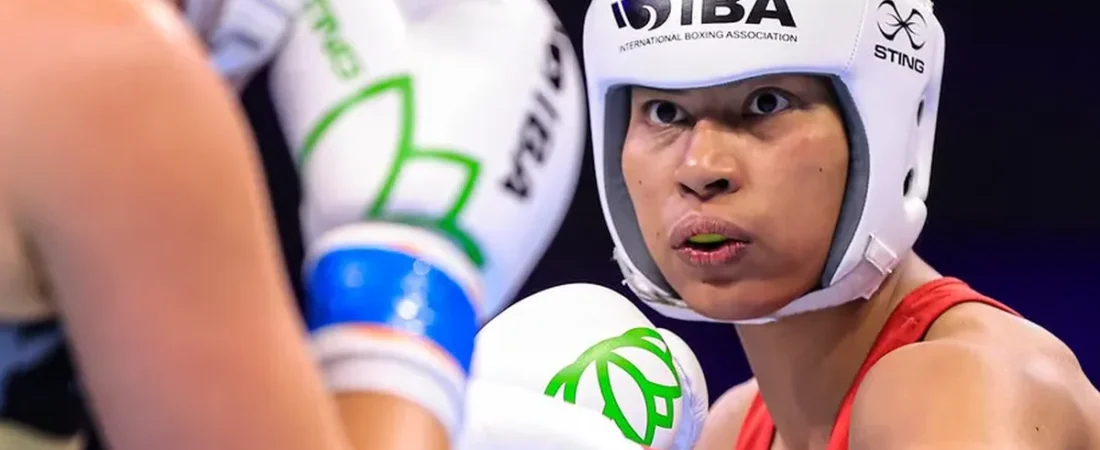
There are days at a multi-sport Games when a nation’s sporting story gets rewritten in a single session. The Asian Games 2026 boxing gold India campaign produced exactly that kind of day, as Lovlina Borgohain, Parveen Hooda and Ankush Panghal each won gold within hours of each other — three finals, three Indian hands raised, three playing of the national anthem in one golden afternoon at Aichi-Nagoya. Never before had Indian boxing delivered a hat-trick of Asian Games golds in one day, and the scale of the achievement was underlined by what it did to the medal table: 15 golds, 75 medals, and a climb to fifth in the standings.
For Lovlina Borgohain, the triumph carried an extra layer of magic: it arrived on her 29th birthday, a 5-0 demolition of China’s Bao Ziyi in the women’s 75kg final. For Parveen Hooda, it was history written in real time — a 3-2 split-decision win over Chinese Taipei’s Chen Nien-chin in the women’s 65kg final that made her only the third Indian woman ever to win an Asian Games boxing gold, after Mary Kom and Lovlina Borgohain. For Ankush Panghal, it was a 4-0 masterclass against South Korea’s Kim Minseong in the men’s 80kg final, the kind of dominant verdict that turns a final into a formality.
This is the story of the Asian Games 2026 boxing gold India hat-trick: how three boxers, across three weight classes, turned one day into a landmark for Indian sport — and what it means for the programme that produced them.
The Day the Asian Games 2026 Boxing Gold India Campaign Won Everything
Boxing days at a multi-sport Games are always long. Bouts run in sessions, categories overlap, and the medal count usually grows slowly, one bronze or one finalist at a time. But when the Asian Games 2026 boxing gold India story reached its climax, the day was different from the opening bell of the first final. India entered the evening session with three gold-medal bouts, and by the time the last of them ended, all three had gone the same way. Three for three. Perfection.
The context made the Asian Games 2026 boxing gold India achievement even sweeter. Indian boxing had already banked two bronzes earlier in the tournament — Priya Ghanghas in the women’s 60kg and Kapil Pokhariya in the men’s 90kg — and Lovlina had been the flagbearer of the campaign from the start, assured of a medal deep into the competition. But there is a difference between a good tournament and a legendary one, and the difference is made in finals. On this day, India contested three finals and won all three. That is what separates contenders from champions, and on this day, India were champions.
The Asian Games 2026 boxing gold India achievement is even more striking when set against the scale of the Asian boxing landscape. China are the superpower of the sport in Asia, Uzbekistan are the rising force, and traditional powers like Kazakhstan and South Korea contest every division. For India to take three golds in a single day — including wins over China, Chinese Taipei and South Korea in the finals — is a statement that the country’s boxing programme belongs in the very top tier of Asian boxing. The Asian Games 2026 boxing gold India story is not an accident of scheduling; it is the product of years of investment, depth and belief.
A historic first for Indian boxing
Indian boxing has produced golden days before. Mary Kom’s trailblazing gold, Lovlina’s own earlier triumphs, and the men’s successes across editions have all given the sport its folklore. But three Asian Games golds on the same day, across both the men’s and women’s competitions, stands apart as the pinnacle of the Asian Games 2026 boxing gold India campaign. It is the kind of day that gets its own name in the record books — the day the ring belonged to India. Every young boxer in a dusty gym from Haryana to Assam now has a new reference point: the day Lovlina, Parveen and Ankush all won gold, hours apart, and the tricolour went up three times.
Lovlina Borgohain: Birthday Gold, 5-0 Masterclass
Some stories are written too perfectly to be fiction. Lovlina Borgohain walked into the women’s 75kg final at the Asian Games 2026 on the morning of her 29th birthday — and walked out as a champion, defeating China’s Bao Ziyi 5-0 in a unanimous verdict that never looked in doubt. It was the standout bout of the entire Asian Games 2026 boxing gold India campaign: a birthday gift, a gold medal and a dominant performance over a Chinese opponent — the perfect day for one of Indian boxing’s most decorated athletes.
The 5-0 scoreline tells its own story. In Olympic-style boxing, a unanimous decision means all five judges scored the bout in your favour — no split, no doubt, no controversy. Lovlina controlled the fight against Bao Ziyi with the composure of an athlete who has been in the biggest arenas before. The Chinese boxer had no answer to Lovlina’s range, her footwork and her timing. From the first round, the Indian was the boss of the ring, and by the third, the judges’ scorecards were a formality — the first gold of the Asian Games 2026 boxing gold India hat-trick, sealed in style.
This was the Asian Games 2026 boxing gold India campaign’s marquee moment, and it belonged to its marquee boxer. Lovlina had already assured herself of a medal earlier in the Games, reaching the final of the women’s 75kg division. But a silver and a gold are different currencies in the history books. On her birthday, with the whole nation watching, Lovlina made sure she was dealing in gold.
Why Lovlina’s gold matters beyond the medal
Lovlina Borgohain is already one of the faces of Indian Olympic sport, an athlete whose name carries weight far beyond boxing circles. A second Asian Games gold — against a Chinese opponent, on her birthday, in a unanimous decision, and the headline act of the Asian Games 2026 boxing gold India hat-trick — only deepens that legacy. It also matters for what it says about her form and focus. Championship boxing is as much mental as physical, and Lovlina’s ability to dominate a final on the biggest continental stage, with all the emotional weight of the occasion, shows an athlete at the peak of her powers. Indian boxing could not have asked for a better standard-bearer for this Asian Games 2026 boxing gold India hat-trick.
Parveen Hooda: History Maker in a 3-2 Thriller
If Lovlina’s gold was a coronation, Parveen Hooda’s was a coronation with the crown balanced on a knife’s edge. The women’s 65kg final against Chinese Taipei’s Chen Nien-chin went the full distance and ended in a 3-2 split decision in Parveen’s favour — the kind of verdict that leaves both corners holding their breath until the referee raises the winner’s hand. When that hand turned out to be Parveen’s, history was made: she became only the third Indian woman ever to win an Asian Games boxing gold, after Mary Kom and Lovlina Borgohain.
Split decisions are boxing’s cruelest lottery. Two judges saw it one way, three saw it the other — and in this case, the majority saw it Parveen’s way. The bout was a tactical chess match, with Chen Nien-chin bringing all the experience and craft of Chinese Taipei’s well-drilled programme. Parveen matched her round for round, refused to be outworked, and did enough in the deciding exchanges to convince three of the five judges — the middle gold of the Asian Games 2026 boxing gold India hat-trick. In a 3-2 split, the margin is not in the score but in the moments: a cleaner combination here, a stronger final thirty seconds there. Parveen found those moments when it mattered most.
The significance of joining Mary Kom and Lovlina Borgohain in this exclusive club cannot be overstated. Mary Kom is Indian boxing’s pioneer, the woman who put the sport on the map. Lovlina is its modern icon. Parveen Hooda is now its future and its present — the third name in the lineage of Indian women who have stood on top of the Asian Games podium, and the second gold of the Asian Games 2026 boxing gold India hat-trick. For a sport that has invested heavily in its women’s programme, this is validation: the pipeline is producing champions, not just medal contenders.
The anatomy of a split-decision victory
It is worth pausing on what a 3-2 win in a major final demands. Unlike Lovlina’s 5-0 cruise, Parveen’s gold was earned in the trenches. Every exchange was contested, every round was a negotiation, and the Chinese Taipei corner would have believed until the final bell that the bout was theirs. Winning a split decision in an Asian Games final requires nerves of steel in the closing seconds — the knowledge that coasting for even one round could cost you everything. Parveen boxed the final minute like a champion who knew exactly what was at stake. She was, and she is.
Ankush Panghal: 4-0 and Never in Doubt
Completing the Asian Games 2026 boxing gold India hat-trick was Ankush Panghal, and he did it in style. In the men’s 80kg final, the Indian defeated South Korea’s Kim Minseong 4-0 — a dominant verdict that capped a perfect day for the contingent. Three finals, three golds, and the men’s programme delivered its share with a performance that was never in serious doubt.
The 4-0 scoreline reflects a bout that Ankush controlled from early on. Kim Minseong came with the discipline and toughness that South Korean boxing is known for, but Ankush had too much craft, too much composure and too much conviction. A 4-0 verdict in a major final means four of the five judges scored it your way — close to a shutout, and as comprehensive a statement as a boxer can make without stopping his opponent. Ankush’s gold ensured that the Asian Games 2026 boxing gold India story belonged to both halves of the programme: two women’s champions and one men’s champion, three golds, one unforgettable day.
For Indian men’s boxing, Ankush’s gold is a significant marker. The men’s programme has had its share of near-misses and hard-luck stories at these Games — Kapil Pokhariya’s bronze in the 90kg division, earned after a semifinal defeat to Uzbekistan’s Turabek Khabibullaev, showed both the promise and the challenge. Ankush’s 4-0 gold changes the tone: it proves the men’s side can win the big ones too, against quality opposition, on the biggest stage. A 4-0 win over a South Korean finalist is no fluke; it is a career-defining performance — and the final gold of the Asian Games 2026 boxing gold India hat-trick.
The perfect day, box by box
Step back and look at the day as a whole. Three Indian finalists, three different weight classes — women’s 75kg, women’s 65kg, men’s 80kg — and three different kinds of victory: Lovlina’s 5-0 unanimous masterclass, Parveen’s 3-2 split-decision thriller, Ankush’s 4-0 commanding win. Between them, the three champions defeated opponents from China, Chinese Taipei and South Korea — three of Asia’s strongest boxing nations. There was no easy draw, no soft final. This was the Asian Games 2026 boxing gold India hat-trick at its most impressive: three golds, earned the hard way.
The Bronze Base: Priya and Kapil’s Hard-Fought Medals
A hat-trick of golds does not come from nowhere, and the Asian Games 2026 boxing gold India story has its foundations in the bronzes won earlier in the tournament. Priya Ghanghas fought her way to the women’s 60kg bronze, going down only to China’s Yang Chengyu in the semifinal. Kapil Pokhariya earned the men’s 90kg bronze, stopped in the semifinal by Uzbekistan’s Turabek Khabibullaev. Both defeats came against elite opposition — China and Uzbekistan are the twin superpowers of Asian boxing — and both medals added to the tally that the golden day then supercharged.
There is a lesson in those bronzes that Indian boxing would do well to remember. Priya and Kapil did not win gold, but they won finals that other boxers lost — the quarterfinals and repechage bouts that separate medallists from also-rans. In boxing, bronze is earned in the trenches, and the depth it represents is what makes golden days possible. A programme that produces only finalists is a programme with a conversion problem; a programme that produces finalists and quarter-finalists alike is a programme with depth. India’s boxing campaign at these Games had both, and the Asian Games 2026 boxing gold India hat-trick is the flowering of that depth.
It is also worth noting the quality of the opposition that stopped Priya and Kapil. Losing to a Chinese boxer in a women’s semifinal, or to an Uzbekistani boxer in a men’s heavyweight semifinal, is no disgrace — it is a measure of where the bar sits in Asian boxing. Lovlina, Parveen and Ankush cleared that bar. Priya and Kapil showed how high it is. Together, the five medals tell a complete story of a boxing programme that is competitive across the board — and the Asian Games 2026 boxing gold India hat-trick is its crowning chapter.
What the Asian Games 2026 Boxing Gold India Hat-Trick Did to India’s Medal Tally
Three golds in one day do extraordinary things to a medal table. The Asian Games 2026 boxing gold India hat-trick pushed India’s tally to 15 golds and 75 medals overall at that stage, moving India up to fifth in the standings. In the context of the whole campaign, that is a seismic shift. Gold medals are the currency of the standings table — the table is ordered by golds, not total medals — so the three golds of the Asian Games 2026 boxing gold India hat-trick transformed India’s position far more than any number of bronzes could.
The day of the boxing hat-trick was one of the great days of India’s entire Asian Games campaign, alongside the earlier golden days in other sports. It recalled the kabaddi double gold against Iran, when both the men’s and women’s teams stood on top of the podium on the same day. Boxing has now gone one better: three golds, not two, across three weight classes and both genders. As our analysis of India’s medal tally noted when the count stood at 60 medals, the gold conversion rate was the great question hanging over the contingent — and the boxers answered it emphatically, three times in one day.
For the full picture of how the golden day reshaped the standings, Indiory’s report on India’s golden day and the 75-medal tally tracks how the boxing golds combined with the day’s other successes, while The Times of Bengal’s medal tally coverage details the climb to fifth in the standings. What is clear from every account is that the Asian Games 2026 boxing gold India hat-trick was the single biggest contributor to one of the finest days of the entire campaign.
Fifteen golds, seventy-five medals, fifth place
Numbers are the language of the medal table, and these numbers speak loudly. Fifteen gold medals is a substantial haul for any Asian Games campaign, and seventy-five total medals reflects a contingent of remarkable breadth. Fifth place in the standings puts India among the elite of Asian sport — behind only the established giants of China, Japan and South Korea, and one other. The boxers did not just win three medals on their golden day; the three champions of the Asian Games 2026 boxing gold India hat-trick moved the needle for the entire Indian contingent. That is the leverage of gold in the standings system, and India spent it well.
What This Says About India’s Boxing Programme
Hat-tricks do not happen by accident. The Asian Games 2026 boxing gold India story is, at its core, the story of a programme that has been building toward this moment for years. Consider what it takes to produce three Asian Games champions in three different weight classes on the same day: talent identification across the country, world-class coaching, sports science, international exposure, and the kind of mental conditioning that lets a boxer win a 3-2 split decision in a major final.
The women’s programme, in particular, has reached a remarkable level of maturity. Lovlina Borgohain is the established superstar, but Parveen Hooda’s emergence as the third Indian woman to win an Asian Games boxing gold — after Mary Kom and Lovlina — shows that the pipeline is working. The lineage now reads: Mary Kom, Lovlina Borgohain, Parveen Hooda. Three generations, one standard. For every young girl lacing up gloves in a small-town gym, that lineage is both an inspiration and a roadmap.
The men’s gold matters just as much. Ankush Panghal’s 4-0 win over South Korea’s Kim Minseong in the 80kg final proves that the men’s programme can produce champions at the highest level of Asian competition. Combined with Kapil Pokhariya’s bronze in the 90kg division, the men’s campaign shows a healthy mix of breakthrough and near-miss — the raw material from which future golds are made. A boxing programme that wins golds in both the men’s and women’s competitions on the same day — exactly what the Asian Games 2026 boxing gold India hat-trick delivered — is a programme with no weak flank.
Depth, conversion and the fortress question
Indian sport has spent these Games debating the difference between depth and conversion — the ability to reach finals versus the ability to win them. Boxing, on its golden day, delivered the perfect answer to that debate — and the Asian Games 2026 boxing gold India hat-trick is the case study the rest of the contingent can learn from: reach the final, and then finish the job. Five medals across the tournament, three of them gold, including wins over China, Chinese Taipei and South Korea. That is depth converted. The Asian Games 2026 boxing gold India hat-trick is the case study the rest of the contingent can learn from: reach the final, and then finish the job. Lovlina, Parveen and Ankush all finished the job — that is what the Asian Games 2026 boxing gold India hat-trick will be remembered for.
What Comes Next: Momentum Toward Los Angeles
Asian Games golds are precious in their own right, but in boxing they carry an additional weight: they are stepping stones on the road to the Olympics. The Los Angeles 2028 Games are the horizon toward which every elite boxer now turns, and champions crowned at Aichi-Nagoya will carry their momentum into the Olympic cycle. Lovlina Borgohain, Parveen Hooda and Ankush Panghal have all announced, in the most emphatic way possible, that they intend to be in that conversation.
For Lovlina, the birthday gold is a statement of intent from an athlete who knows exactly what the Olympic stage demands. For Parveen, joining the Mary Kom-Lovlina lineage of Asian Games champions is the kind of breakthrough that changes a career’s trajectory — she is no longer a prospect, she is a proven champion. For Ankush, the 4-0 gold over South Korea is a career-defining result that will shape his seeding, his confidence and his funding for the cycle ahead. The Asian Games 2026 boxing gold India hat-trick is not an ending; it is a beginning.
And there is the inspiration effect, which cannot be measured in medals. When three boxers win gold on the same day — when the tricolour goes up three times and the anthem plays three times — the message to every young athlete in the country is unmistakable: this is possible. The next Lovlina, the next Parveen, the next Ankush is training somewhere right now, in a gym that just got a little more crowded. That is the real legacy of golden days: they do not just fill the medal table, they fill the pipeline.
India’s boxing campaign at these Games deserves to be remembered alongside the other great stories of Aichi-Nagoya — the endurance heroics of athletes like Sawan Barwal, whose marathon silver ended a 44-year wait, and the golden days in kabaddi and elsewhere. But boxing’s hat-trick stands alone as the single finest day for one sport in the entire Indian campaign. Three finals. Three golds. One perfect day. That is the Asian Games 2026 boxing gold India hat-trick.
Why this story matters: The Asian Games 2026 boxing gold India hat-trick — Lovlina’s birthday masterclass, Parveen’s historic split-decision triumph and Ankush’s commanding 4-0 win — was the single greatest day for one Indian sport at these Games, delivering three golds that lifted the nation to 15 golds, 75 medals and fifth in the standings.